 In this area
Centro Storico
Renaissance Naples Hotel Mediterraneo
8.7· 374 reviews
approx. from£373 / nightSee prices
The Naples issue
Naples’ ancient core is a kilometre of Spaccanapoli, pizza smoke, sacred relics and student-night chaos, all packed into lanes that never learned to be quiet.
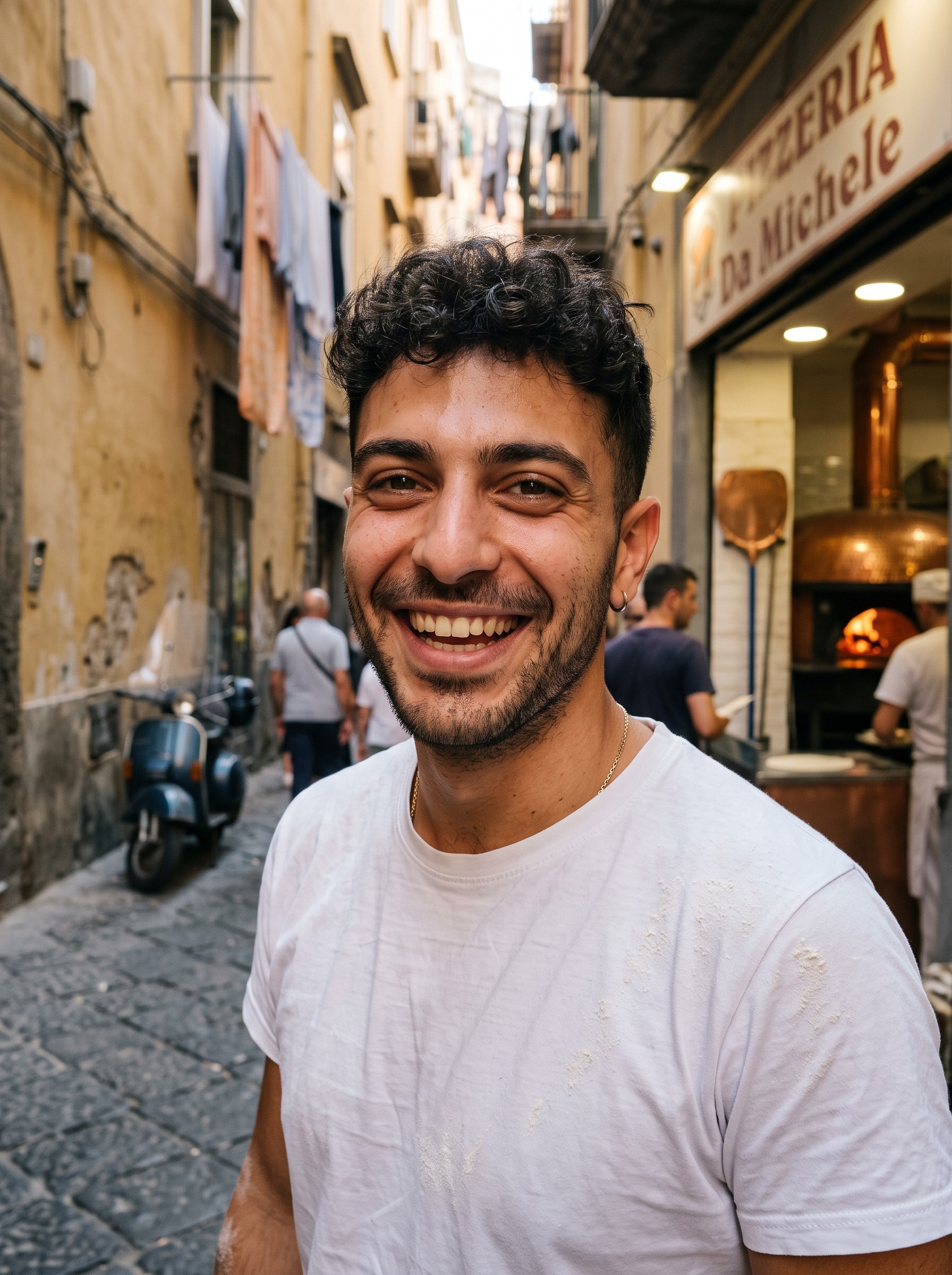
By Gennaro EspositoPizza queues and two-euro cuoppi, at full volume
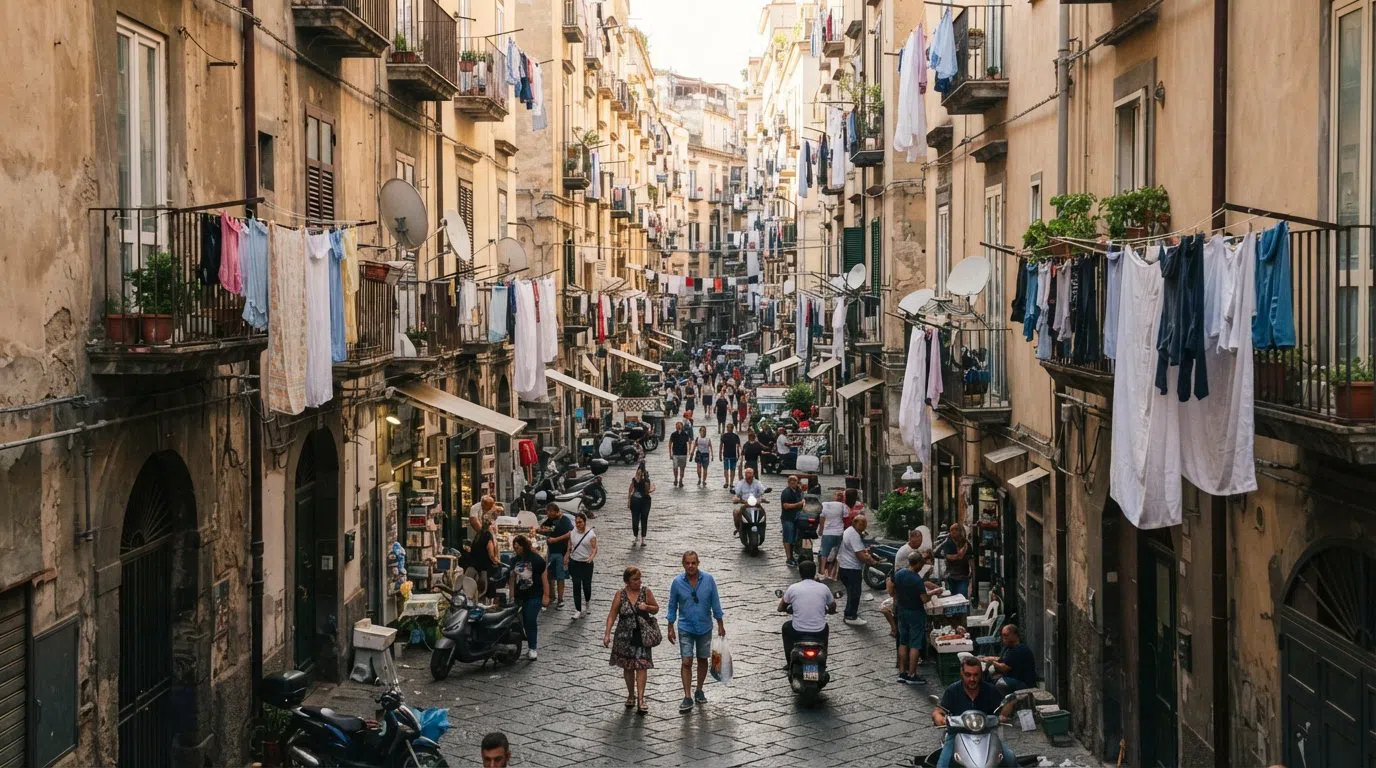
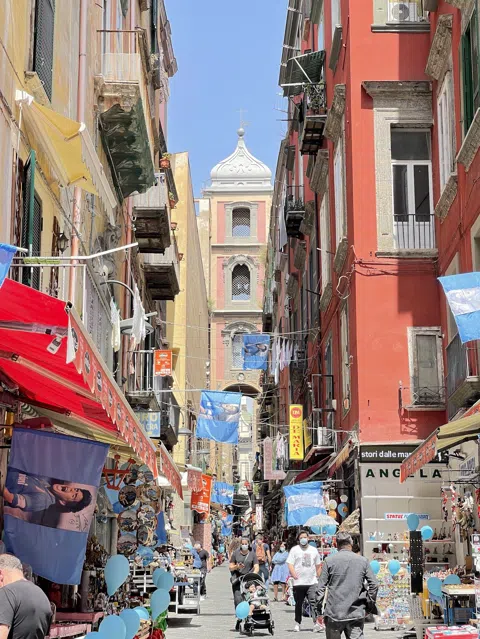
Stand at the top of Via San Biagio dei Librai and look down: the street runs arrow-straight for a kilometre, so narrow that opposing balconies almost touch, so busy that scooters, nuns, tour groups and men delivering crates of lemons all somehow move through it at once. This is Spaccanapoli, and if Naples has a spine, this is it. The Centro Storico is the old city laid out by the Greeks 2,400 years ago and never properly interrupted, never smoothed into something polite. Baroque church fronts drop straight into the pavement. Maradona shrines glow from walls. Votive candles flicker under San Gennaro. Nativity figures stare out from workshop windows. It is theatrical, grubby, generous, and loud enough to rattle the teeth. You do not come here for silence. You come because the city is still happening in front of you.
This is the UNESCO-listed ancient core, and the first thing to understand is that the famous sights are not separated from daily life by any real distance. They sit in the same lanes as the laundry, the scooters, the espresso bars, the old men arguing with the world. Spaccanapoli — the ruler-straight street that cuts Naples in two under the names Via Benedetto Croce and Via San Biagio dei Librai — is the headline act, but its twin, Via dei Tribunali, is where the pizza pilgrims go to kneel at the oven door. Between them, the quarter stacks history like plates in a back-kitchen cupboard: churches, cloisters, underground chambers, workshops, and the sort of street noise that makes the whole place feel permanently switched on.
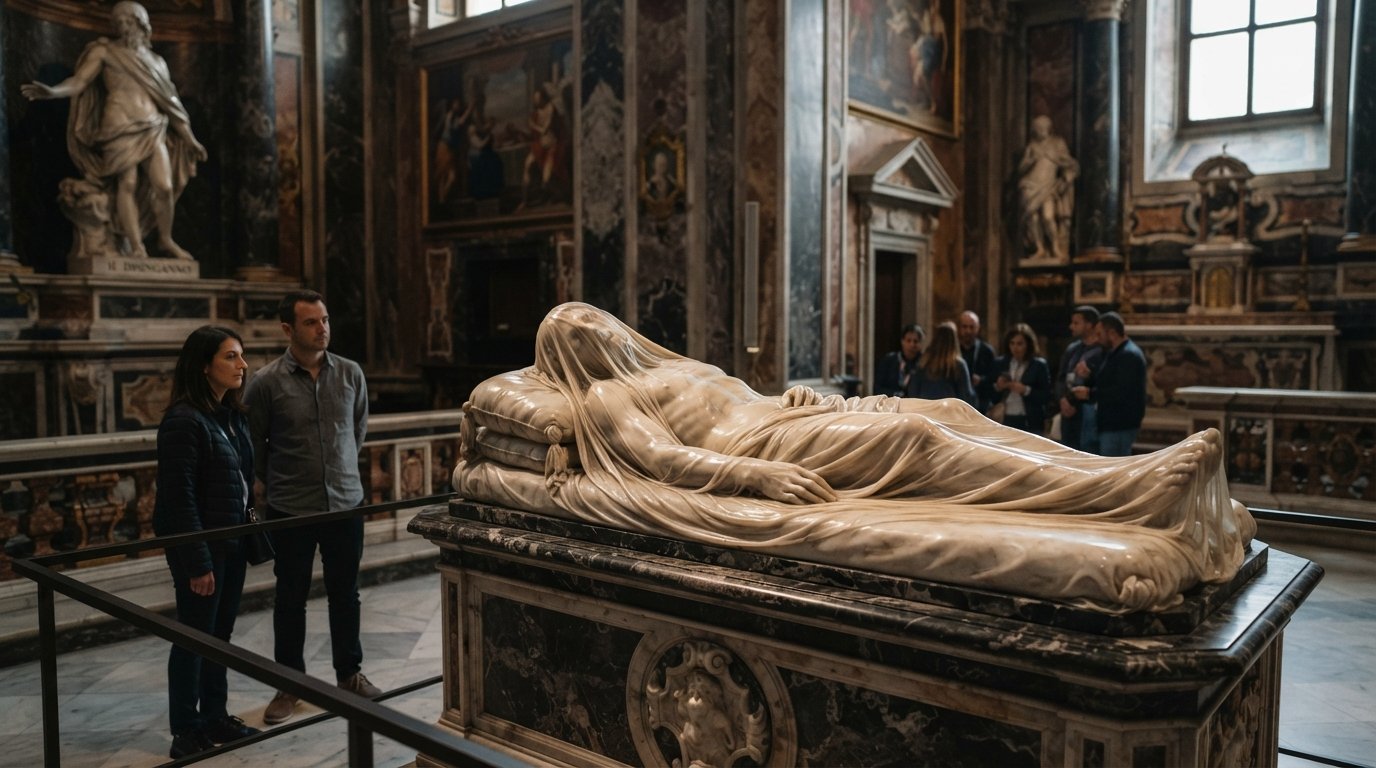
The most astonishing room in the neighbourhood is inside Cappella Sansevero, home to Giuseppe Sanmartino’s Cristo Velato — the Veiled Christ — a 1753 marble sculpture so fine the shroud looks wet. It is one of those works that makes even the loudest visitor go quiet for a second. Book it properly, because this is not a place for spontaneous optimism. The chapel runs on timed online tickets, closes on Tuesdays, and the good slots go early. But when you stand there and look at that stone veil, all the fuss feels justified.
A few streets away, the Duomo di Napoli keeps the city’s most famous relic in a chapel built for devotion and spectacle: the Treasure Chapel of San Gennaro, where the vials of dried blood are said to liquefy three times a year before a packed cathedral. Naples does not do faith in a whisper. It does it in public, with elbows and expectation.
Then there is the underground city. Napoli Sotterranea drops you 40 metres below the lanes into Greek cisterns and wartime air-raid shelters, a 90-minute guided descent that begins from Piazza San Gaetano and leaves hourly. The old town above can feel like a stage; down there, the city becomes geology and survival. You see how much of Naples is stacked, one civilisation over another, with the present simply the top layer.
And because Naples never leaves a mood in one register for long, Via San Gregorio Armeno turns the sacred into craft and commerce. It is the year-round nativity-craft street, where artisans hand-sculpt terracotta pastori — shepherds, fishmongers, footballers, politicians, the lot. If you want the city’s sense of humour, go there. It is all in the windows.
Live prices from our booking partners.
Free cancellation on many rooms. We may earn a commission when you book.
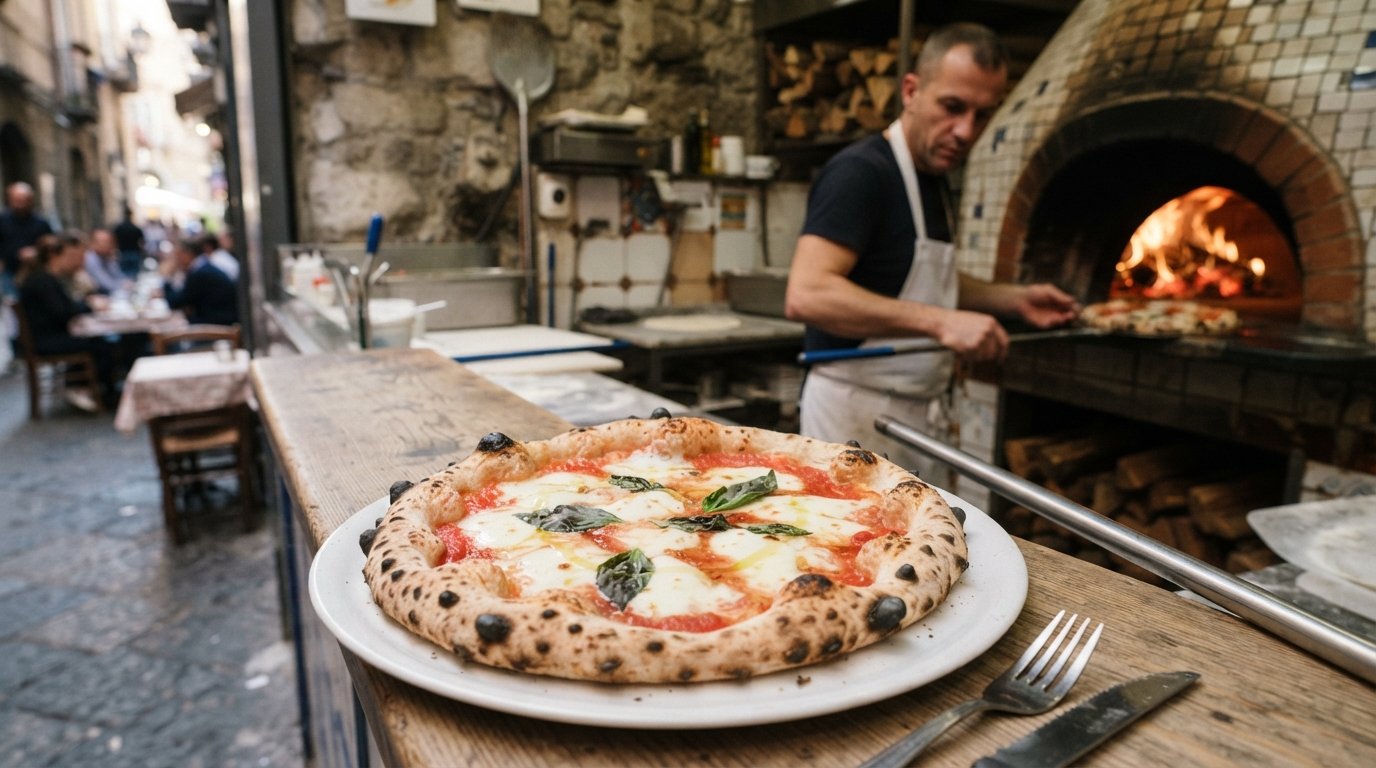
You came here, in part, for the pizza. Of course you did. Everybody does. And the thing about Centro Storico is that the hype is not fake; you just have to accept the queue as part of the ritual. On Via dei Tribunali, Gino Sorbillo at number 32 is the pilgrimage stop: no bookings, a name-on-the-list scramble at the door, and waits that can run to an hour and a half for a canonical Margherita or Marinara from the wood oven. That is the deal. You stand, you sweat, you talk to strangers, and then the dough arrives blistered and proud.
A few doors along, Antica Pizzeria Di Matteo at number 94 has been feeding the neighbourhood since 1936 and knows exactly what it is doing. This is fried Naples: pizza a portafoglio folded and eaten walking, golden frittatine, crisp arancini. It is the sort of place where the counter moves fast and the memory of Bill Clinton stopping in during the 1994 G7 still hangs in the air like a brag nobody needs to repeat too loudly.
For the old-school origin story, Antica Pizzeria Port’Alba on Via Port’Alba traces its pizza-selling back to 1738 and claims the title of the world’s oldest pizzeria. Whether you care about the claim or not, the room has the right sort of gravity. It feels like a place that has seen every version of Naples pass through and kept the oven lit.
Pizza is the point, but it is not the whole meal. At Trattoria La Campagnola on Via dei Tribunali 47, the chalkboard changes daily and the kitchen leans into home-style Neapolitan cooking: genovese, polpette, whatever the owners cooked that morning. This is where you go when you want the city’s everyday table, not the tourist performance of one. The food is direct, unshowy, and more honest than any laminated menu.
If you want a single dish done with stubborn focus, Tandem on Via Paladino is the place. It is a tiny room devoted to slow-cooked ragù napoletano over pasta or bread, and that narrow obsession is exactly why it works. Naples loves a kitchen that knows its lane.
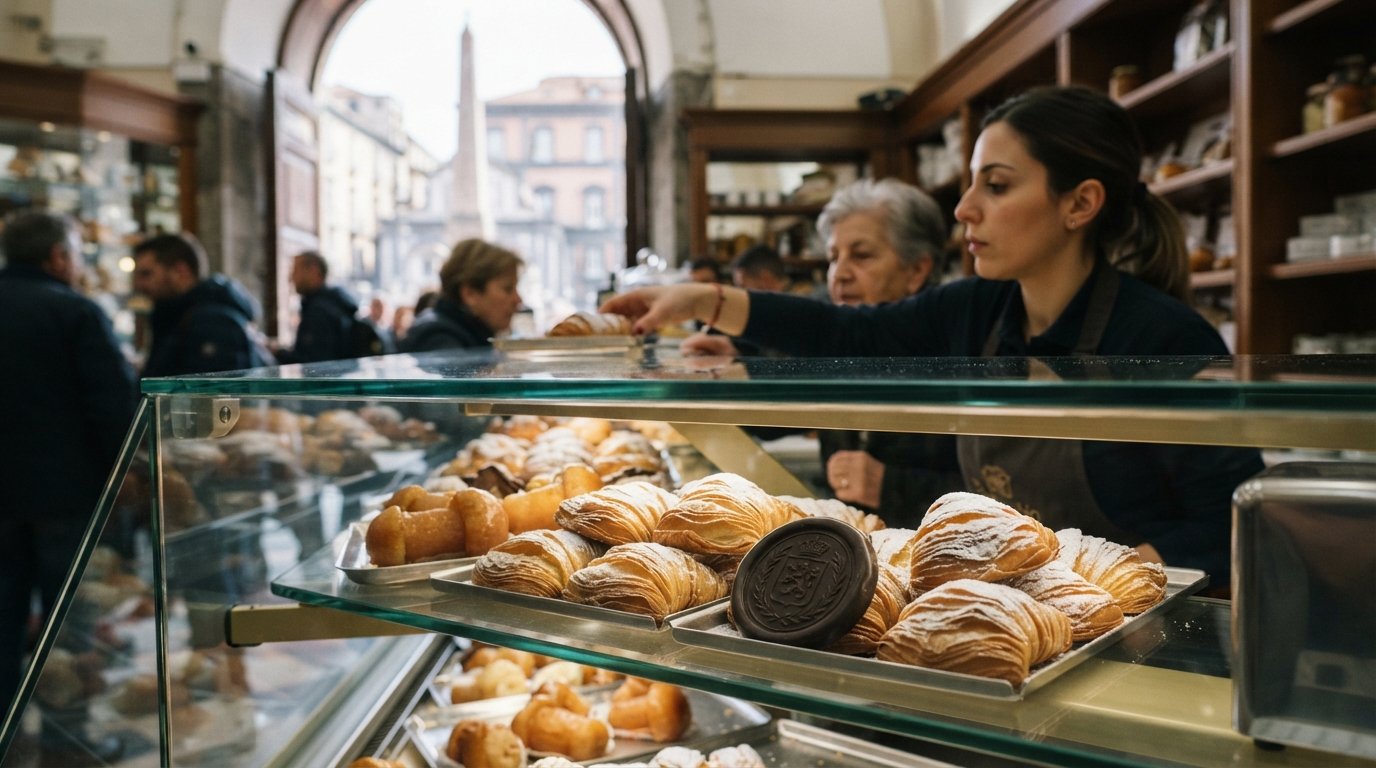
Finish sweet at Scaturchio on Piazza San Domenico Maggiore, open since 1905. Order a warm sfogliatella and, if you like a bit of old-city theatre with your sugar, the chocolate-and-liqueur ministeriale medallion invented here. The pastry case alone is worth the detour.
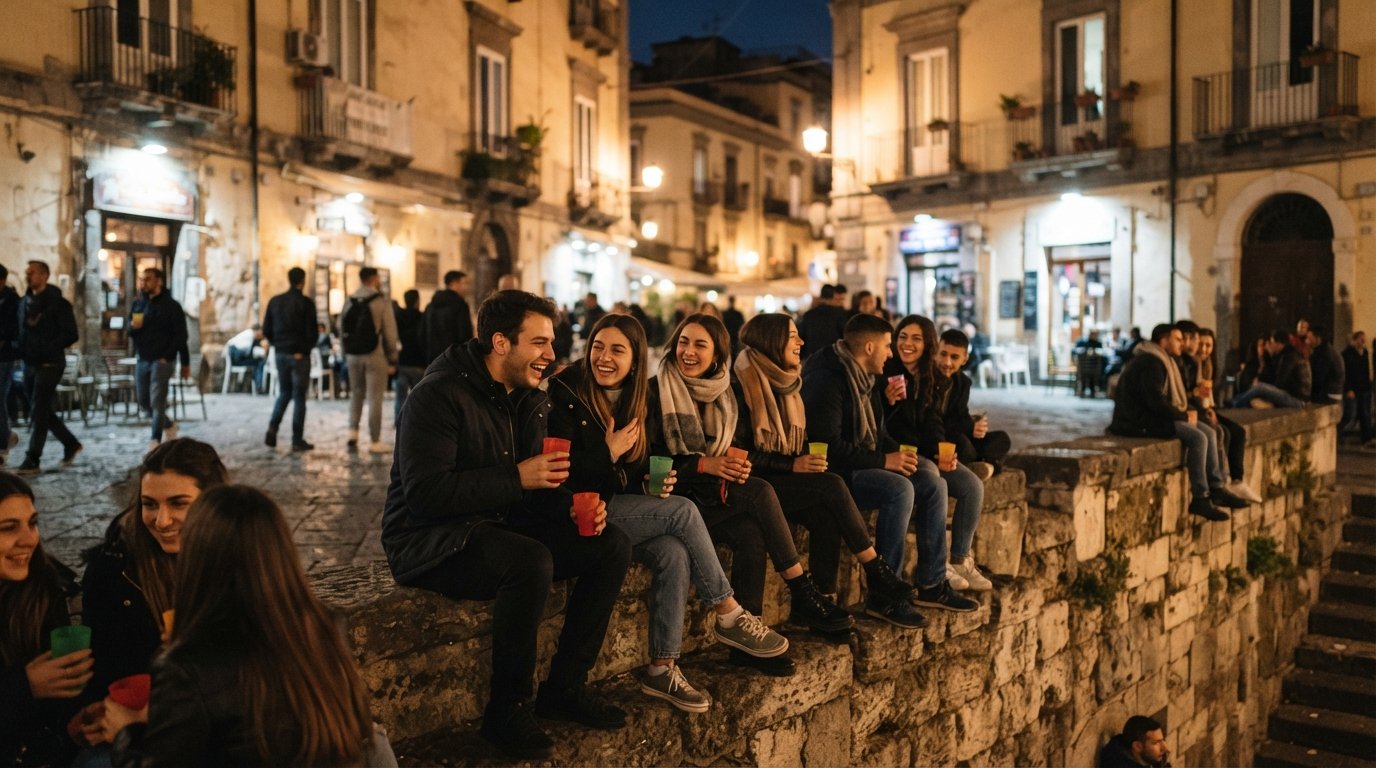
By early evening, the old town changes tempo. The students take over, the plastic cups come out, and the quarter turns into an open-air bar with no roof and very little shame. The gravitational centre is Piazza Bellini, ringed by the music conservatory and the fine-arts academy, where by nine on a warm night hundreds of twenty-somethings sit on the ancient Greek walls in the middle of the square with drinks bought from the bars around the edge. It is not a club district. That is the point. Nobody is hiding behind a door. Everybody is out in the street.
The institution here is Caffè dell’Epoca, better known as Peppe Spritz, on Via Santa Maria di Costantinopoli. Aperol spritz runs around two euros, Peroni bottles are cheaper still, and the whole place moves at a pace that keeps Piazza Bellini fuelled. It is cheap, loud, unpretentious, and exactly as functional as a neighbourhood bar should be.
If you want something a bit more composed, Spazio Nea is the grown-up move: an art gallery and bookshop with a leafy courtyard bar that programmes concerts and readings alongside cocktails and wine. It gives you a little breathing room without leaving the neighbourhood’s social current.
For a smaller, more crafted drink, duck into Ex Salumeria - La Bottega del Rum on Vico Pazzariello. It is a matchbox-sized bar where every drink is built on house-infused rums, made to your taste on the spot for around eight euros. That is the sort of detail Naples does well: a tiny room, one serious idea, no fuss.
Piazza San Domenico Maggiore gives you a second, slightly calmer open-air option nearby, if you want to keep drinking but not quite in the Bellini crush. None of this is about velvet ropes or DJ mythology. It is about spilling into the street and staying there long past midnight.
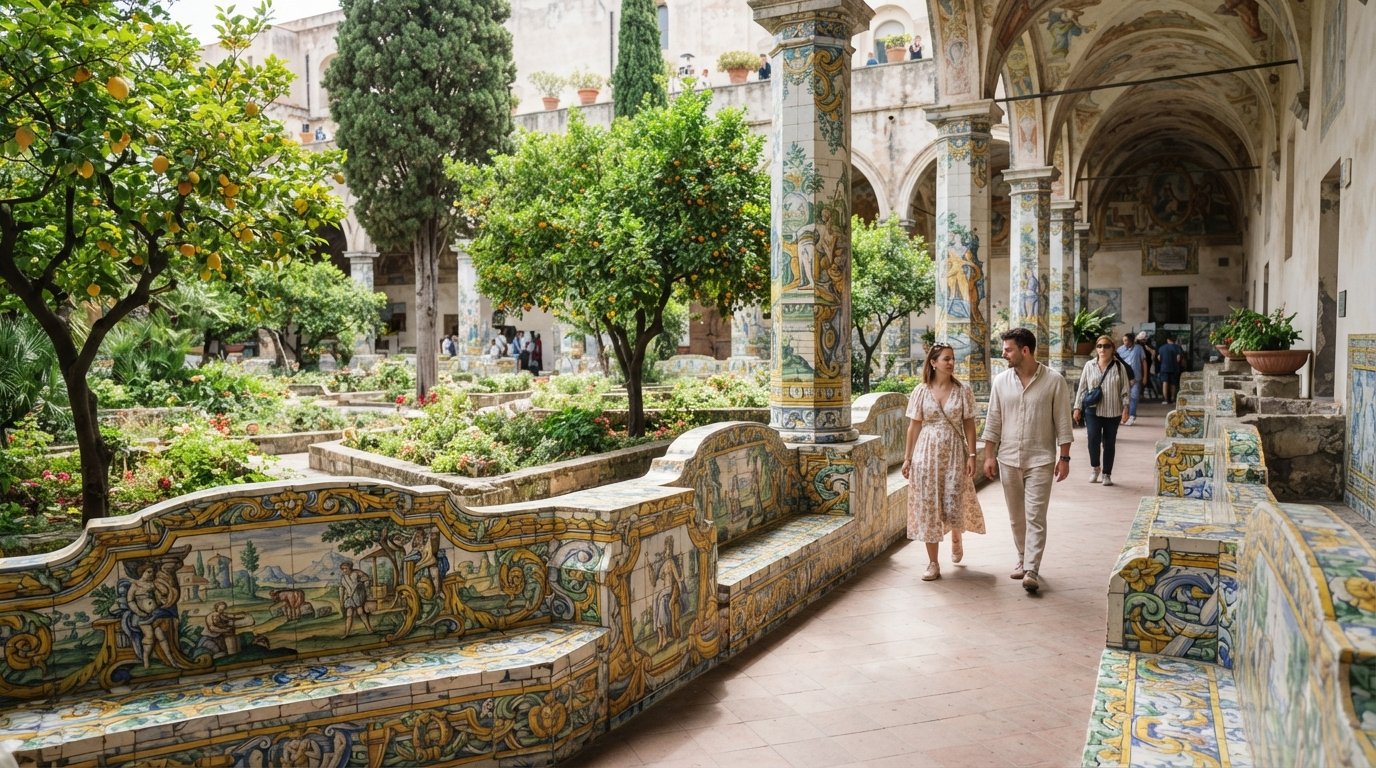
Give yourself a full day and barely leave a few hundred metres. Start with the big one: Cappella Sansevero on Via Francesco De Sanctis 19/21. It is open daily except Tuesday, roughly 9am to 7pm, around 10 euros, and timed online tickets are essential. Go early, because the chapel sells out days ahead and the Veiled Christ deserves your full attention, not a rushed shuffle. Then step back into the street and let Spaccanapoli do the rest. Pause at the Complesso Monumentale di Santa Chiara, where the majolica-tiled cloister gives you a rare patch of green and quiet, then continue to the Gothic Basilica di San Domenico Maggiore, a church with its own square and a serious collection of Neapolitan painting and sculpture.
From there, go below ground with Napoli Sotterranea. The guided tours leave hourly from Piazza San Gaetano 68 on Via dei Tribunali, cost about 15 euros, and take you down through Greek-Roman cisterns and WWII shelters. It is one of the few experiences in the city that makes the layers of Naples feel physical rather than theoretical.
Back above ground, the Duomo di Napoli is free to enter and worth the time even if you are not chasing relics. The Treasure Chapel of San Gennaro is the centre of gravity, but the whole cathedral carries the city’s devotional muscle. Next door, Basilica di San Lorenzo Maggiore layers a Roman market beneath its cloister, which is exactly the sort of thing Naples does without making a fuss about it. Then wander Via San Gregorio Armeno, open all year even if the artisans are busiest from September, and watch the nativity figures multiply into footballers, saints, politicians and whatever else the city is arguing about this season.
Sansevero Chapel Museum
Via San Gregorio Armeno
Spaccanapoli street artery
Wear real shoes. The basalt cobbles are not decorative; they are a test. And keep your head up, because the best parts of Centro Storico are often the things hanging over you: laundry, balconies, saint cards, neon, the next church front, the next oven, the next argument.
Shopping in Centro Storico is not about labels. It is about craft, repetition, and the pleasure of buying something made a few metres from where you are standing. Via San Gregorio Armeno is the obvious headline, a lane of family workshops turning out presepe nativity scenes, terracotta shepherds, tiny fishmongers, food stalls and the running gag of celebrity and footballer figurines. It is on sale every month of the year, not just at Christmas, and that is important: the street is not a seasonal trick but a living workshop.
Around Piazza Bellini and Via Port’Alba, second-hand and antiquarian bookstalls line the street beneath the old city gate, a reminder that this quarter still belongs to students as much as pilgrims. Just off Piazza Bellini, Via San Sebastiano remains the traditional street of musical-instrument shops, which feels exactly right beside the conservatory next door. For everyday food shopping and street eats, the sprawling Pignasecca market sits a short walk west in Montesanto rather than in the centre proper, but it belongs to the same practical city rhythm.
Elsewhere, the small specialist shops do the work: coral and cameo jewellers, religious-goods stores near the Duomo, pasticcerie selling sfogliatelle to take away. It is not a designer-boutique district, and thank God for that. Buy something with hands on it.
Stay here for atmosphere and proximity. From the right street you are five minutes’ walk from Spaccanapoli, the Via dei Tribunali pizzerias, the Veiled Christ and the Duomo, which is a hard thing to beat if you want to be inside the action rather than commuting to it. The best fit is a boutique B&B or small design hotel inside a restored palazzo: high ceilings, tiled floors, and a courtyard that takes the edge off the street noise. That courtyard matters. This is the loudest quarter in Naples, and if you sleep lightly, you need to plan accordingly.
Pockets near Piazza Bellini and Piazza San Domenico Maggiore put you closest to the evening scene; streets nearer Via Duomo are a touch calmer. Prices skew mid-range and good value for how central you are, and in that sense Centro Storico beats the seafront grand hotels and polished apartments elsewhere in the city. If you want the sights on your doorstep and do not mind a lively, chaotic soundtrack, this is the place.
Our best-rated stays in this neighbourhood. Prices are approximate “from” rates — confirmed at the provider when you continue. We may earn a commission if you book through our partners — at no extra cost to you.
In this area In this area
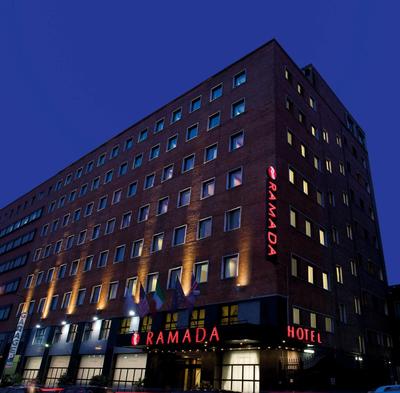 In this area
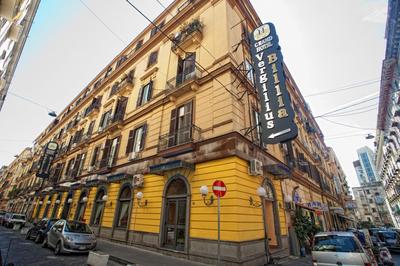 In this area
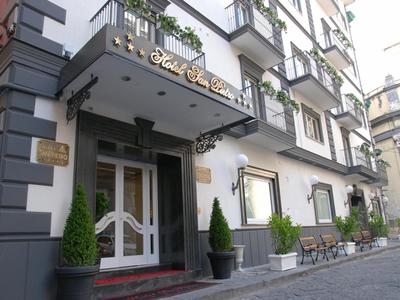 In this area
 In this area
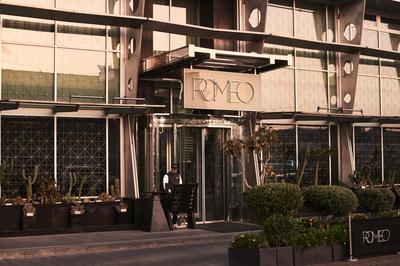 In this area
 In this area
 In this area
The Centro Storico is made for walking and effectively closed to cars — a web of pedestrian lanes and ZTL zones where a scooter is the only sensible engine. Once you are in, you walk everywhere. That is not romantic nonsense; it is the only way the quarter makes sense. Download an offline map, because GPS goes haywire in the deep, narrow lanes.
The most useful Metro Line 1 stations are Dante and Museo, both a short walk from the western end of the historic centre, with Cavour on Line 2 handy for the Duomo end. A single ANM ticket is about 1.50 euros and covers 90 minutes across metro, funicular and bus. Line 1 also links you to the celebrated Toledo art station and up to Vomero if you need to move beyond the old town.
For arrivals, Napoli Centrale / Garibaldi station is two metro stops or a 15-20 minute walk east, and it is the hub for Circumvesuviana trains to Pompeii and Herculaneum and ferries from the nearby port. Naples International Airport (Capodichino) is only about 15-20 minutes away by taxi, with fixed city-centre fares applying, or by the Alibus airport shuttle.
Gallery
Yes, if you want to be in the thick of it. You are within a short walk of Spaccanapoli, the Via dei Tribunali pizzerias, the Veiled Christ and the Duomo, and it is generally cheaper than the seafront. The catch is noise — this is the liveliest, loudest quarter in the city — so choose a courtyard-facing room in a restored palazzo and bring earplugs.
Via dei Tribunali is the pizza street. Gino Sorbillo at no. 32 is the classic queue for a benchmark Margherita, Antica Pizzeria Di Matteo at no. 94 is the place for fried pizza a portafoglio and frittatine, and Antica Pizzeria Port’Alba on Via Port’Alba claims to be the world’s oldest. Expect to wait at the famous names, especially at weekends — join the queue rather than settling for a tourist-menu spot.
Yes. Cappella Sansevero sells timed-entry tickets online only, and they routinely sell out days ahead in summer. Book before you travel, note that the chapel is closed on Tuesdays, and remember photography is not allowed inside.
It is lively and generally safe, with crowds and a visible police presence, and the student nightlife around Piazza Bellini runs late in a friendly spirit. Take normal big-city precautions against pickpocketing in the busy lanes and on the metro — keep your bag in front of you and don’t wave your phone around — and you will be fine.