 In this area
The Naples issue
Materdei, Naples: pizza, ossuaries and a hill that still feels lived-in
A steep, stubbornly local hill quarter above Naples’ centro storico, where Starita’s queues, the Fontanelle ossuary and a Mendini metro station tell the whole story in one walk.
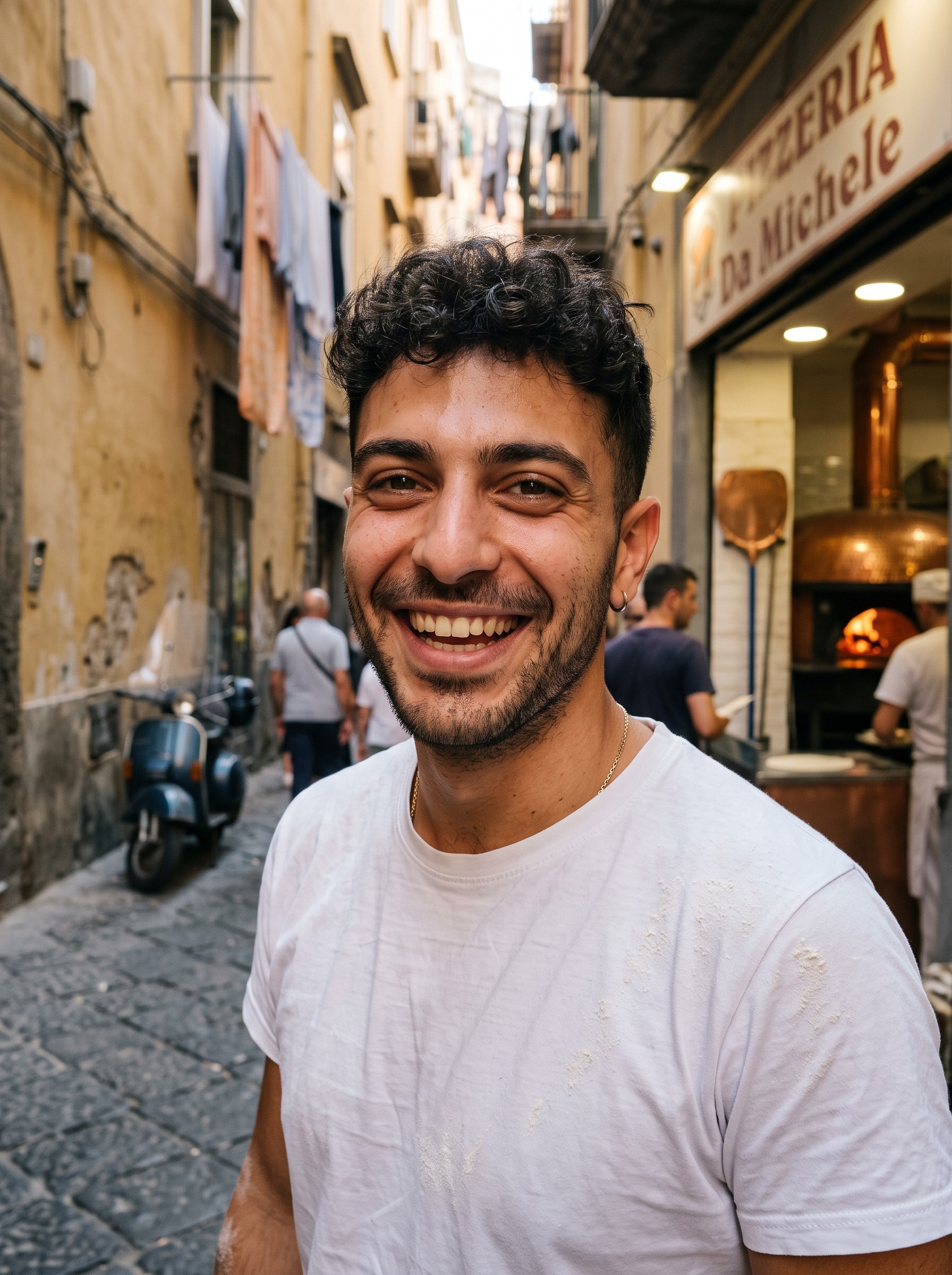
By Gennaro EspositoPizza queues and two-euro cuoppi, at full volume
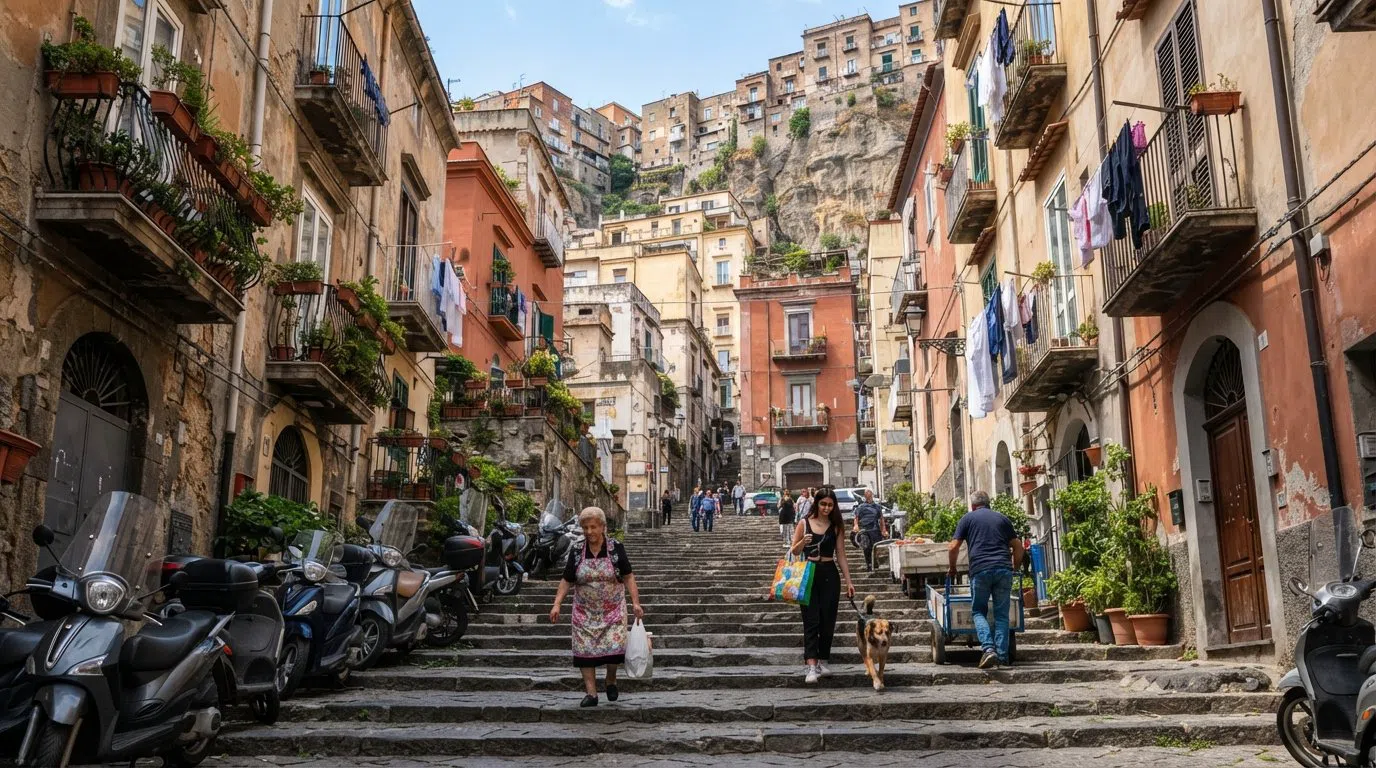
Materdei starts with a queue and ends underground. On Via Materdei, outside Starita, people stand around waiting for a pizza that has had more than a century to earn the crowd, while a few streets away the entrance to the Cimitero delle Fontanelle opens onto one of the strangest and most moving spaces in Naples: a former quarry packed with the bones of the anonymous dead. That contrast is the whole neighbourhood in miniature — loud and domestic on top, solemn and subterranean below, with laundry on the line, balconies talking back and forth, and the hill itself forcing you to notice every step.
What Materdei is known for
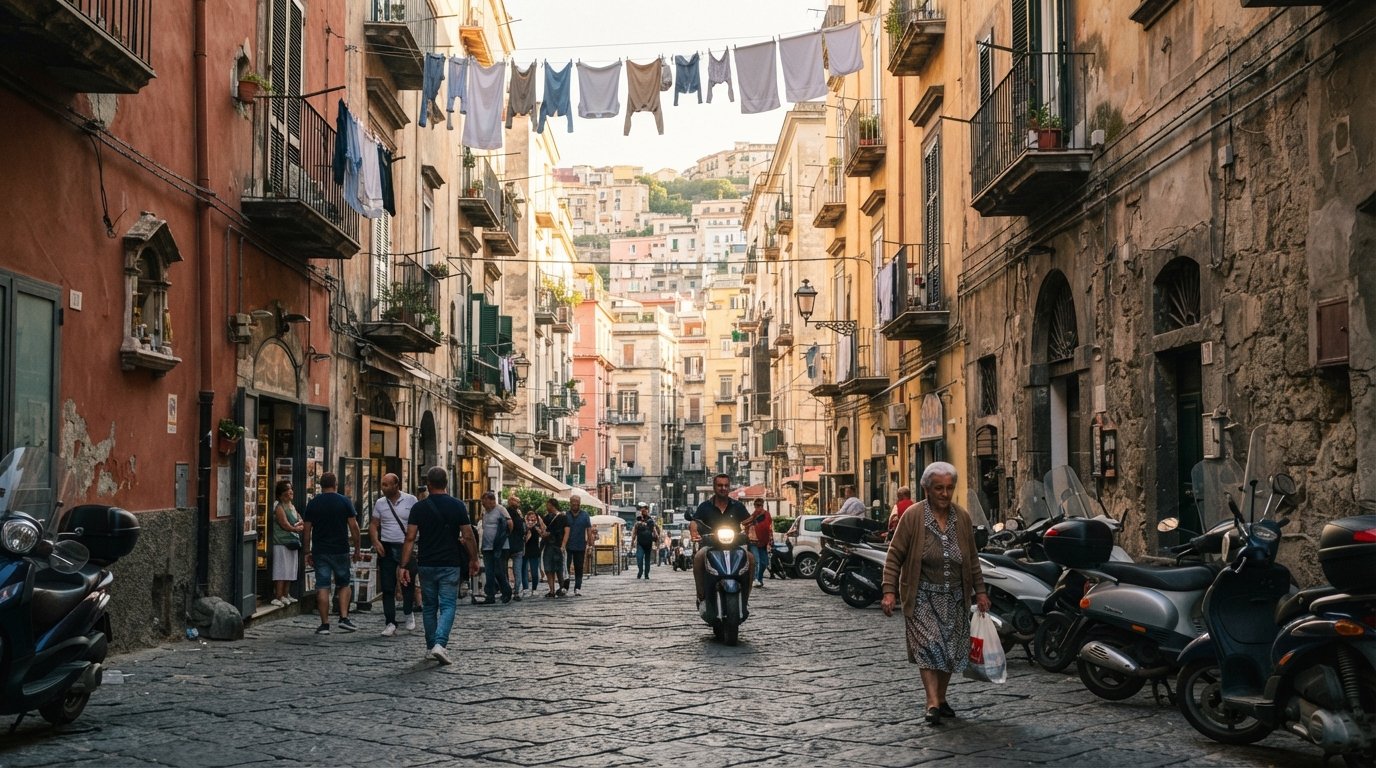
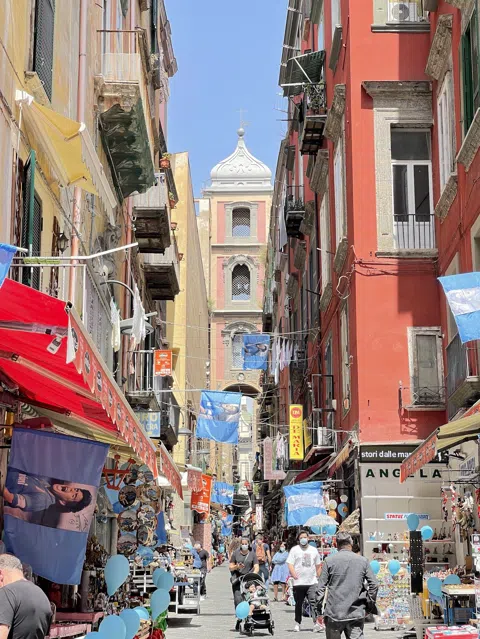
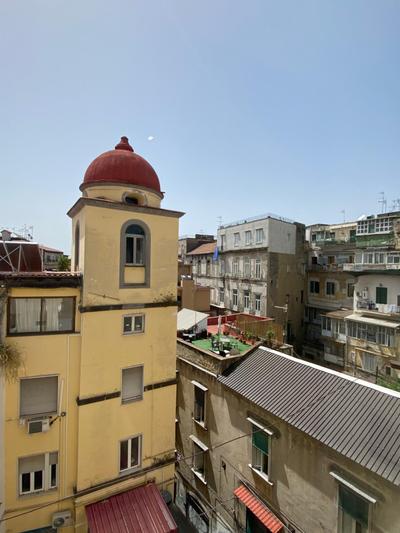
Materdei sits on the tuff shelf above the historic centre, and it feels exactly like a place built on rock and memory. The neighbourhood is not polished, and it does not pretend to be. It is residential Naples with the tourist volume turned down: old men outside the bar, kids kicking a ball against church walls, the smell of ragù drifting from open windows around one o'clock, scooters threading the lanes while neighbours call across the street from their balconies. It is also stacked. There is an older lower section near the metro and a newer upper part built after the war, which means stairs, ramps, sudden viewpoints and a daily reminder that Naples is a city of levels, not just streets.
Two things put Materdei on the map, and they are not remotely alike. The first is pizza. Starita a Materdei, founded in 1901, is the name that made this street travel-famous, and it still pulls people uphill for a pie that means business. The second is what lies beneath the neighbourhood: the Cimitero delle Fontanelle, a vast ossuary inside an old tuff quarry, where the bones of tens of thousands of poor and plague-dead Neapolitans were once tended in the cult of the abandoned souls. That mix — famous dough above, anonymous dead below — gives Materdei a gravity that a normal neighbourhood guide can’t fake. It is one of the few places in Naples where you can eat a genuinely famous pizza, tour a subterranean ossuary and still hear the ordinary noise of a working quarter all within a ten-minute walk.
The other landmark that quietly defines the place is the Materdei metro station, part of Naples’ Metro dell’Arte. Designed by Alessandro Mendini and opened in 2003, it is not just a stop but a small public art argument: a Sandro Chia mosaic, work by Luigi Ontani and Sol LeWitt, and a colourful glass spire that pedestrianised Piazza Scipione Ammirato. It says something about Materdei that one of its signatures is a station. This is not a neighbourhood that performs for visitors; it is a neighbourhood people pass through on the way to work, home, school and dinner.
Plan your Naples trip
Live prices from our booking partners.
Guests & rooms
Free cancellation on many rooms. We may earn a commission when you book.
Where to eat & drink
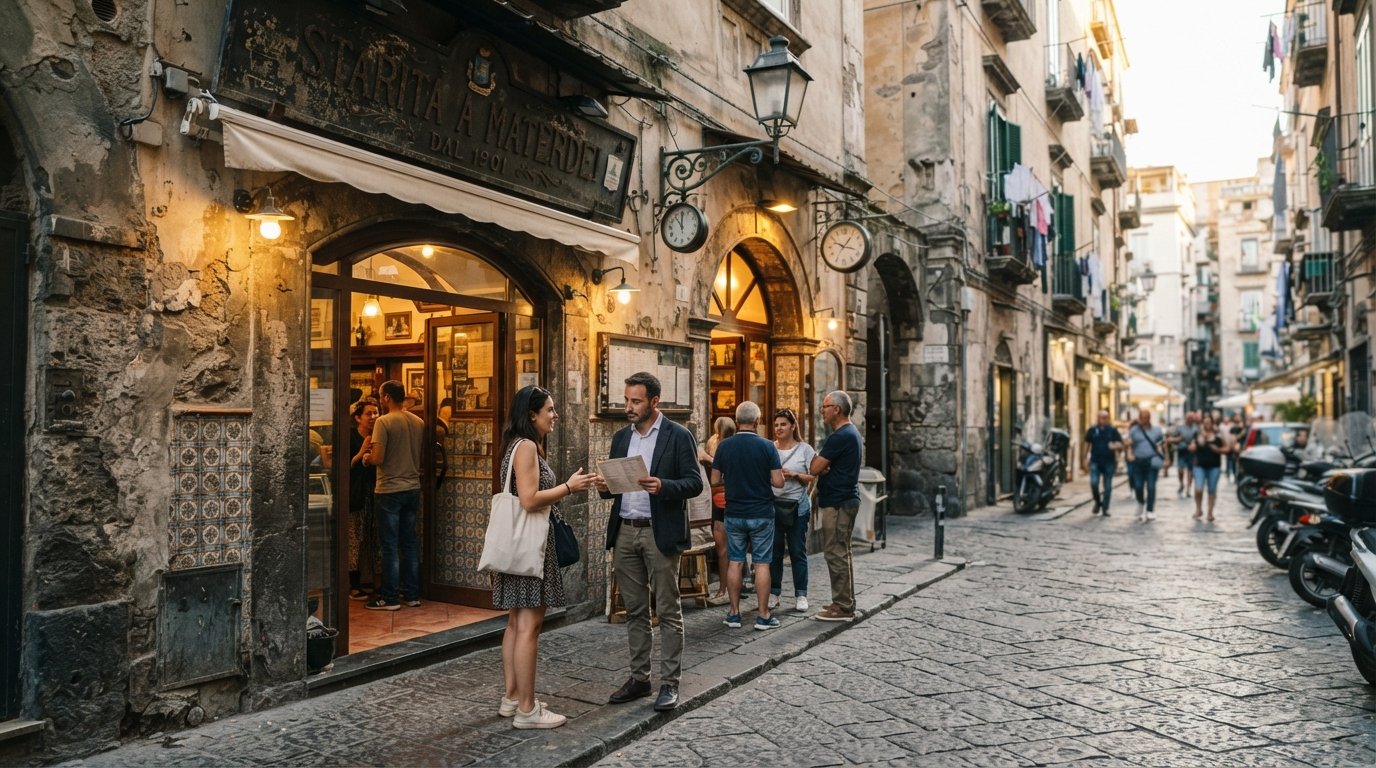
If you come to Materdei hungry, begin with Starita a Materdei at Via Materdei 27, because there is no reason to pretend otherwise. Alfonso Starita opened here as a wine cellar in 1901, and the family line has carried it forward into the era of pizza pilgrimage. It is one of those places where the queue is part of the ritual, and the ritual is worth it. Starita is tied to the birth, more or less, of the modern montanara — dough deep-fried, then finished in the wood oven with tomato, provola and basil — and even the 1954 De Sica film L’oro di Napoli leaned on the pizzeria’s staff for its frying scenes. They still tell the story of meeting Sophia Loren. That is the sort of detail Naples keeps because it knows when a story has earned its place.
A few doors down at Via Materdei 2, Antica Pizzeria La Centenaria keeps the scale tighter and the mood more intimate: about seven tables, a room so small that your neighbours are basically part of the menu. The specialty here is pizza fritta, the folded, fried pocket that is one of Naples’ most democratic pleasures. This is not a place for ceremony. It is for eating hot, practical, deeply local food without a speech about provenance. That is the charm.
For something slower and more tavern-like, Cantina del Gallo on Via Alessandro Telesino is the real deal: a Silvestri-family osteria run by four generations since 1898, and one of the last real outdoor taverns in the city. This is where you sit with honest wine and plates of pasta e patate or the house rustic pizza cafona, and nobody pretends the room is anything but what it is. Naples has plenty of places that look rustic for the camera. Cantina del Gallo is not one of them. It is rustic because it has been doing the work for over a century.
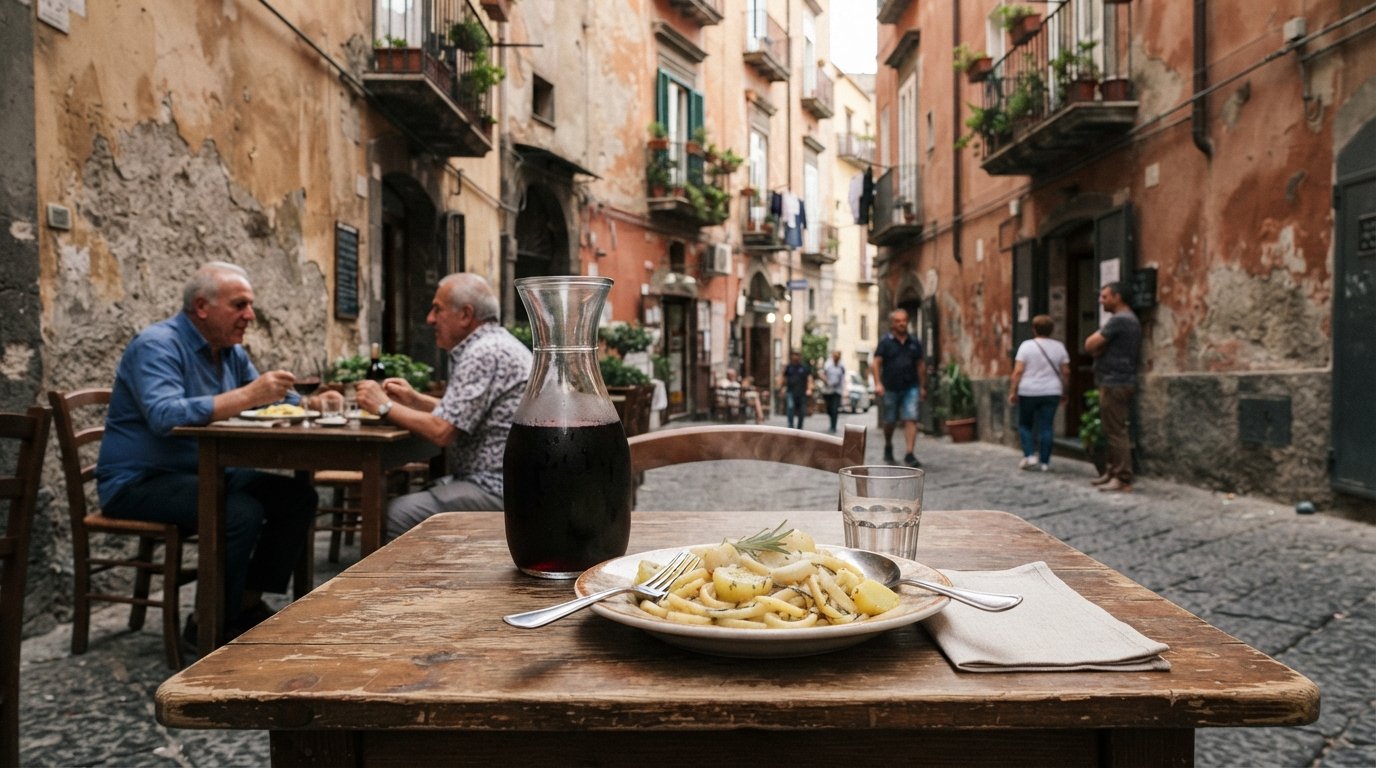
Mornings belong to Bar Materdei on Via Materdei, a plain caffetteria where locals take espresso, cappuccino and cornetti away from the tourist crowds. This is the kind of bar that tells you more about a neighbourhood than a glossy opening ever could. Stand at the counter, pay your euro, and watch the day start. That is Materdei in miniature: no performance, just the correct cup at the correct hour.
Going out
Materdei is not a nightlife district, and thank God for that. Its evenings are quieter, neighbourhoody, and built around the old Neapolitan idea that a night out does not need a soundtrack bigger than the street. You can have a long dinner at Cantina del Gallo with a carafe of house red, take a passeggiata through the piazza, then stop for a nightcap at a corner bar. That is the scale here. The real movida lives downhill in Piazza Bellini and the student lanes of the centro storico, or further across town in the baretti of Chiaia if you want something dressier. Materdei is where you come back to after the noise.
The practical catch is transport. Line 1 stops running around 11pm, so if you stay out late in the centre you are either walking back uphill or taking a taxi. That matters. Materdei is not the place for a club crawl until dawn on your doorstep. It is the place for people who like their evenings to end with a proper walk home through real streets, under real balconies, with the city finally lowering its voice.
Things to do / what to see
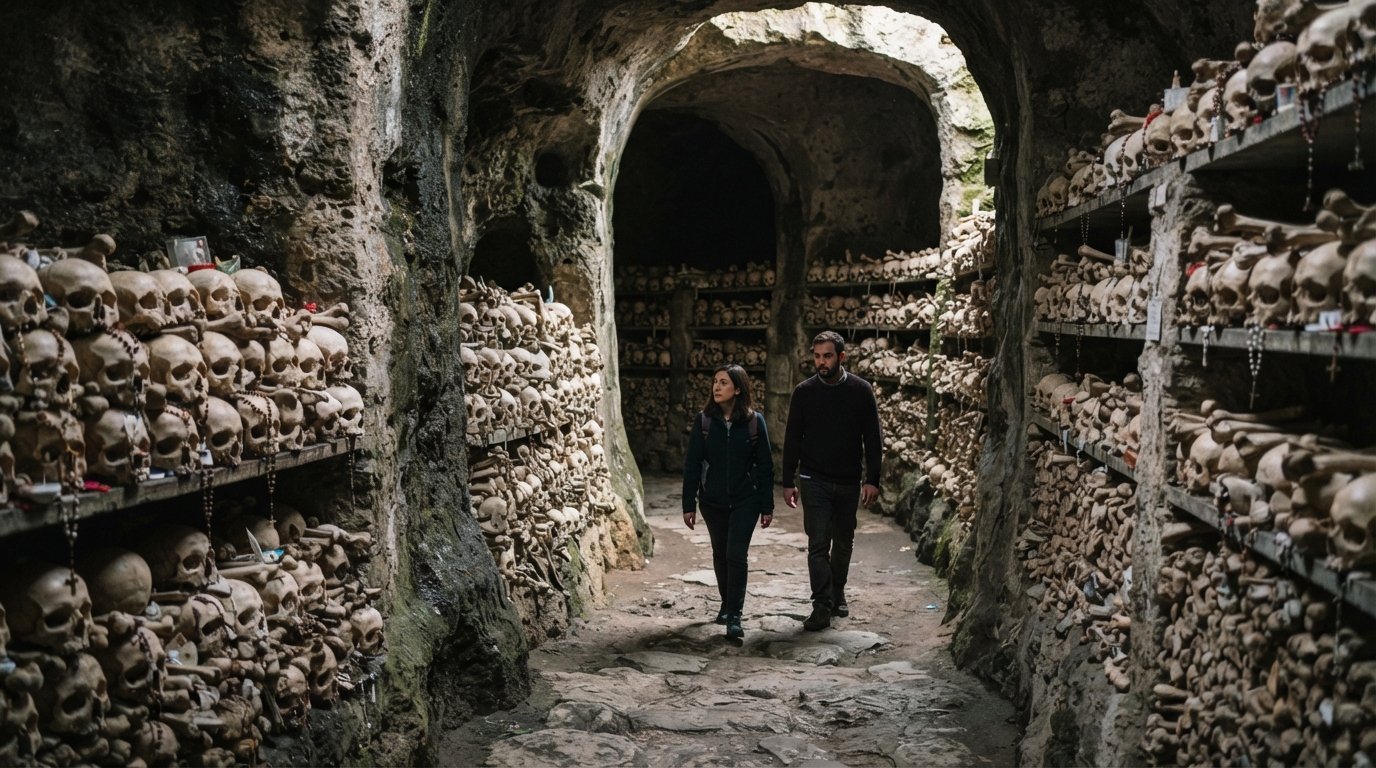
Start underground, because that is where Materdei’s most extraordinary story sits. The Cimitero delle Fontanelle at Via Fontanelle 80 is an enormous ossuary carved into a former tuff quarry, reopened to the public in 2026 after a long closure. Entry is a few euros, and reservation is advised. The space is not polished in the museum sense; it is raw, vast and deeply Neapolitan in the way it treats the dead as part of the civic landscape. For more than a century, the bones of the anonymous poor were tended here within the cult of the abandoned souls, a folk devotion that made the quarry into something between cemetery, shrine and social archive. You do not go there for a cheerful hour. You go because Naples has always understood that its underground is not an add-on; it is a second city.
From there, it is a ten-to-fifteen-minute downhill walk into the neighbouring Rione Sanità, where the Catacombe di San Gaudioso sit beneath the Basilica di Santa Maria della Sanità. These are the second-largest catacombs in Naples, and they are worth the descent for the early-Christian frescoes alone, let alone the macabre schiattamorti burial niches. They are run by the local youth cooperative that has helped regenerate the quarter, which matters because in Naples the best heritage projects are often also social ones. The walk between Materdei and the Sanità is part of the experience: a shift from one lived-in quarter to another, with the city’s layers changing under your feet.
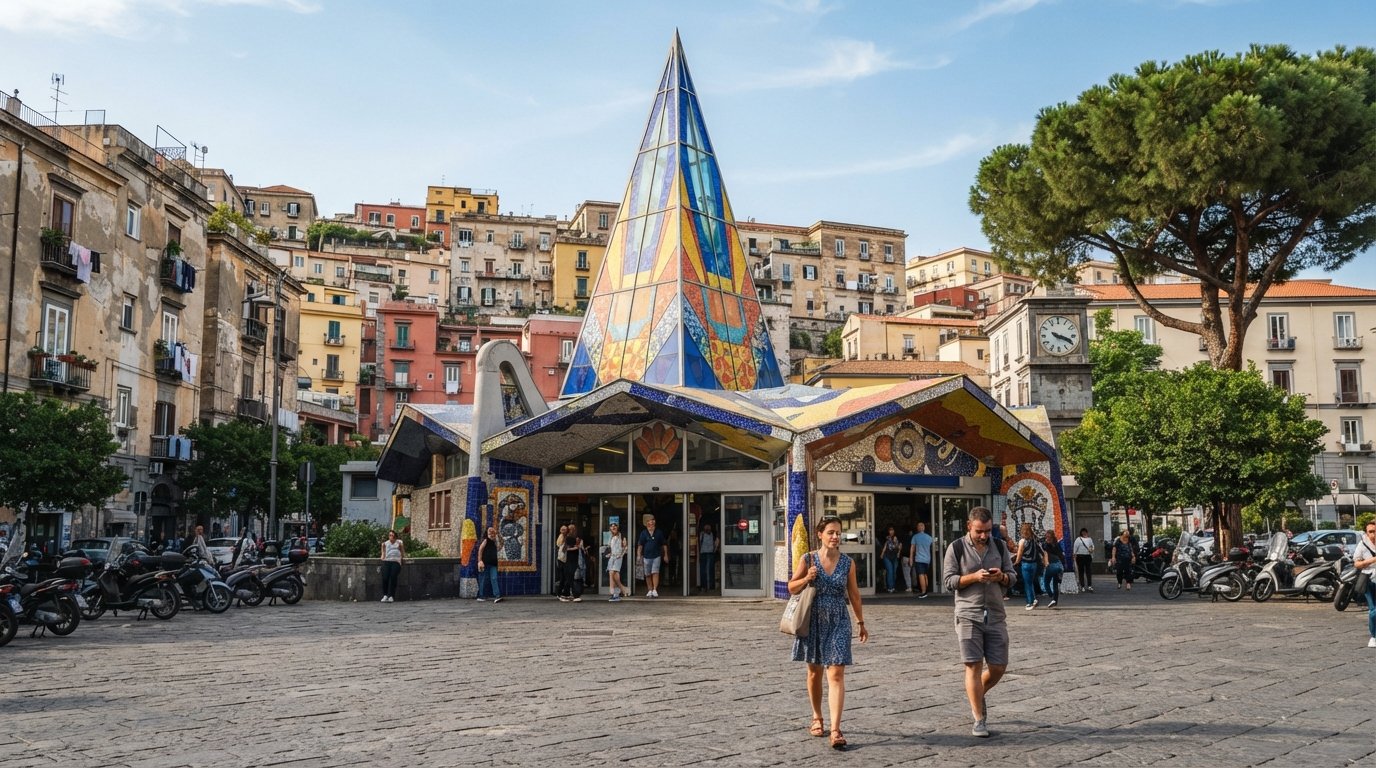
Back above ground, the Materdei metro station deserves a proper look, not just a passing swipe of the metro card. As one of the Metro dell’Arte stations, it was designed by Alessandro Mendini and opened in 2003, and it holds a Sandro Chia mosaic, work by Luigi Ontani and Sol LeWitt, plus that colourful glass spire that helped pedestrianise Piazza Scipione Ammirato. It is a station, yes, but also a little civic manifesto about how Naples can turn infrastructure into art without losing its street sense.
If you want a bigger museum hit, the Museo Archeologico Nazionale di Napoli is a short walk downhill from Materdei and gives you the Farnese marbles and the finds from Pompeii and Herculaneum. It is one of those places that makes the city’s archaeology feel immediate rather than abstract. From Materdei, it is close enough to fold into the same day as the Fontanelle and lunch, which is a very Neapolitan way to travel: dead, art, pizza, coffee, repeat.
Don’t miss in Materdei
Materdei Metro Station art
Piazza Scipione Ammirato
Historic local bakeries
Shopping & markets
Materdei is not a shopping quarter, and that is exactly why it works. There are no designer streets here, no boutique parade, no glossy retail theatre. What you get instead is the everyday commerce of a real neighbourhood: the fruttivendolo with crates spilling onto the pavement, the butcher, the tabacchi, the corner bakery, the hardware shop that has been there for decades. That is not a consolation prize. That is the point. If you want a city that still buys its fruit from a person who knows your face, Materdei is still that kind of place.
For a proper market, head downhill toward Montesanto and the Pignasecca, Naples’ oldest street market, where fish, produce and fried street food spill into the lanes a short walk or one metro stop below. If you have a sweet tooth, keep going into the adjacent Sanità for Pasticceria Poppella on Via Arena della Sanità, the bakery that invented the fiocco di neve, a soft brioche bun filled with delicate milk cream and dusted with icing sugar. That is one of those pastries that gets copied because the original is so simple and so right.
Where to stay in Materdei
Materdei makes sense for travellers who want a quieter, better-value base and do not mind using the metro or walking downhill to the main sights. The sweet spot is around Piazza Scipione Ammirato and the streets close to the Materdei metro station, where you get the fastest Line 1 link into the centre without sacrificing sleep. Accommodation here tends to be B&Bs, guesthouses and apartments rather than big hotels, and prices generally sit lower than in Chiaia, Santa Lucia or the busiest parts of the centro storico.
The hill matters. Materdei is stairs and steep lanes, not a place for wheeled luggage optimism. If you have heavy bags or mobility concerns, ask about lifts and how many steps lead to the door. Streets nearer the station and the main piazzas are the most practical; the deeper you go toward the Fontanelle, the more residential and remote it feels. That can be lovely if you want to live like a local, less lovely if you want to stumble straight out into the action at midnight.
Choose Materdei if you want to feel local and sleep well. Choose the centro storico or Chiaia if you want the city to perform itself at your doorstep.
Hotels in Materdei
Our best-rated stays in this neighbourhood. Prices are approximate “from” rates — confirmed at the provider when you continue. We may earn a commission if you book through our partners — at no extra cost to you.
In this area In this area
 In this area
Getting around
Materdei’s own Line 1 metro station is the key to the neighbourhood. It is two stops to Museo, where you can connect for the Archaeological Museum and Line 2, and two stops to Dante in the historic centre. The full Line 1 loop takes around 33 minutes end to end, with trains roughly every 9 to 14 minutes. That makes Materdei practical in a very Neapolitan way: not effortless, exactly, but manageable if you understand the terrain.
The catch, again, is the clock. Line 1 stops running at about 11pm, so late nights need planning. On foot, the centro storico, the Sanità and the Museo are all a downhill 10 to 20 minutes away — easy going down, a proper climb coming back. For the airport at Capodichino, the metro does not reach it yet; the simplest option is the Alibus shuttle from Naples Central / Piazza Garibaldi, so budget for a taxi or a downhill trip to the station first.
Within Materdei itself, expect to walk everywhere on stairs and ramps. Wear proper shoes. Travel light. This is a neighbourhood that rewards people who can handle a hill and a good meal without needing a lift for every move.
Gallery
Materdei in pictures
Materdei — your questions
Is Materdei a good area to stay in Naples?
Yes — if you want a quieter, local, better-value base and you are happy to use the metro or walk downhill for the sights. It feels properly residential, you have Starita on the doorstep, and the centre is only a short hop away. It is less ideal for a very short first trip, or if you do not want to deal with stairs and steep streets.
Is Materdei safe?
Broadly, yes. It is an ordinary lived-in Naples neighbourhood rather than a tourist zone, so it is calm most of the time. Use normal city sense, especially on quieter lanes and around the station late at night, but there is nothing here that makes it more risky than the rest of central Naples.
What is Materdei famous for?
Three things: Starita a Materdei, the century-old pizzeria that helped popularise the fried-then-baked montanara; the Cimitero delle Fontanelle, the huge ossuary carved into a tuff quarry with its long folk cult of the anonymous dead; and the Alessandro Mendini-designed Art Station on Metro Line 1, with works by Sandro Chia, Luigi Ontani and Sol LeWitt.
Can you visit Materdei without staying there?
Absolutely. It works well as a half-day or full-day neighbourhood: pizza at Starita, the Fontanelle, the metro station, then downhill to the Sanità or the Museo. But staying here gives you the real advantage — quieter nights, local life, and a base that feels like Naples rather than a postcard of it.