
The three straight decumani that organise the Centro Storico were surveyed by Greek colonists long before the Romans arrived, and nobody since has had the nerve to move them. Naples built upward instead, floor after floor, until the lanes became canyons that hold usable light for perhaps forty minutes at a stretch. November is when those forty minutes get long enough to plan a day around.
The Centro Storico has no gate and no single ticket. It is a square kilometre or so of working city, and most of what you photograph there is free, unticketed and largely indifferent to you. The paid stops are small and each sets its own rules: some welcome a lens, one bans it outright. The route below is built around the light rather than around a ticket, with the wider city context in the Naples guide.
The streets that hold the light
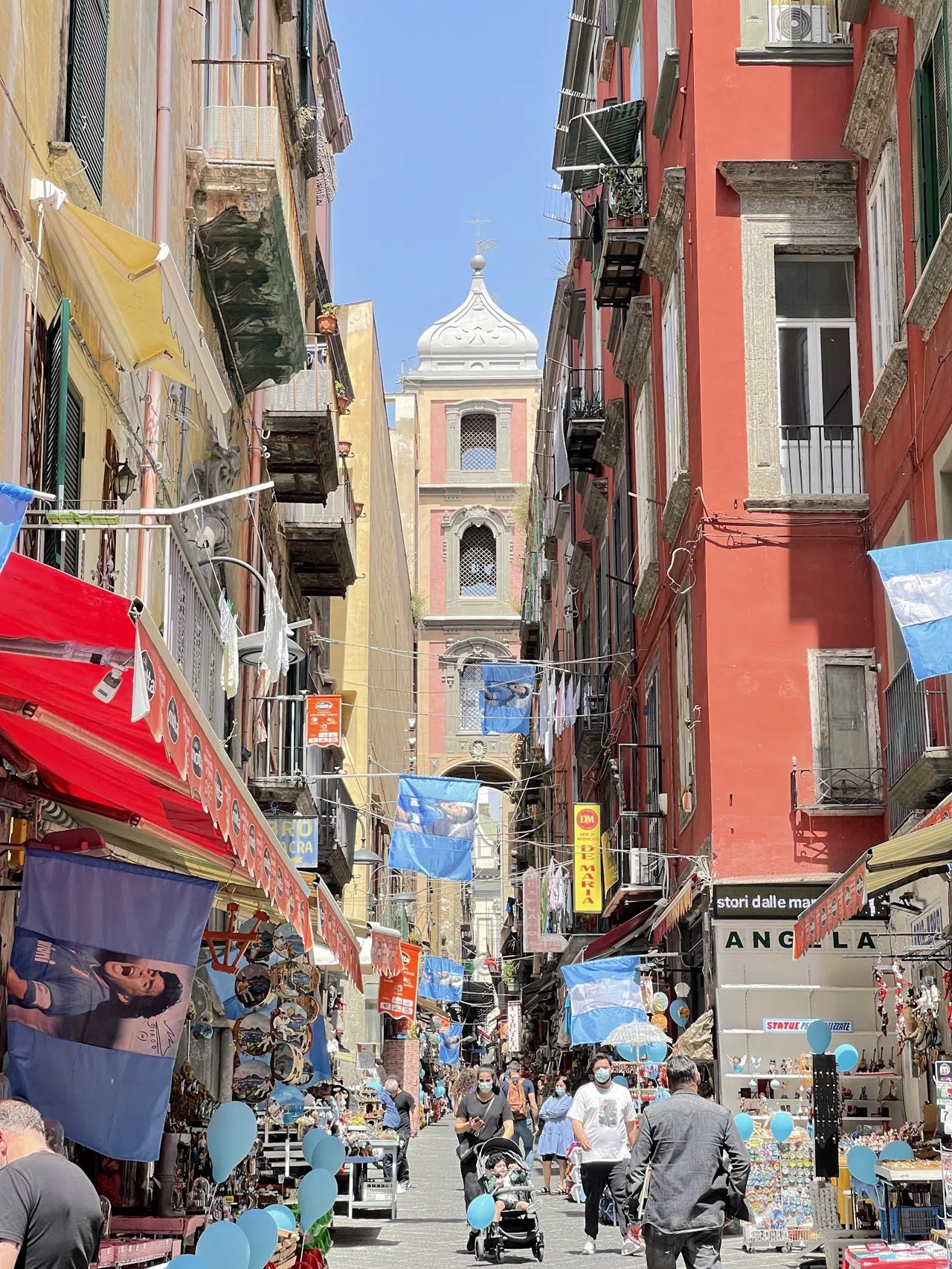
Spaccanapoli (Centro Storico, signed as Via Benedetto Croce and then Via San Biagio dei Librai) is the straight cut you can pick out from the hills above the city, and the most useful frame in the quarter. The street is narrow enough that the facades compress into each other, which means a long lens gives you a stack of balconies, washing lines and shop signs receding to a vanishing point. In November the sun sits low enough to rake along the axis for a good part of the morning rather than dropping in overhead at midday, which is the practical reason to come now instead of in July.
It is fully public and free, with no door policy and no opening hours. It is also pedestrian-heavy to the point of congestion, and scooters still use it. Guides handling a party will cluster people into doorways to let traffic past, which works, but it means a group of a dozen moves at about a third of the speed of a couple. If you are shooting seriously, walk it alone or in a pair.
Via San Gregorio Armeno (Centro Storico, running north off Spaccanapoli) is the artisan lane where the presepe workshops make nativity figures year-round and sell them hardest in winter. The 2026-27 presepe season runs from 17 November 2026 to 6 January 2027, and that date governs the month: from mid-November the workshops are lit and fully stocked, but December's shoulder-to-shoulder crush has not yet arrived. Figurines run from a few euro to several hundred depending on size and maker, and walking the lane costs nothing.
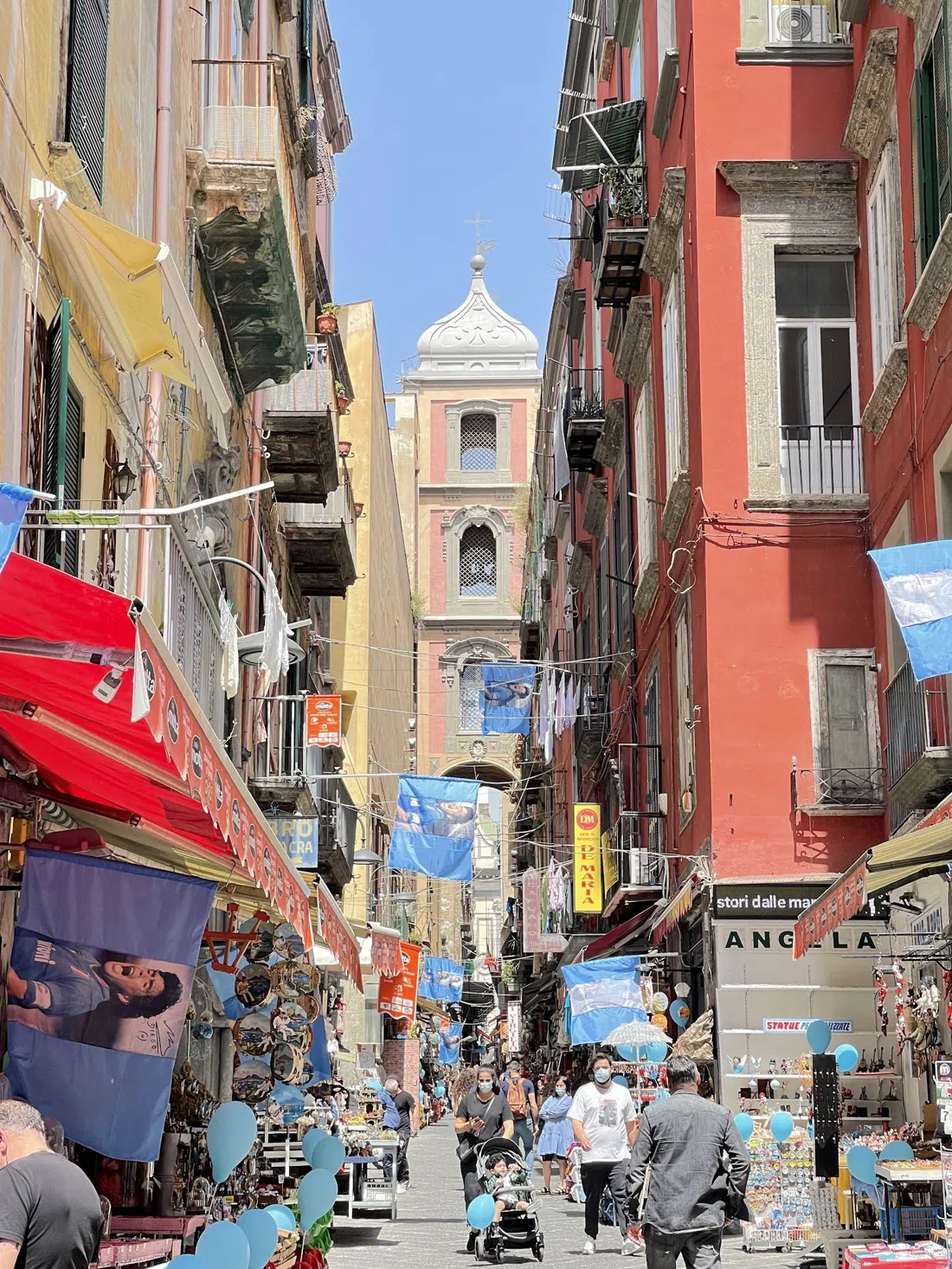
The lane is single-file in places. Walking groups run through it constantly and guides split parties into small clusters for exactly that reason. If you are in a group of more than six you will spend the visit apologising to people trying to get past; if you are two, you can stand still long enough to shoot a workshop interior from the doorway without blocking anyone.
Four interiors and the rule each one sets
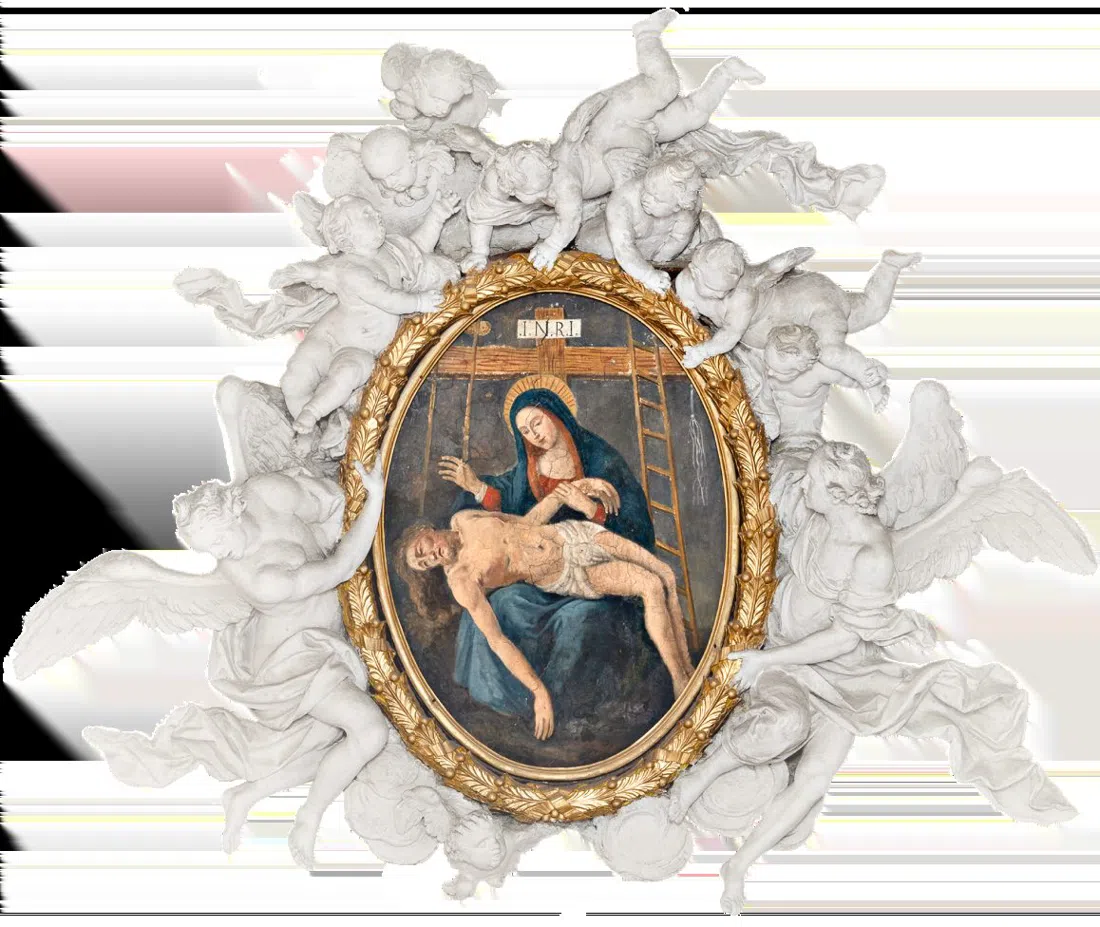
Museo Cappella Sansevero (Centro Storico, a short walk north of Spaccanapoli) is the one stop where the camera stays in the bag. Photography and video are banned outright, and the room is small enough that nobody gets away with it. Entry is timed and costs roughly €10-12 adult, around €7-8 reduced; it opens daily 9:00-19:00, closed Tuesdays, last entry 18:30. Groups have to be booked in advance and are capped, with large parties staggered across slots. Treat it as a break from shooting rather than a failure to shoot; it is a better visit without the viewfinder anyway.
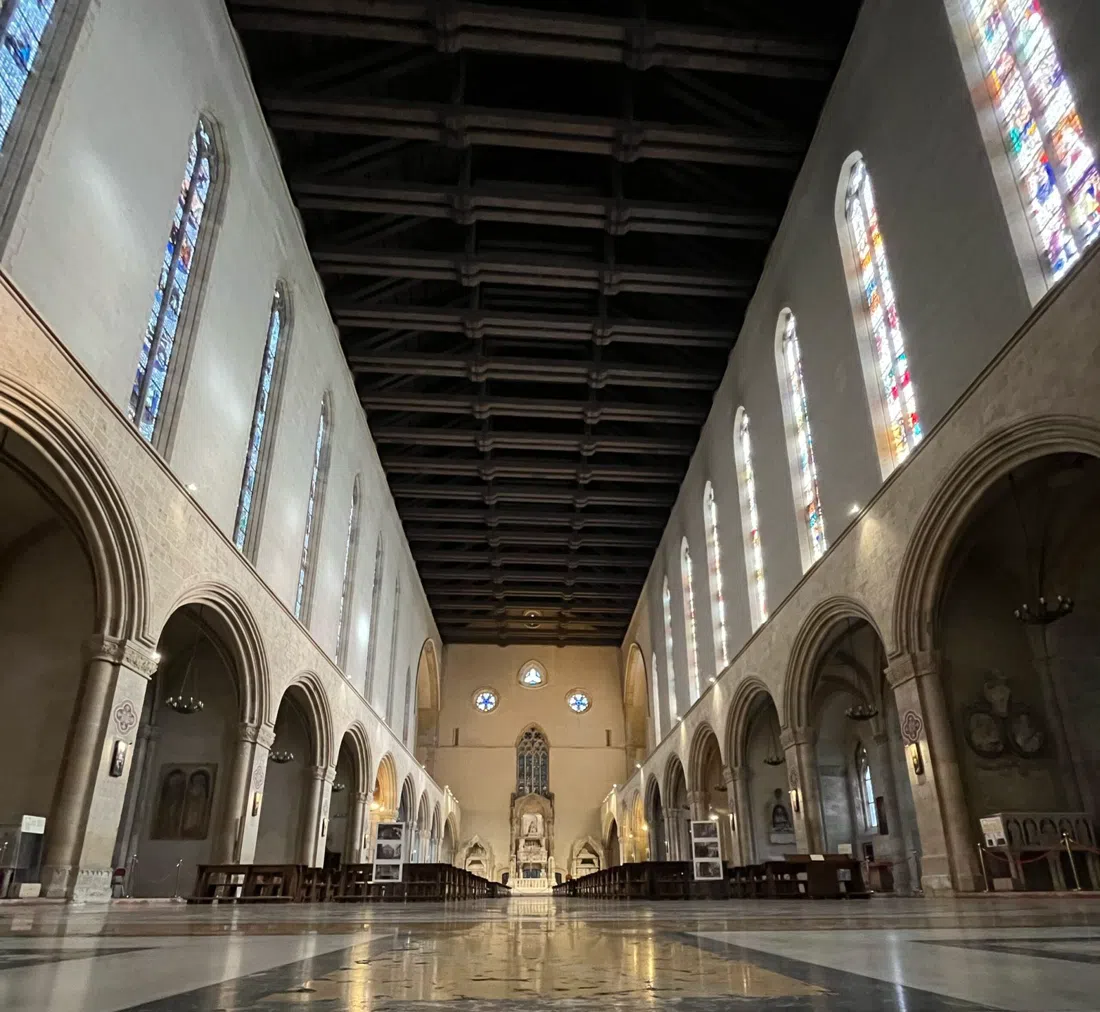
Complesso Monumentale di Santa Chiara (Centro Storico, Via Santa Chiara) gives you the opposite problem: too much colour. The majolica cloister, with its tiled octagonal pillars and painted benches, is the most saturated thing in the quarter and it will fight your exposure on a bright morning, so overcast November days render it better. The basilica is free; the cloister and museum are €7 full, €5 reduced, €4 for ages 7-17. Hours are Mon-Sat 9:30-17:00 and Sun 10:00-14:00. There is no online booking for individuals, so tickets come from the on-site desk only, and group leaders queue once for the whole party.
Pio Monte della Misericordia (Centro Storico, Via dei Tribunali) holds Caravaggio's Seven Works of Mercy above the altar it was painted for, which is a rarer thing than it sounds. Photography is permitted without flash, though some rooms vary, so ask at the desk rather than assume. Entry is €10 full, €8 reduced and for groups, €20 family. Open Mon-Sat 10:00-18:00 and Sun 9:00-14:30. The octagonal church is tight, so parties rotate through in waves; a group of twenty will be waiting as much as looking.
Duomo di Napoli and the adjoining Cappella del Tesoro di San Gennaro (Centro Storico, Via Duomo) enforce a dress code, shoulders and knees covered, and the chapel closes between 13:00 and 14:30 or 15:00, which catches out anyone shooting straight through the middle of the day. The cathedral itself is free, the chapel around €3.50, and the treasury museum roughly €15 with an audioguide or about €11 reduced. Groups are accepted, and guides routinely build the lunch closure into the route rather than fight it.
Naples and its dead
The Neapolitan cult of the dead, the adoption and care of anonymous skulls, is the oddest thread running through the quarter, and two places still show it plainly.
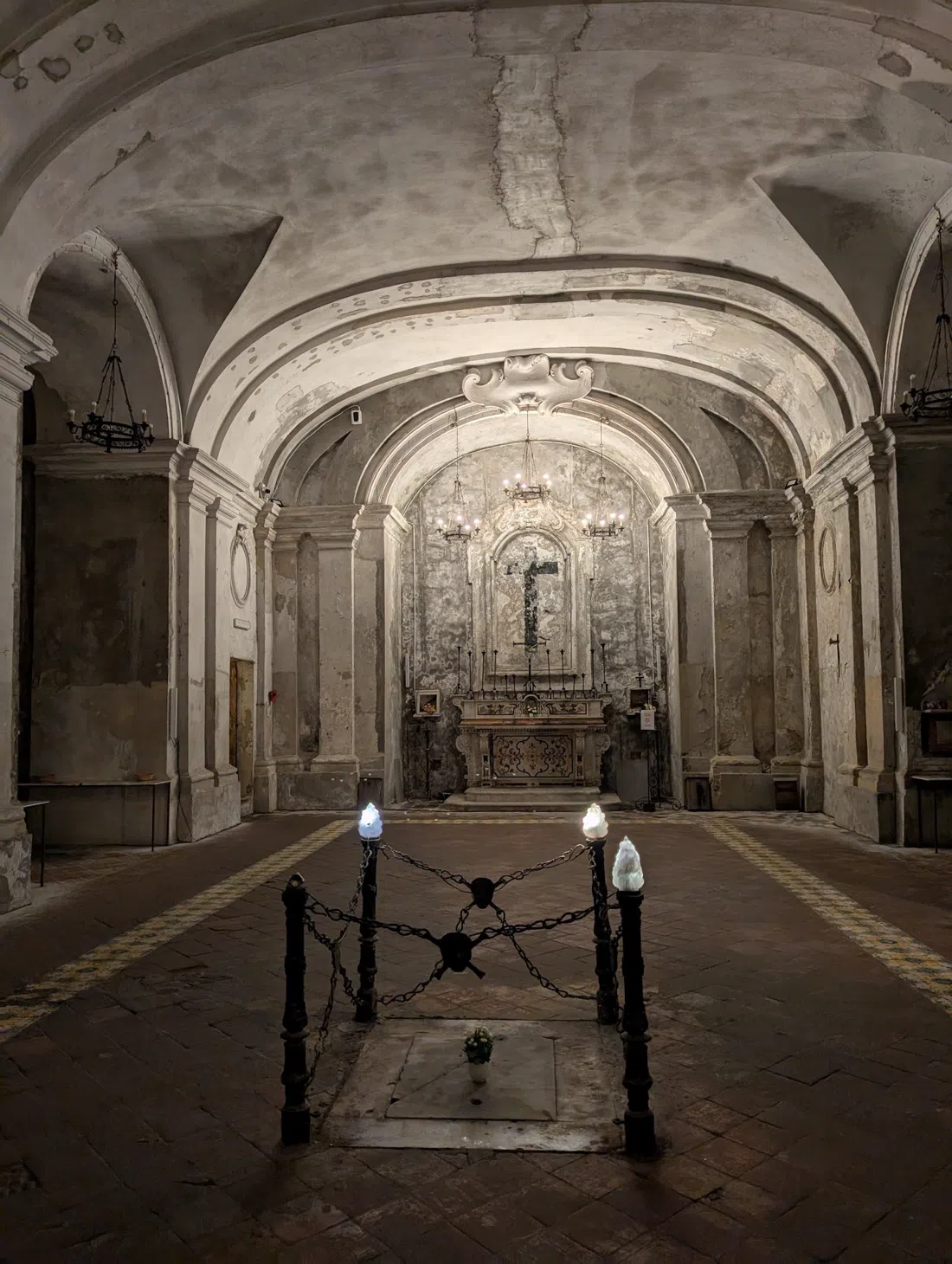
Complesso Museale Santa Maria delle Anime del Purgatorio ad Arco (Centro Storico, Via dei Tribunali) is the clearest surviving window onto that practice, with a hypogeum beneath the church. The church is free; the hypogeum and museum are €6, €5 reduced, €3 for ages 7-18. Hours are short (Sun-Fri 10:00-14:00, Sat 10:00-17:00), so it has to be slotted early in the day or it falls off the itinerary entirely. English guided visits run Saturdays at 11:00 by email reservation, and the group rate starts at fifteen people. The hypogeum only takes small groups.
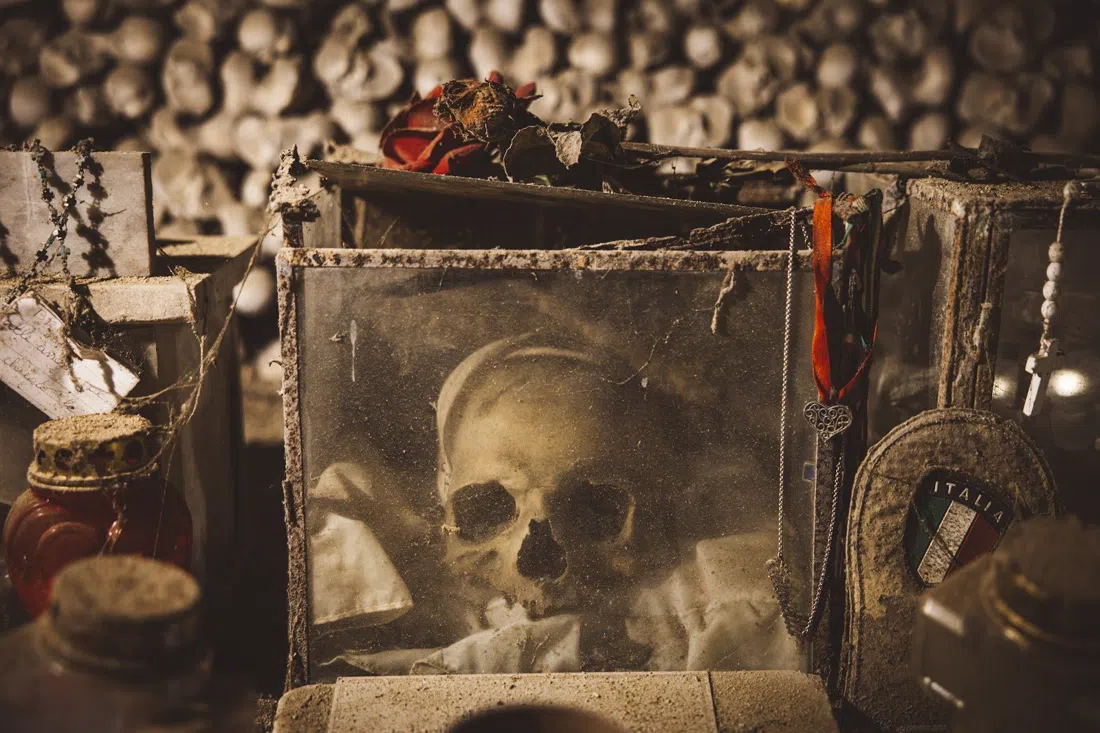
Cimitero delle Fontanelle (Rione Sanità, uphill north of the Centro Storico) reopened on 19 April 2026 after five years closed, with accessibility improvements, which makes it new to most visitors regardless of how often they have been to Naples. Booking is mandatory. Admission runs in slots every fifteen minutes for groups of up to 25, and each visit is capped at 40 minutes. It is open 10:00-18:00 with last admission 17:15, closed Wednesdays, and entry is low-cost. Forty minutes in a rock-cut ossuary is less time than it sounds when you are working in near-darkness, so go in knowing which two or three frames you want.
Two ways underground
Complesso Monumentale di San Lorenzo Maggiore (Centro Storico, Piazza San Gaetano) is the best-lit underground in the quarter and the one place you can photograph an intact Roman-era street: the old market lane, with its shopfronts, sits directly beneath the basilica. Entry is €10 including an audioguide in several languages, open daily 9:30-17:30, and shoulders and knees must be covered to enter the church. One caveat worth checking before you commit a party: from mid-June to the end of July 2026 entry ran on guided visits only during maintenance work, so confirm the current arrangement rather than assuming open access.
Napoli Sotterranea (Centro Storico, Piazza San Gaetano) is guided-only, with departures roughly every two hours between 10:00 and 18:00 in Italian and English. It costs €15 adult, €10 for students aged 11-24 and €8 for children 5-10, and takes about an hour and a half including more than a hundred steps down. The narrow candle-lit passage is effectively unshootable without a fast lens, and the squeeze is one you cannot turn around in, which rules out anyone claustrophobic or unsteady on their feet. Groups should reserve, particularly at weekends.
Frames worth the walk uphill
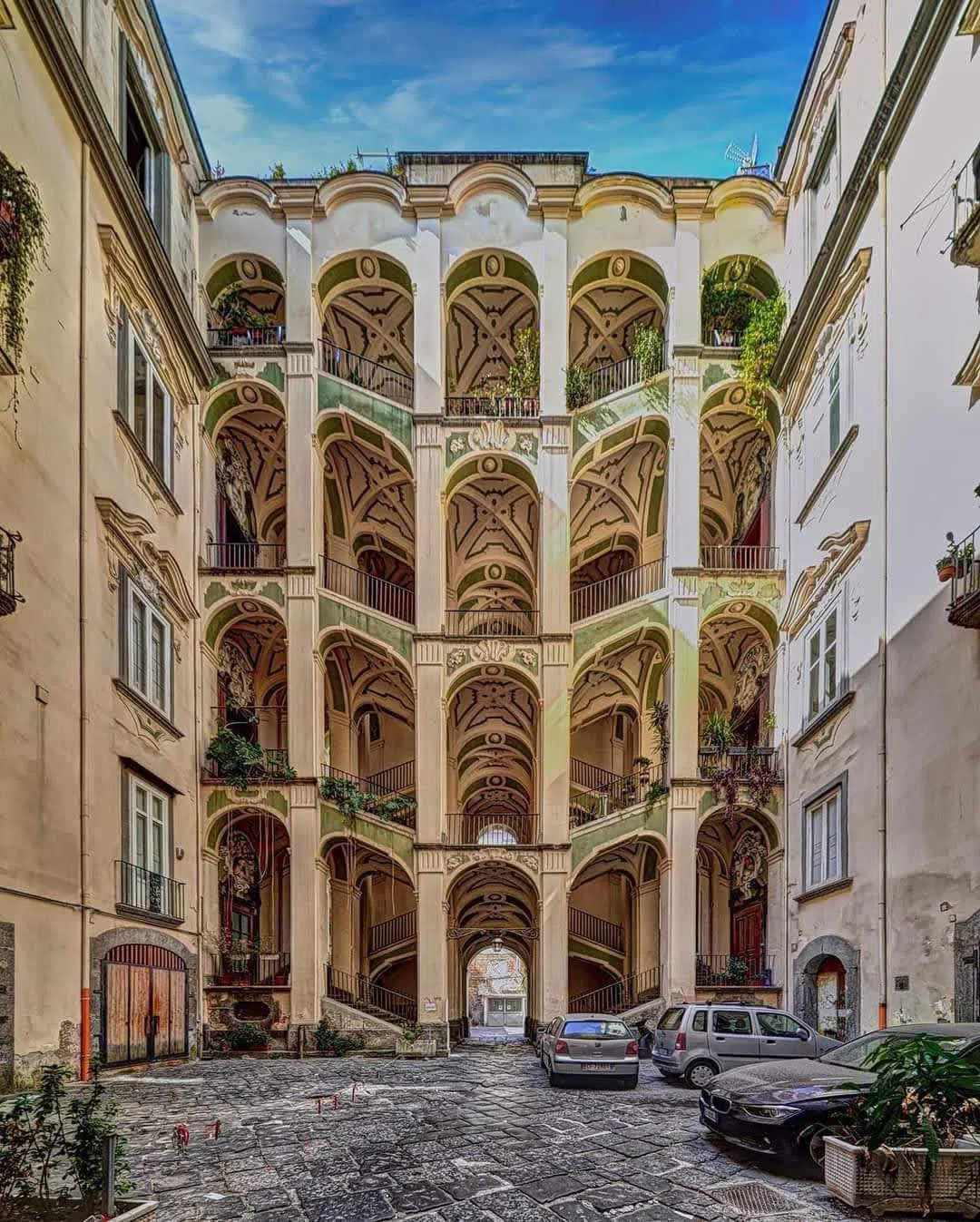
Palazzo dello Spagnolo (Rione Sanità, Via Vergini 19) has the double-ramp 'ali di falco' staircase by Sanfelice that most people have already seen before they arrive. It is still a residential building: no ticket desk, no fixed hours, no charge. You can look and shoot from the courtyard, but climbing the stairs is not allowed, and residents' privacy comes before anyone's photograph. Small, quiet groups only.
Largo Maradona (Quartieri Spagnoli) and its mural were restored and uncovered during 2026, with the colours brought back and a ball and boots added, while the wider square's redevelopment (paving, benches, lighting, kiosks) was finishing around the turn of September into October 2026. Confirm the current state of the works before routing a group there. The shrine is free and open at all hours, but the slargo is genuinely small and packs tight.
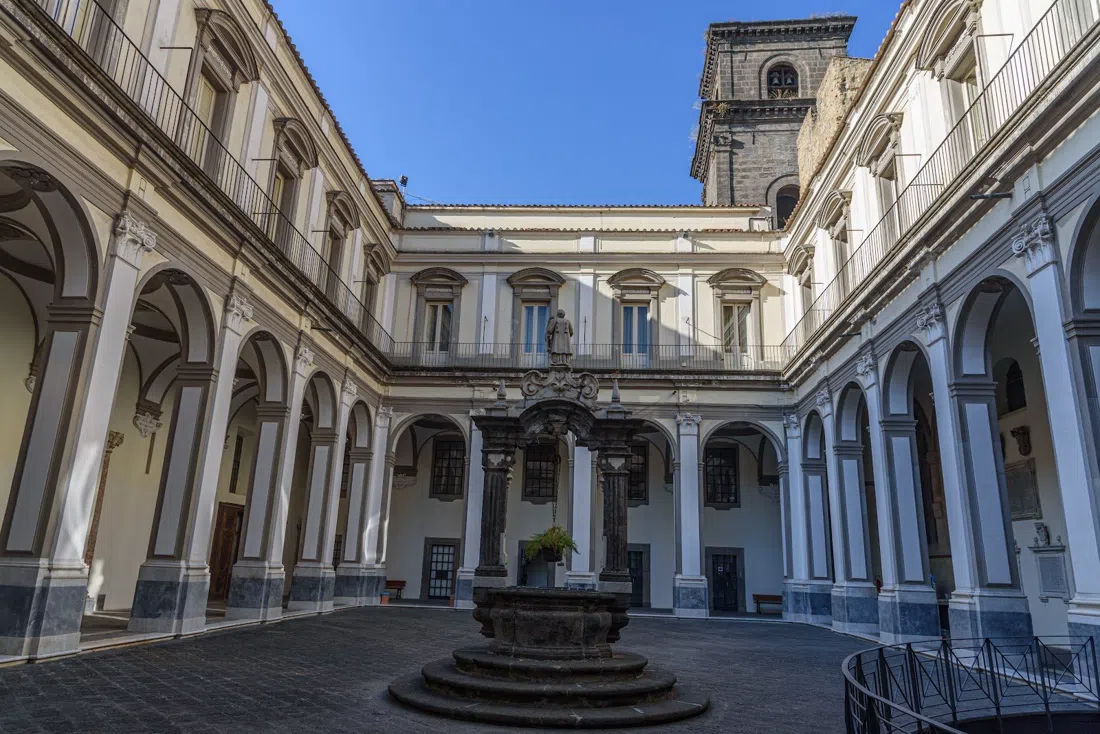
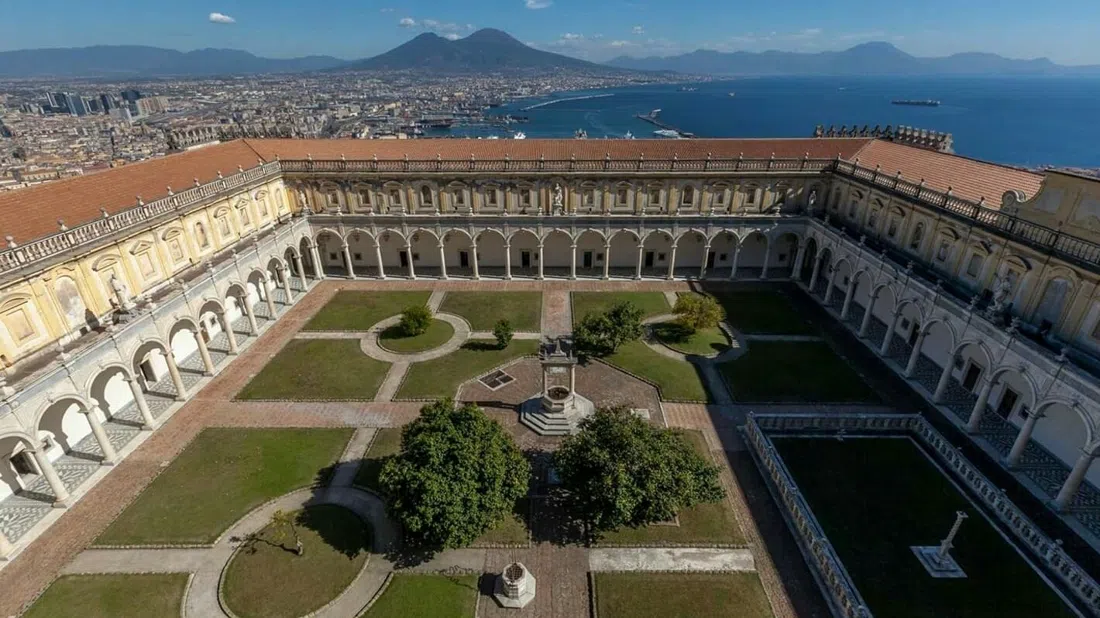
Certosa e Museo di San Martino (Vomero, above the city on the Sant'Elmo ridge) is where the whole quarter resolves into a single frame. It opens 8:30-19:30, closes Wednesdays, costs around €6-7 and is free on the first Sunday of the month. In November the light on the bay is at its best from about 16:00 onward, which makes this the natural end of the day rather than the start of it. The belvedere terrace is narrow, so parties rotate through for the view shot.
When the rain comes in
November in Naples delivers genuinely heavy days, and the sensible response is to move indoors rather than shoot flat grey streets.
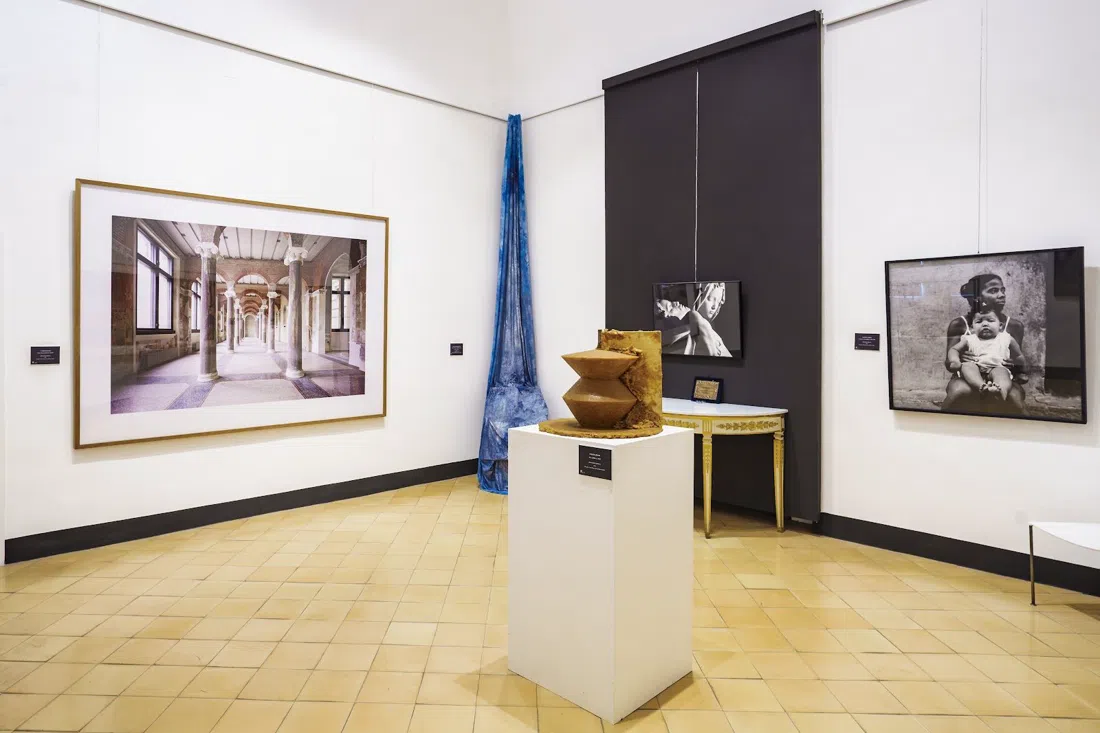
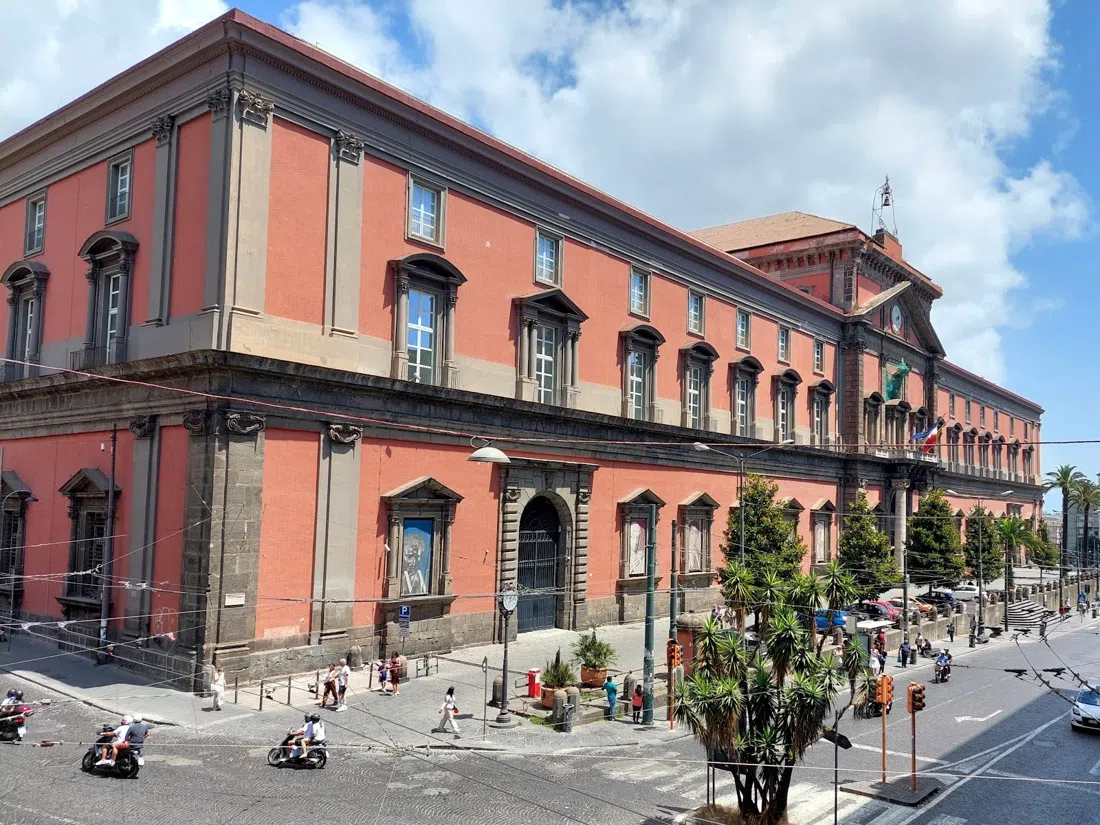
Museo Archeologico Nazionale di Napoli (Piazza Cavour, at the northern edge of the Centro Storico) is the deepest indoor option. The MANN runs around €22 full, €2 reduced for EU citizens aged 18-25, and is free on the first Sunday of the month. It opens 9:00-19:30, closed Tuesdays, last entry 18:30. Two things to check the morning you go: the entrance is currently moved to the Western gate for renovation work, and individual galleries can shut at short notice, so look at the collections schedule before travelling across town. Large rucksacks and wheeled cases go into free lockers; booked and school groups get reserved ones.
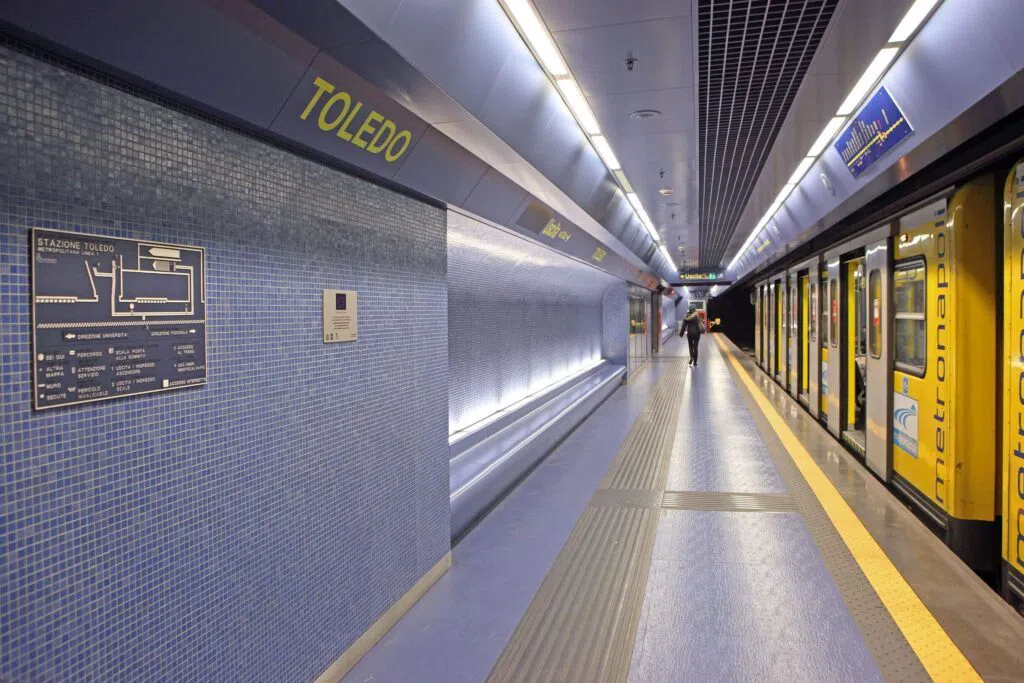
Toledo metro station (Via Toledo) is a working station rather than a museum, and its mosaic light-well is one of the most photographed interiors in the city, effectively free with a transport ticket at €1.50 for a single ANM journey, €1.70 for the integrated TIC or €4.50 for a day pass. Go off-peak or commuters on the escalator will own every frame, and keep the escalators clear either way.
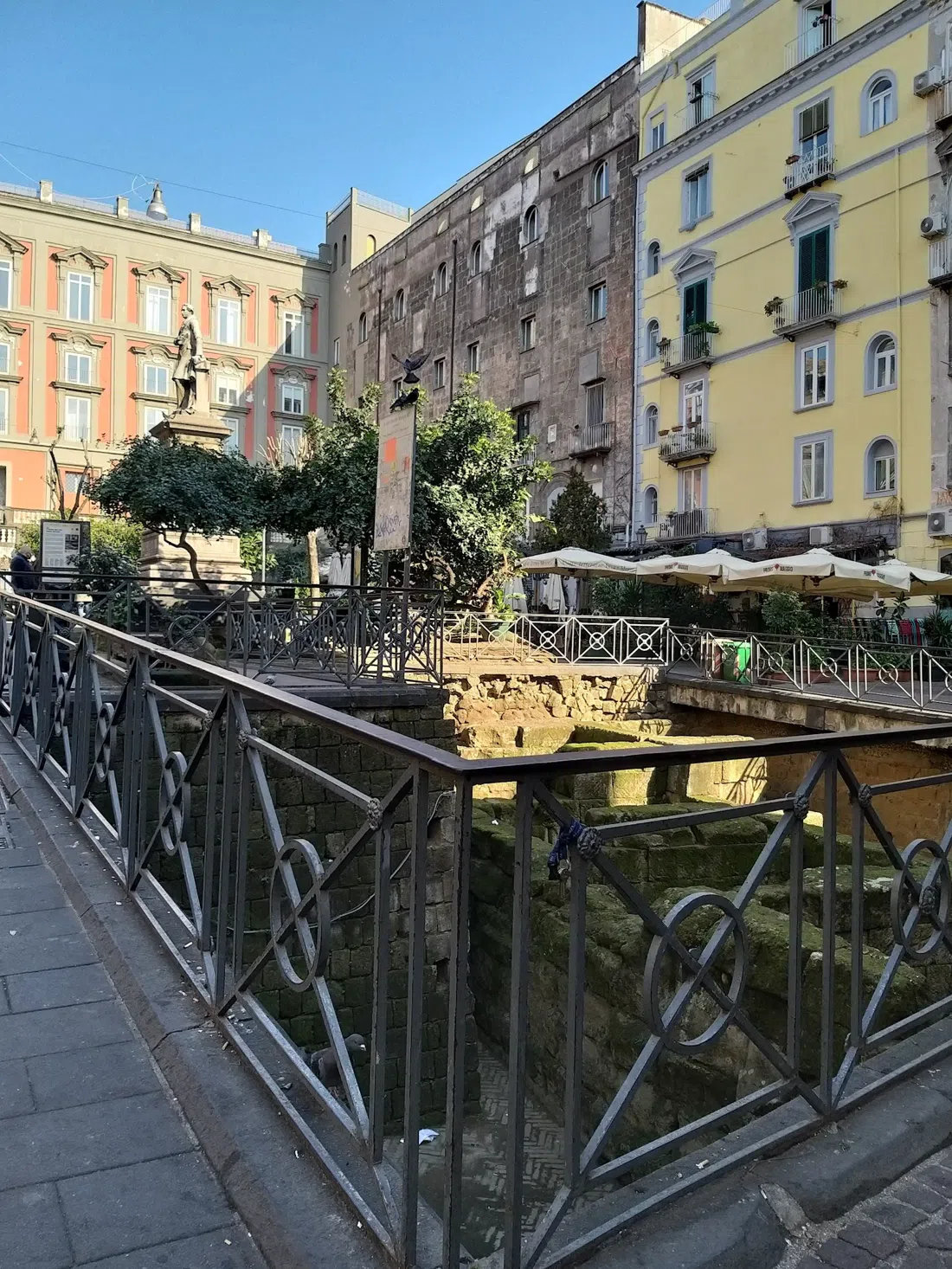
Piazza Bellini (northern edge of the Centro Storico) is where the day ends. The exposed Greek walls sit below street level in the middle of the square, which lets you frame ancient masonry and present-day Naples in the same shot, and the café terraces stay busy well past midnight. Sitting is free, coffee runs about €1.50-3 and drinks €3-8. Individual cafés will seat a party but want notice for more than a handful of people.
How long the quarter takes
Two full days covers the route above without rushing. One day covers Spaccanapoli, Via San Gregorio Armeno, one cloister, one underground site and a drink in Piazza Bellini, which is a full day in itself provided you accept you will not get inside everything. Half a day is a walk, not a shoot.
The binding constraints are the short-hours sites rather than distance; nothing here is more than twenty-five minutes' walk from anything else. Purgatorio ad Arco closes at 14:00 most days, the San Gennaro chapel shuts over lunch, Santa Chiara's cloister closes at 17:00, and Fontanelle takes the last admission at 17:15. Build the day forward from those four and the rest fits around them.
Best time to go in November
Start at first light on Spaccanapoli, when the street is still being swept and delivery scooters have it to themselves. That rake along the axis is the frame you came for, and it does not survive the mid-morning crowd. Move to the short-hours sites between 10:00 and 13:00. Take the enforced lunch closure as lunch. Spend the flat early afternoon underground at San Lorenzo Maggiore or on the guided descent at Napoli Sotterranea, where daylight is irrelevant. Be on the San Martino belvedere by 16:00.
Within the month, the week from 17 November onward is the sweet spot: the presepe season has opened, so the San Gregorio Armeno workshops are lit and fully stocked, and the December crowds have not landed. Weekdays beat weekends everywhere, and the underground sites in particular ask groups to reserve for weekend slots. If you want the quarter quiet enough to work in, stay inside it; the Naples hotel search covers the streets around the decumani, and being able to walk out of your door at 07:00 is worth more than any lens.
Walking it alone or booking a guide
Most of this quarter costs nothing to photograph, and a competent independent visitor with the hours above does not need a guide to find a street. What a guide buys you is access logistics and context: someone who knows which gallery at the Pio Monte allows a lens today, who has the Purgatorio ad Arco email reservation already made, and who can get a party of fifteen through Santa Chiara's single ticket desk without losing an hour.
Bookable guided options are attached to this page as a separate card rather than described here. For scale: twenty traveller reviews sit across the bookable tours covering this quarter, with the top-rated one carrying 5.0 out of 5 from ten reviews, and those options start from 1,103 USD per person, which is private-guide, multi-day pricing rather than a two-hour walk. Set against door prices of €7 for a cloister and €10 for an underground complex, a guide is a considered purchase for a group or a first visit with limited time rather than a default.
Booking ahead matters at four places regardless: Fontanelle, where booking is mandatory; Sansevero, which is timed-entry into a small room; Napoli Sotterranea at weekends; and any site at all if you are moving a party of more than ten. Santa Chiara is the exception that catches people out: there is no online booking for individuals, so you queue at the desk or you do not go in.
Is it worth it
Yes, with one qualification. If you want a tidy sequence of monuments, the Centro Storico will frustrate you: it is loud, congested, patchily maintained, and several of its best interiors keep hours that assume you live there. If you want a quarter where a Caravaggio hangs where it was hung in the seventeenth century, a Greco-Roman market street survives under a basilica, and a lane of workshops is making nativity figures the same week you walk down it, there is no substitute and November is the month that makes it workable.
It suits photographers, slow walkers and anyone who would rather spend a day inside four streets than cross a city six times, and it suits couples and pairs better than large parties almost everywhere, with Santa Chiara, San Martino and the open streets the honourable exceptions. You need steady legs: the underground sites, the Sanità climb and the Vomero ridge all involve stairs. Anyone on a tight single day who wants interiors as well will come up short, because there are not enough open hours in a November day to do both.
Practical notes before you go
The quarter is walked, not ridden. A single ANM journey is €1.50, the integrated TIC ticket €1.70 and a day pass €4.50; buy the day pass if you are doing Toledo station, the Vomero climb and Piazza Cavour in one go. The metro is the quickest way up to the Certosa and back down for an evening in Piazza Bellini.
Carry cash. The small sites, the workshop purchases on San Gregorio Armeno and the single-desk ticket office at Santa Chiara are all easier with notes and coins than without.
On timing: short-hours sites first, lunch closures respected, underground in the flat early afternoon, the belvedere from 16:00. The 17 November to 6 January presepe window is the reason to pick the second half of the month.
A day of door prices lands roughly at €35-50 per person if you do a cloister, a church gallery, an underground complex and a transport pass. The MANN at around €22 is the single item that moves that figure, and the first Sunday of the month makes both it and San Martino free. Dress for churches, shoulders and knees covered at the Duomo and at San Lorenzo Maggiore, and expect at least one wet day in a November week.