A street older than the churches built on it
In the fourth century BC, Greek settlers laid the street grid of Neapolis in long parallel decumani, and one narrow cross-street, later paved by Roman engineers, built over by medieval and Baroque Naples, and never once rerouted, survives today in almost the same straight line. Locals call it Spaccanapoli, "the street that splits Naples," and the name is not poetic license. Walk its kilometre and a half from the Quartieri Spagnoli to Forcella and you cross, block by block, from a devout, aristocratic, tourist-thronged east into a loud, unpolished, resolutely local west, two versions of the same city that happen to share a doorstep.
A street older than the churches built on it
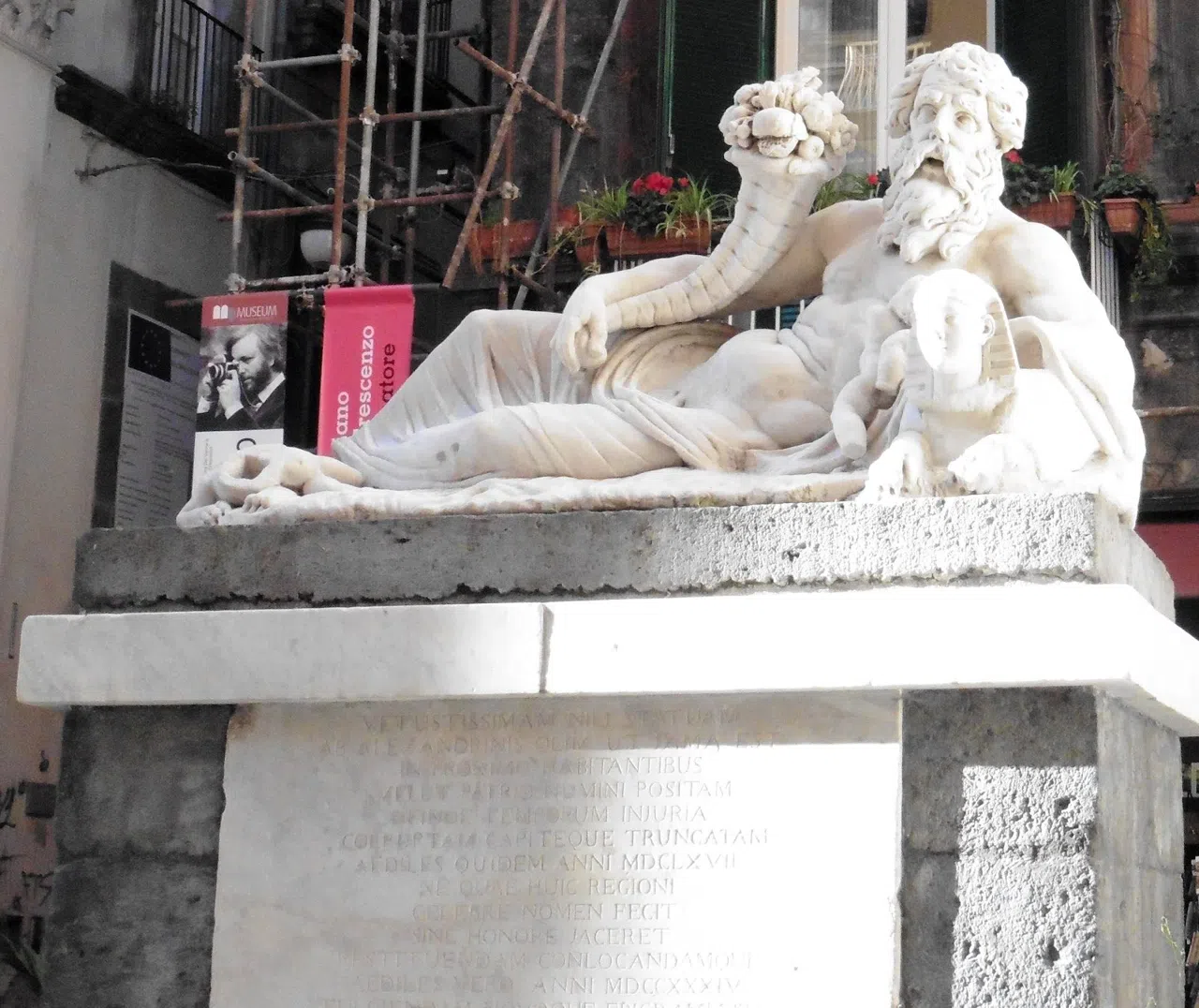
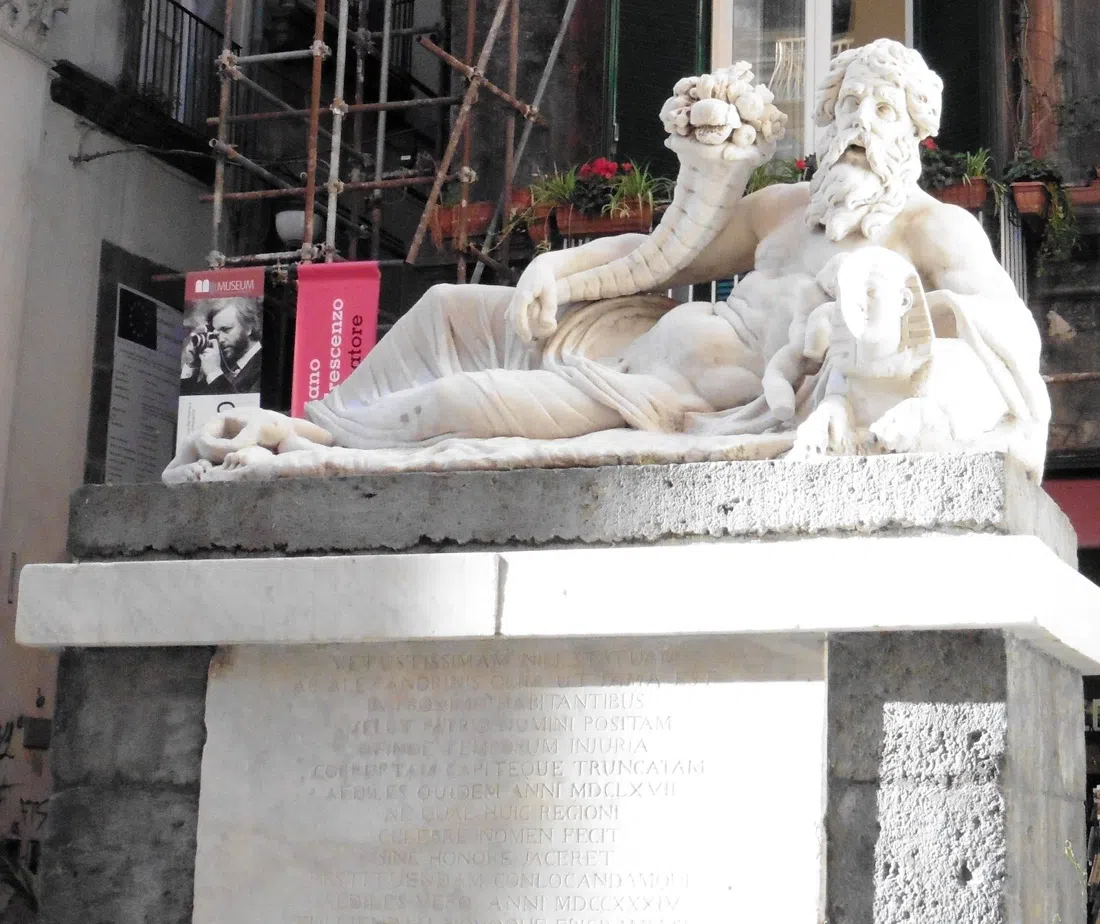
The clearest physical evidence of the divide sits on an unassuming corner where Spaccanapoli meets Via Nilo: the Statua del Nilo (also called Corpo di Napoli). It's a Roman-era reclining river god, headless for centuries until an eighteenth-century restorer gave him a new face and, mistaking the figure for a woman nursing the city, spawned the nickname "the body of Naples." There's no ticket, no gate, and no limit on how many people can crowd around it. It's an open street corner, free at any hour, and it works for a couple or a coach party equally. It's also the article's thesis in stone: this was Naples' Alexandrian merchants' quarter in antiquity, proof that Spaccanapoli has been dividing the city into distinct micro-worlds since before Naples was fully Naples.
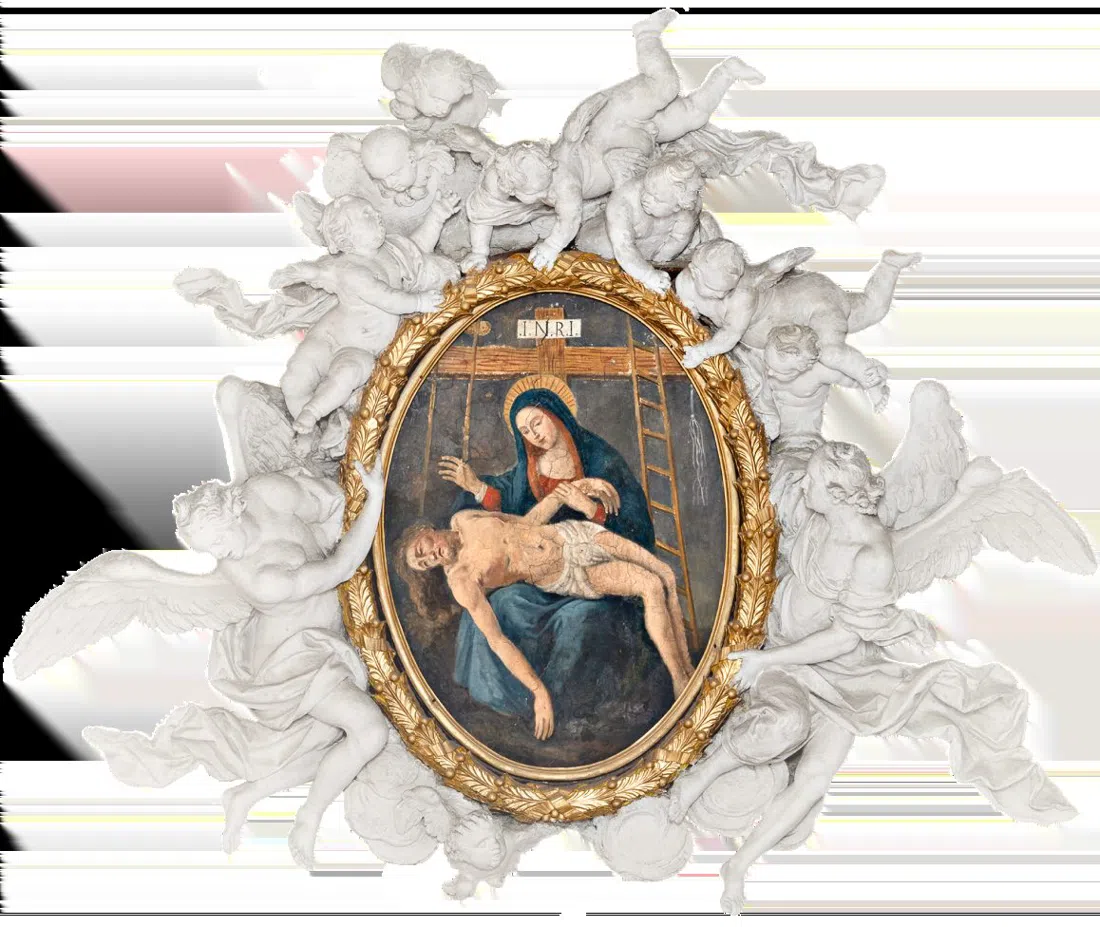
Two minutes' walk away, down a side lane near Piazza San Domenico, the street's most theatrical set piece waits behind an unmarked door: the Museo Cappella Sansevero (Cristo Velato), home to the Veiled Christ, a marble sculpture so fine the drapery over the figure's face looks wet. This is the single most Michelin-grade sight directly off the spine, and it behaves like one: timed-entry ticketing caps how many people can be inside the chapel at once, so anything over a couple of visitors should pre-book rather than arrive on spec. Entry runs €12-17 depending on ticket type, the chapel opens 9:00-19:00, and it's closed Tuesdays. Go early or go booked; this is not a place to queue-jump.
The genteel cloister and the fortress church facing it
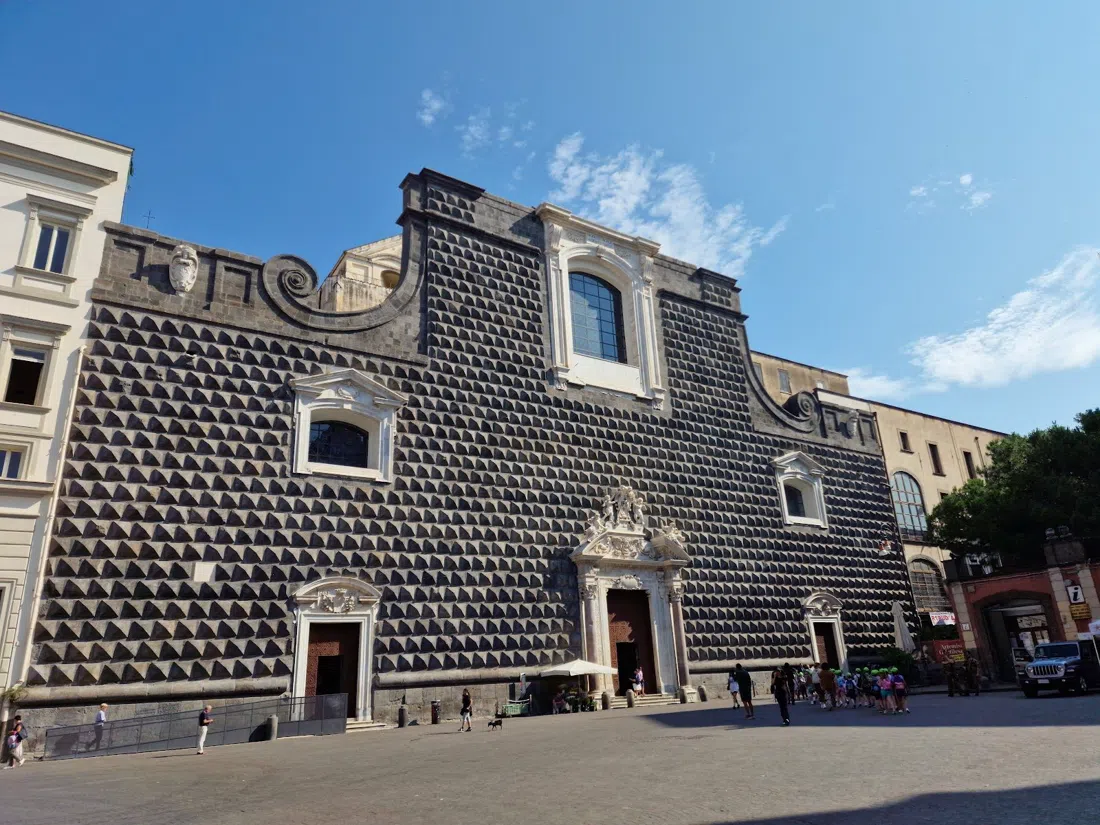
A hundred metres further along, the street opens onto Piazza del Gesù, where two buildings face off in a small essay on Neapolitan double identity. The Chiesa del Gesù Nuovo presents a blunt, diamond-studded stone facade that looks more like a fortress than a house of God. It was, in fact, originally a nobleman's palace, and the church absorbed its defensive front wholesale. Step inside and the mood flips entirely: gilded Baroque ceilings, marble inlay, a nave that doesn't hold back. Entry is free, the church handles groups without complaint, and it's open 7:00-20:00 with a midday closure from 13:00 to 16:00, so plan around Neapolitan lunch, not around it. Respectful dress (shoulders and knees covered) is enforced at the door.
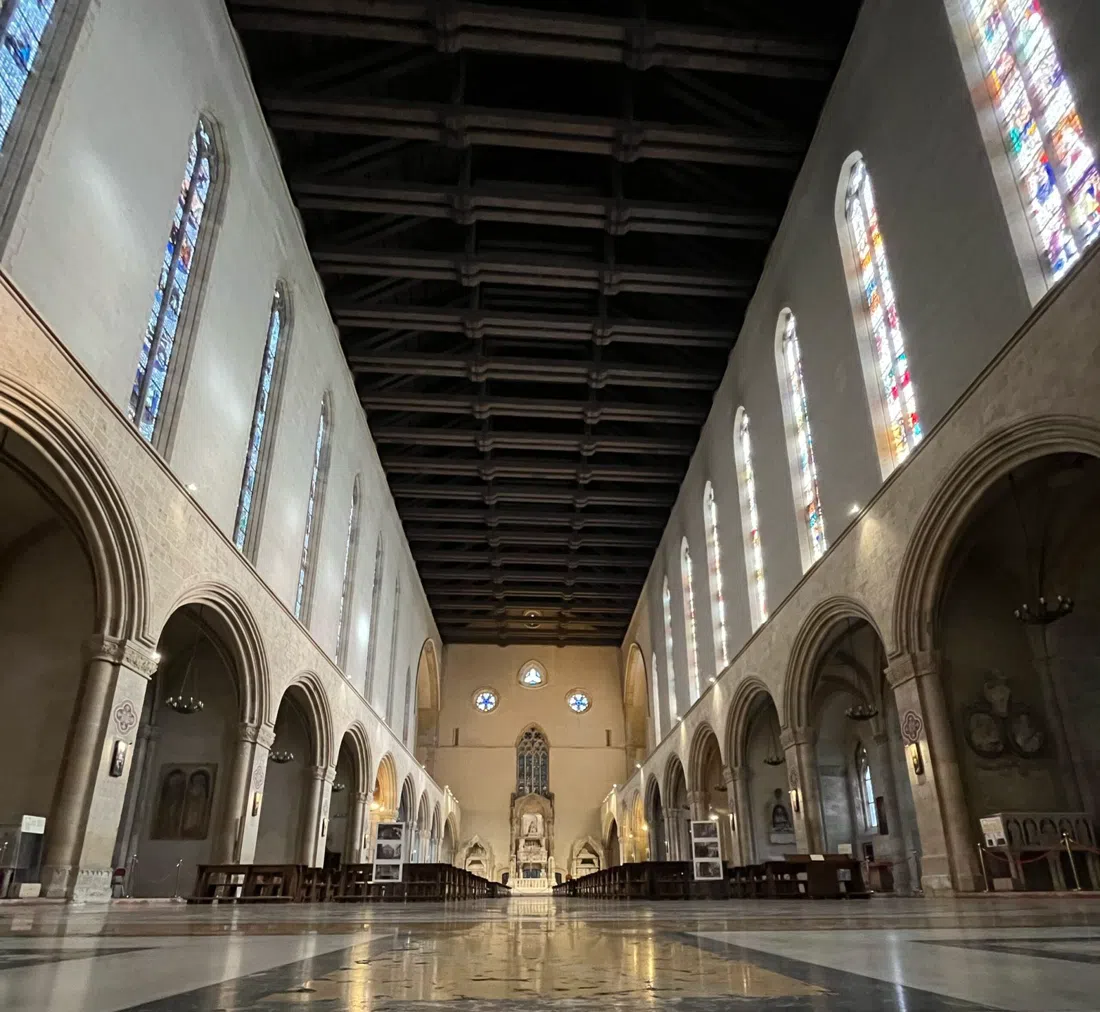
Across the same piazza, on Via Benedetto Croce, the Chiostro Maiolicato di Santa Chiara has the same solemnity without the theatre: a genuinely serene, large open-air cloister lined with majolica-tiled pillars and hand-painted benches depicting eighteenth-century rural life. It's the street's "east" face at its most composed: monastic rather than macabre, a deliberate contrast to Sansevero's velvet-roped drama two minutes away. It's a good group venue precisely because the cloister is so open; entry is €6 (€4.50 concession), and Sunday hours are shorter, 10:00-14:00, so don't leave it for a lazy Sunday afternoon.
The piazza where swords and cassocks kept company
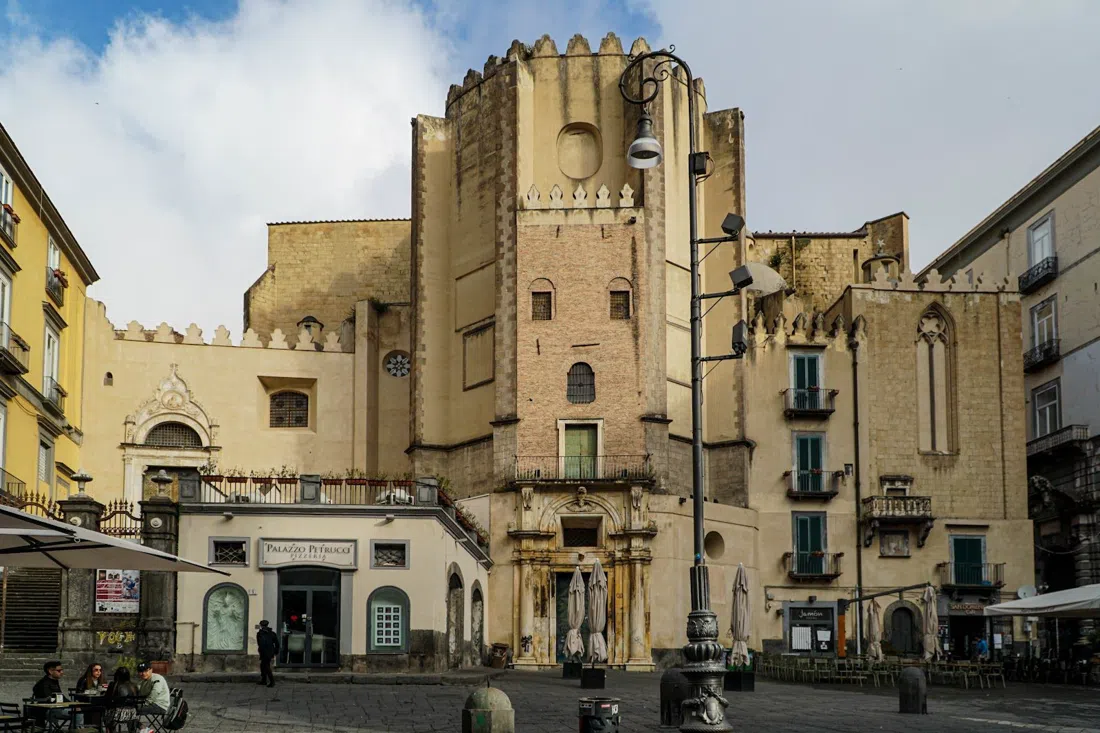
Continue along the decumano and the street funnels into Piazza San Domenico Maggiore, fronted by the Basilica di San Domenico Maggiore. This is where Spaccanapoli's aristocratic history is most visible at street level: the piazza was ringed by the palazzi of Naples' old noble families, and the basilica itself held the tombs of Aragonese royalty and hosted Thomas Aquinas as a lecturer. Entry is free and self-guided, the piazza handles groups easily, and there's no door policy to navigate. It's as much a public square as a church visit. Sit on the steps for ten minutes at dusk and you'll see the piazza's other job: a meeting point for students from the nearby university, which is really where this stretch of the street starts handing off from pilgrim territory to something more bohemian.
The street where nativity figures outnumber saints
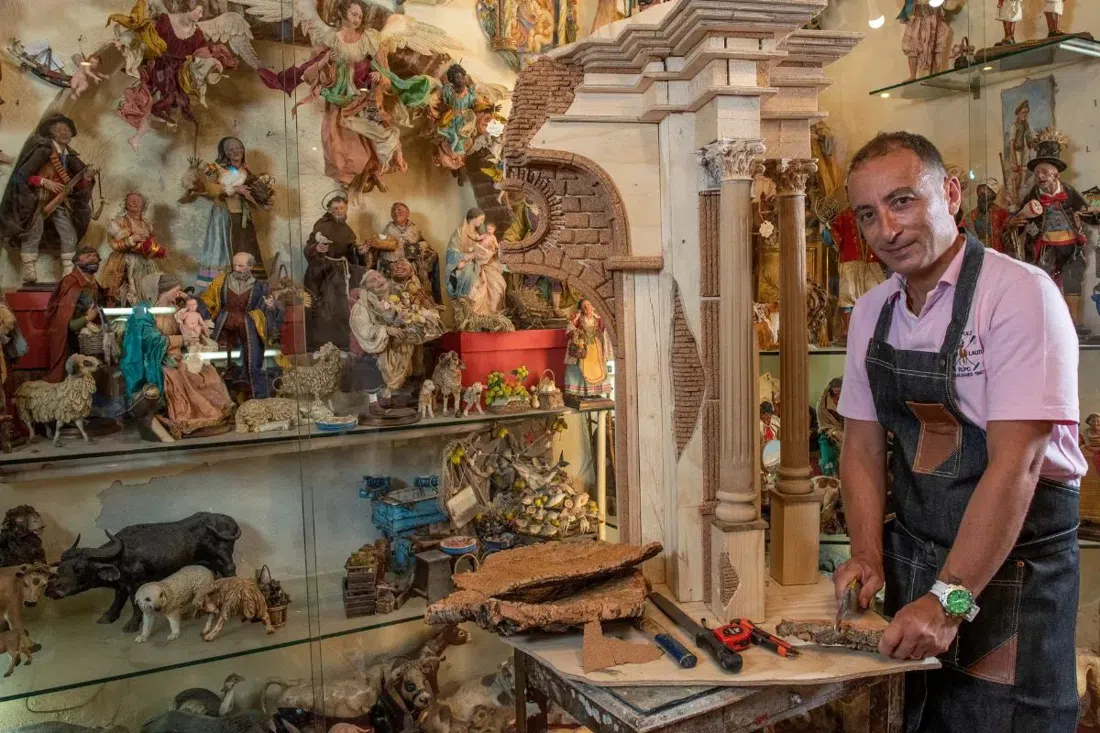
Just off the spine runs Naples' most photographed cross-section of sacred and irreverent culture: Via San Gregorio Armeno, lined floor to roofline with workshops making presepe (nativity) figurines, not just shepherds and wise men, but a running gag of political and celebrity caricatures standing shoulder to shoulder with saints. The anchor name is Bottega Ferrigno, at no. 55, making figures here since 1836. The street is public and manages groups reasonably well outside peak hours, but it bottlenecks badly at midday in high season: narrow enough that two tour groups meeting head-on can stall the whole lane for a few minutes. Browsing is free; figurines run from a few euros for a small piece up to several hundred for a master craftsman's work. Go before 10:30 or after 17:00 if you want to actually look at anything rather than shuffle past it.
The divide runs underground too
The rivalry isn't only east-west; it's vertical. The Complesso di San Lorenzo Maggiore, on Via dei Tribunali just north of the main spine, sits directly over the excavated Greek and Roman city, and walking down into its dig site is the most literal proof available that Spaccanapoli sits exactly on Naples' original decumano: the same street plan, several metres below the current pavement. Through September 2026, the church is running maintenance work and the excavation is guided-visit-only, so book ahead rather than expecting a walk-in self-guided tour. The combined church and excavation ticket is €9, and the complex handles groups without issue once you're on an assigned tour slot.
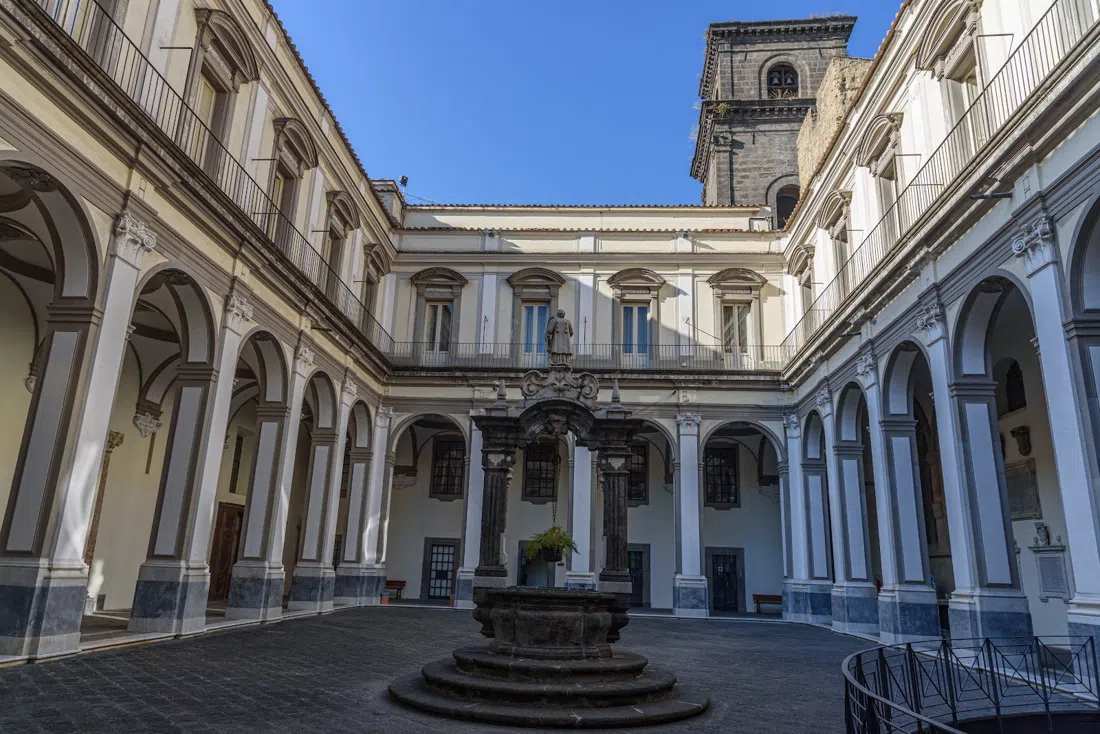
For the fuller underground counterpart, Napoli Sotterranea, entered from Piazza San Gaetano just off Via dei Tribunali, runs scheduled group tours on the hour, with English-language slots at 10:00, 12:00, 14:00, 16:00 and 18:00, descending through Greek-era aqueduct tunnels and a Second World War air-raid shelter. It books out on weekends, so reserve online rather than turning up: €10 at the door if there's space, €15 online for skip-the-line. Between San Lorenzo and Sotterranea, the piece's thesis stops being a metaphor about street level and becomes something you can walk down into.

Pizza rivalry runs the length of the street
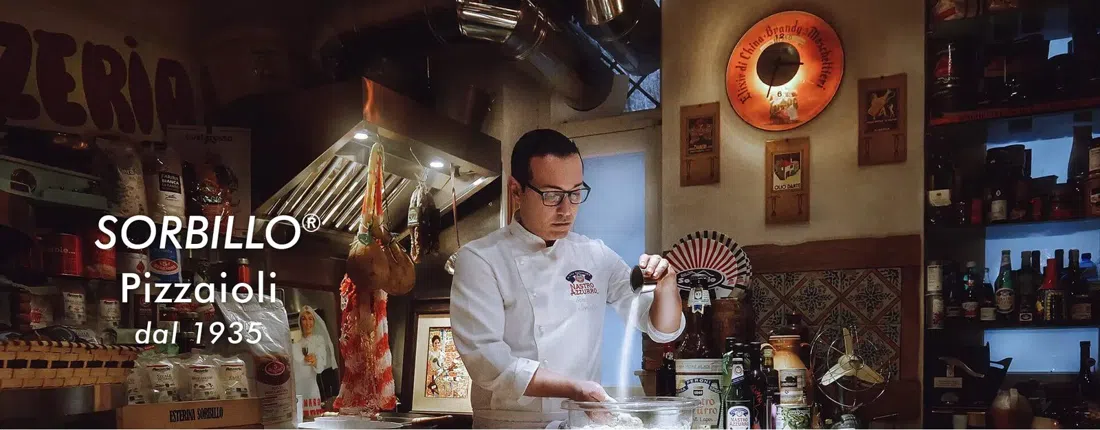
Gino Sorbillo, on Via dei Tribunali and Michelin-listed, is the single most name-checked pizzeria on the decumano. It takes no reservations at its historic site, so everyone, famous or not, queues on the pavement, and it's closed Sundays. Prices sit around €6-14 a pizza, which is unremarkable for the quality on the plate; the queue is the real cost of admission, and it can run past an hour at peak dinner times.
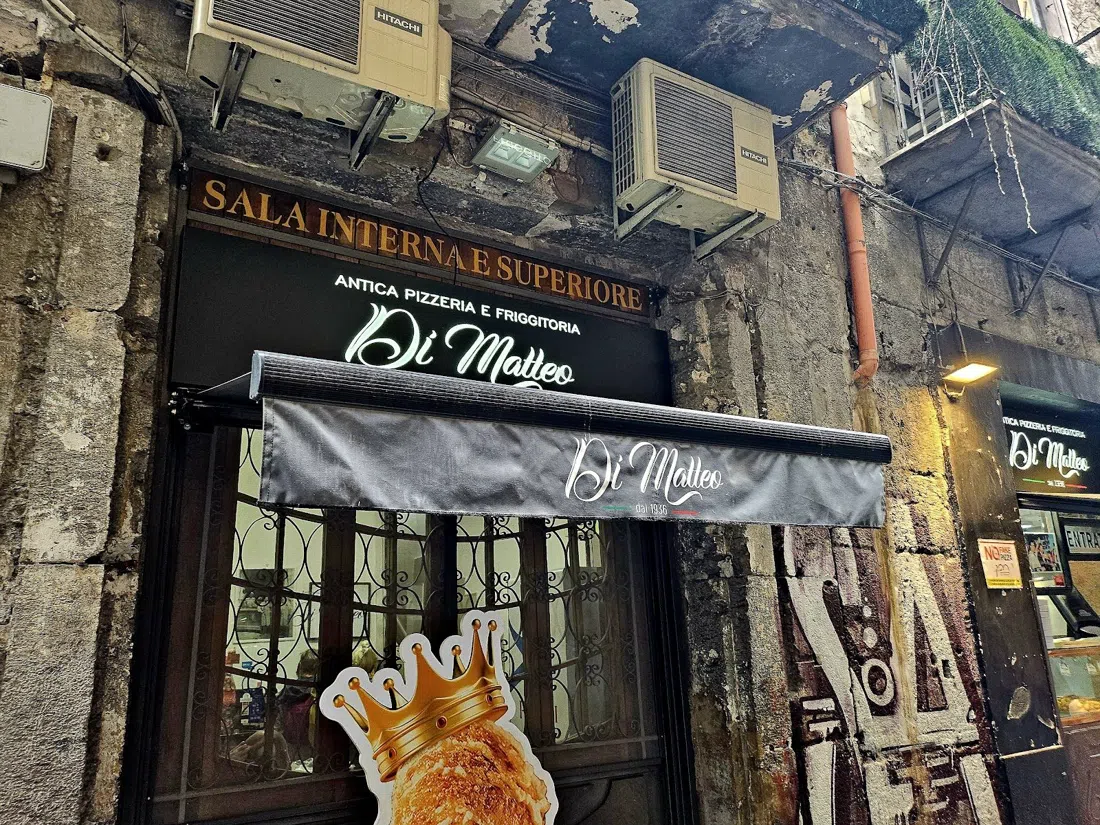
A few doors down the same street, Antica Pizzeria Di Matteo is the no-frills, working-class counterpoint to Sorbillo's fame: the kind of place that fed Bill Clinton a fried pizza in 1994 and never once redecorated to capitalise on it. It's walk-in, casual, and genuinely good for groups happy to split between the counter and the handful of tables; mains run €4-8, and it's also closed Sundays.
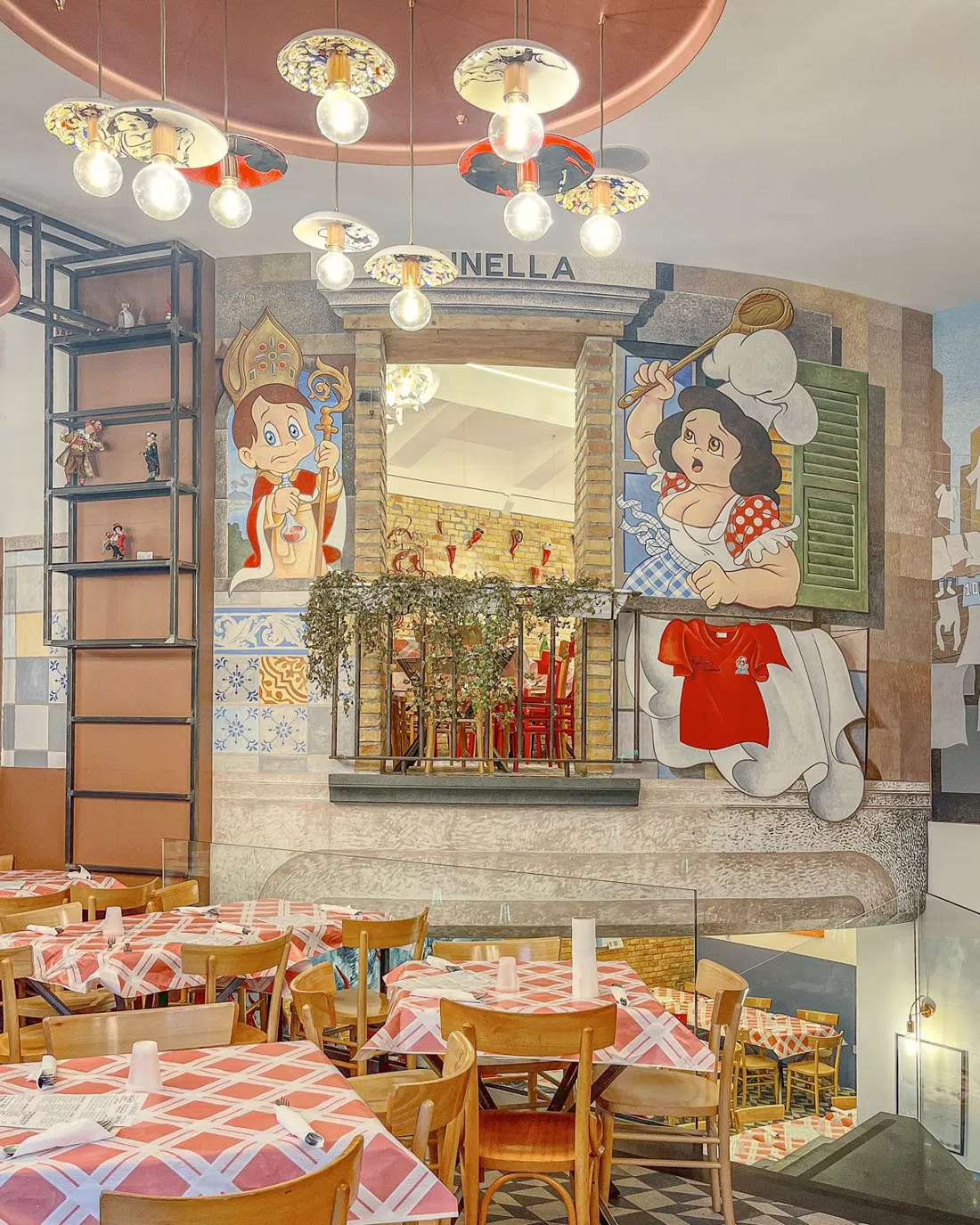
The street's clearest "west" soul, though, sits well past Spaccanapoli's far end at Piazza Carità, on the edge of the Quartieri Spagnoli: Trattoria da Nennella. It's built explicitly for big, loud groups: communal tables, shared plates, waiters who sing over the noise rather than under it, and no standing on ceremony. Expect to be seated fast and fed faster; it's closed Sundays and runs €€ for a meal that comfortably feeds a group without careful ordering. If Sorbillo's queue is the east side's ritual, Da Nennella's chaos is the west's, and the two are a twenty-minute walk and a world apart.
Coffee, chocolate, and a break from pizza
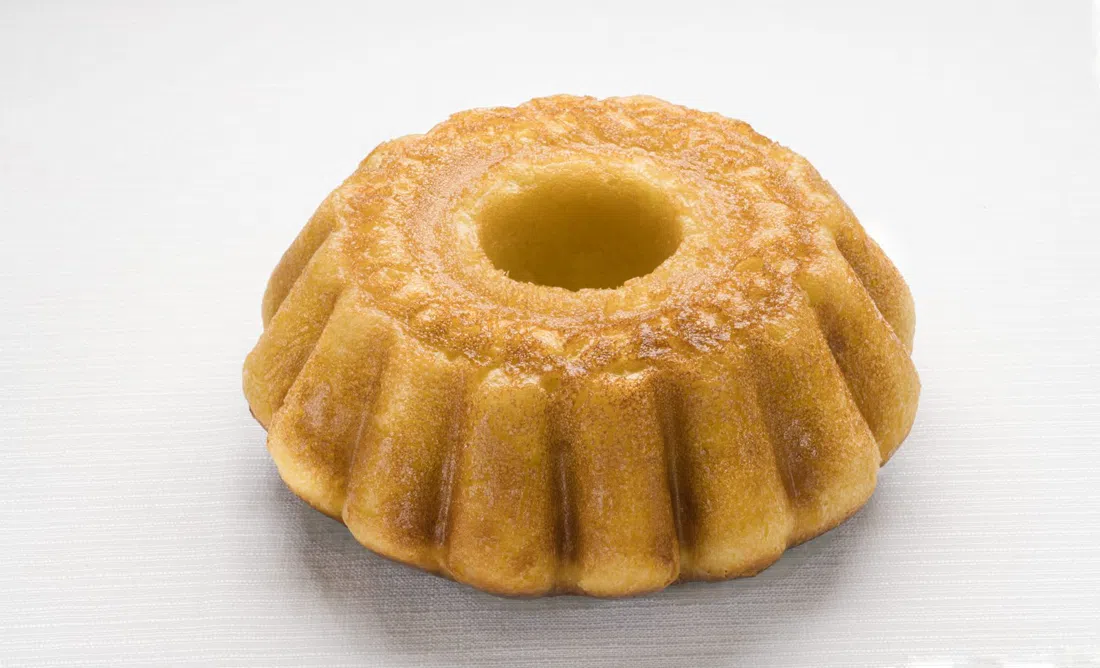
Every itinerary along the street passes Gran Caffè Scaturchio, on Piazza San Domenico Maggiore, a stand-up espresso-and-pastry institution open daily 7:30-20:30. It's fine for small groups at the bar, but the handful of tables get tight fast if there are more than three or four of you; treat it as a five-minute stop, not a sit-down meal. Pastries run €2-5.
For something to carry rather than sit with, Gay-Odin, at Via Benedetto Croce 61, is one of the few businesses on this list that sits directly on Spaccanapoli itself rather than just off it: a longstanding local chocolatier that also runs a walk-in gelato counter, handling group orders quickly despite having no seating inside. Gelato and chocolate run €2-8.
Toward the university end, near Piazza Bellini, Caffè Letterario Intra Moenia is the street's bohemian extension: an outdoor piazza café, open daily 9:00 until 1:00, that handles groups comfortably at its terrace tables. It's students and readers rather than pilgrims and pizza queues, and it's a fair barometer of how the street's character loosens the further you get from the churches.
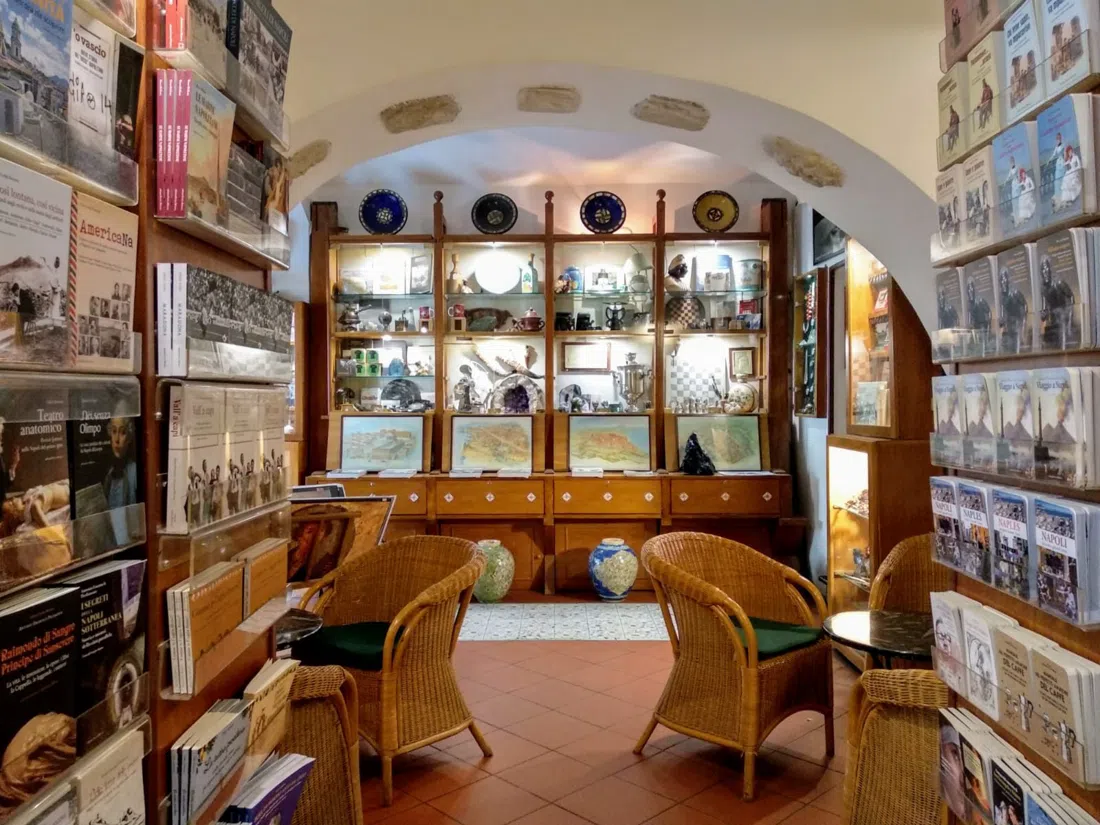
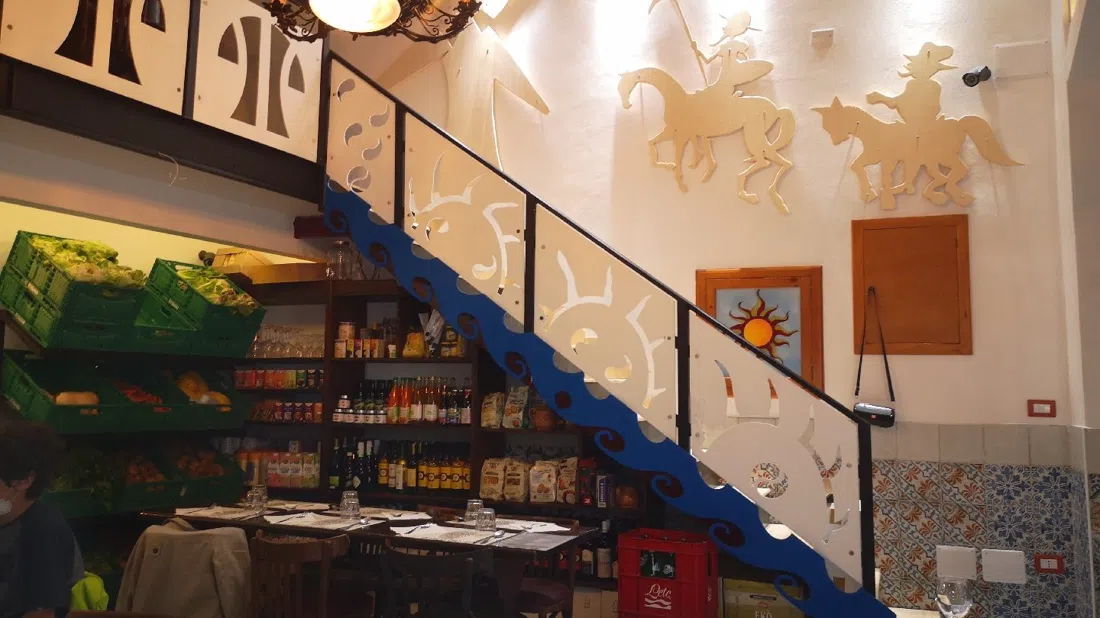
If pizza fatigue sets in, Amico Bio – Un Sorriso Integrale, near the Gesù Nuovo end of the street, is a proper sit-down vegetarian restaurant, one of Naples' first and more than twenty years old under its earlier name, where reservations are worth making for a group rather than optional. Mains run in the €€ range.
Getting there, timing it, and what to bring
Spaccanapoli isn't a single named street on modern maps. It runs as Via Benedetto Croce, then Via San Biagio dei Librai, then into Via Vicaria Vecchia, so navigation apps work better than street signs. The nearest metro stop is Dante on Line 1, a five-minute walk to the western end near Piazza Carità; from the eastern end near Forcella, Piazza Cavour on the same line is closer. Most of the street is pedestrian or semi-pedestrian, and it's genuinely walkable end to end in twenty-five minutes without stopping; budget two to three hours to actually go into anything.
Cash still matters here: several workshops on Via San Gregorio Armeno and the smaller cafés run card-optional or card-minimum policies, so carry small notes and coins. Mornings before 10:30 are calmer for the churches and the figurine workshops; evenings after 19:00 suit the pizzerias and Piazza San Domenico's after-dark crowd, though Sorbillo and Di Matteo's queues peak exactly then. A realistic day budget covering entry tickets, two coffees, a pizza, and gelato lands around €35-50 a person, excluding the Sansevero chapel's slightly steeper ticket. If you're basing a longer stay around the decumano, start with the Naples guide for wider city context, and the Naples hotel search turns up options within walking distance on both sides of the divide. It's worth checking which side you're sleeping on, since it genuinely changes which version of the street you'll wake up to each morning.