Especial Naples
Naples at Christmas 2026: San Gregorio Armeno's Nativity Street and When to Go
The crib figures on one Naples alley are still modelled by hand. What they cost, and which days are closed in December 2026.

Por Katja BrandtThe city before the postcard cropped it
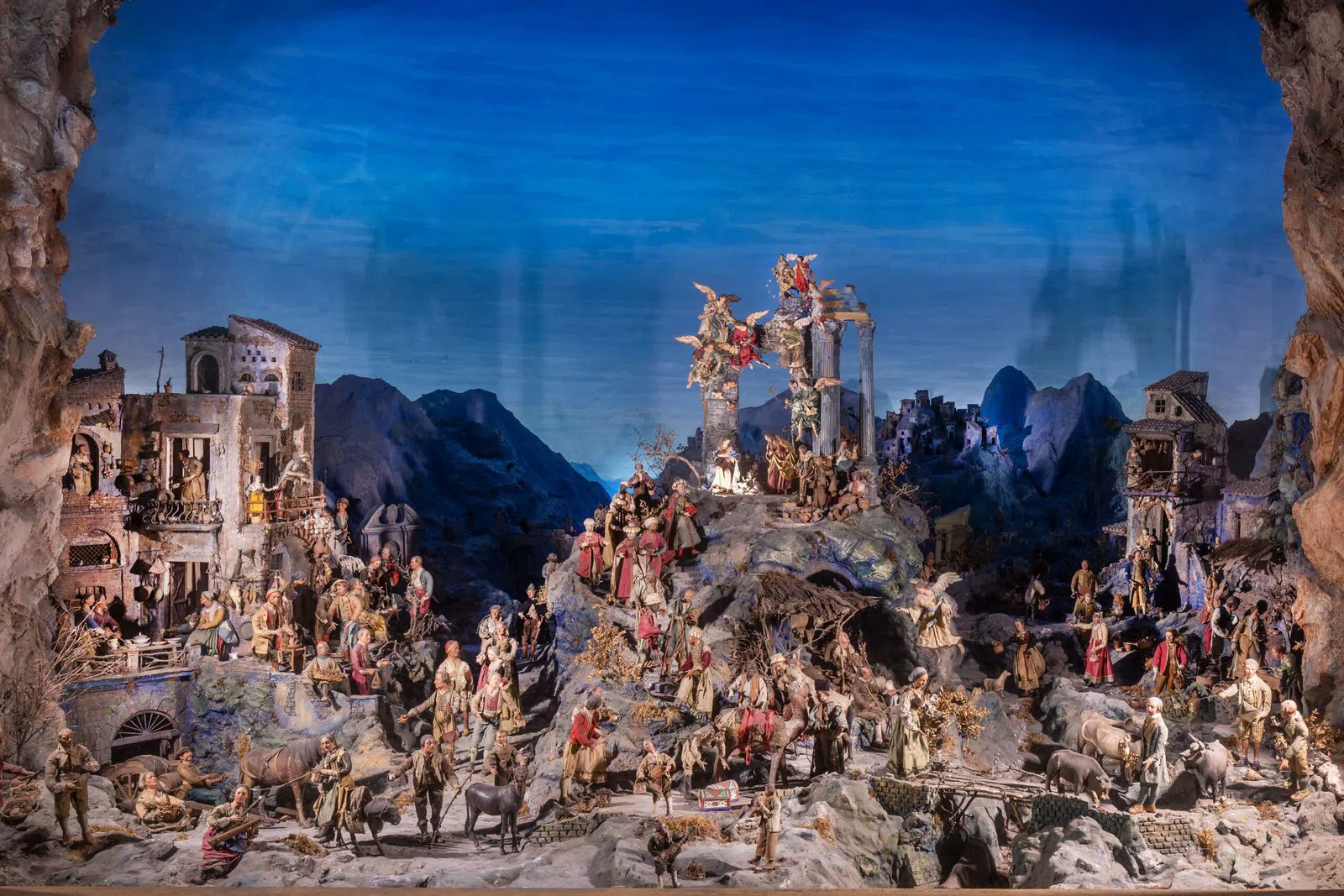
Michele Cuciniello donated his crib of 800 figures to the state in 1879, and it still fills a vaulted former Carthusian kitchen at the Certosa di San Martino. The same hand-modelled pastori are sold today on Via San Gregorio Armeno, where one workshop has worked the 18th-century technique since 1836. December is when the alley fills.
See the old cribs first
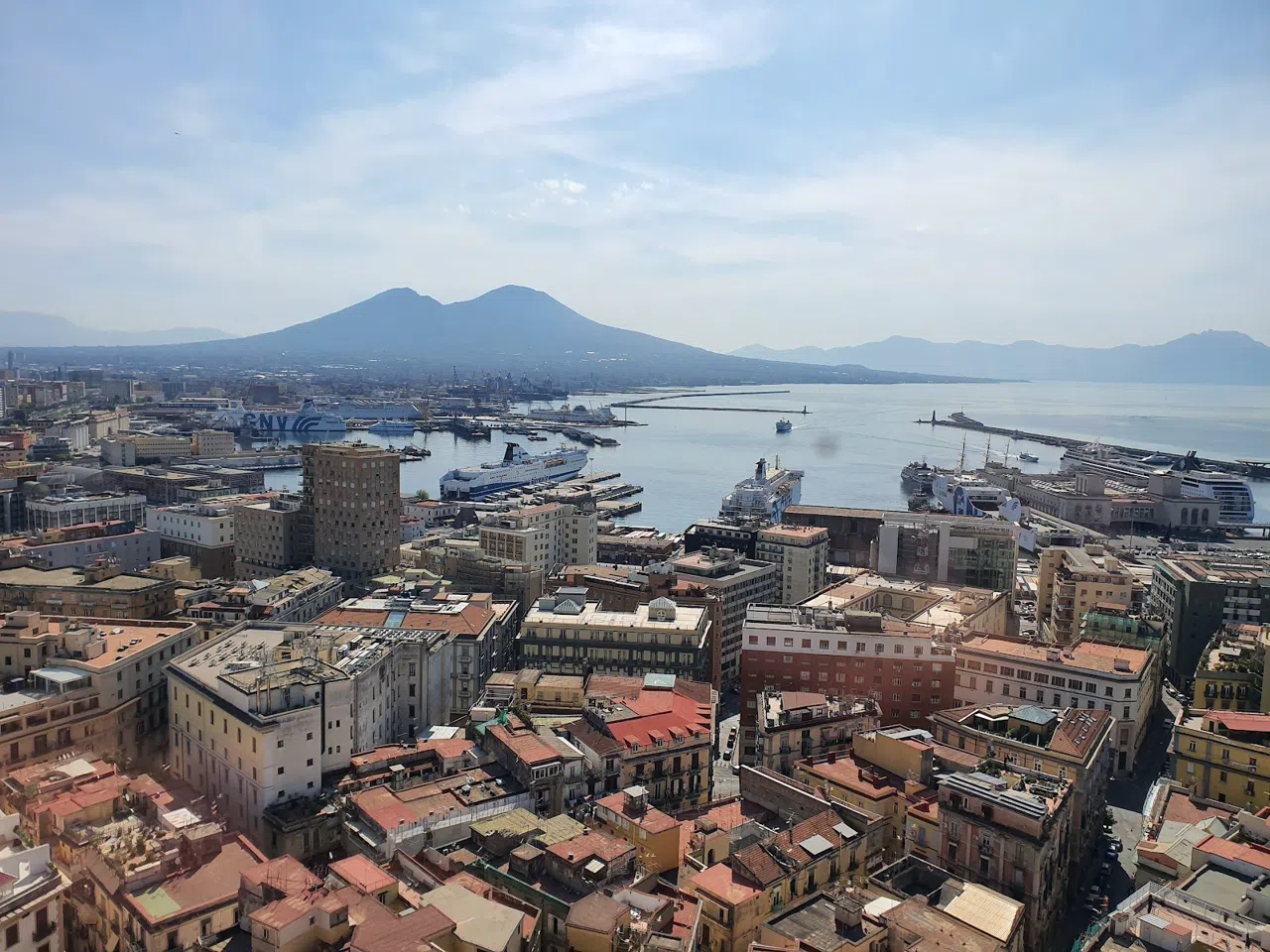
Presepe Cuciniello is inside the Certosa e Museo di San Martino (Vomero), built into the vaulted kitchen, with cliff-like cork rock scenography and hundreds of figures and animals. Entry is €6, €2 for ages 18 to 25, free under 18. The museum opens 8:30 to 18:30, the nativity section from 9:30, last entry 17:30. Cuciniello's figures show the craft at its 18th-century peak, which is the reason to come here before the alley. The terrace outside looks across the bay of Naples.
Presepe del Settecento, in the Complesso Monumentale di Santa Chiara, stages Settecento Naples in 18th and 19th-century pastori, with crowded taverns and working botteghe among the humble houses. The crib is a portrait of the city as much as of Bethlehem. Combined entry is €6, Monday to Saturday 9:30 to 17:00 and Sunday 10:00 to 14:00. The cloister, the museum and the archaeological area take 40 to 60 minutes. Its hand-painted majolica columns and benches are a few steps from the figures.
Planifica tu viaje a Naples
Precios en directo de nuestros socios de reservas.
Cancelación gratuita en muchas habitaciones. Podemos recibir una comisión cuando reservas.
The benches on San Gregorio Armeno
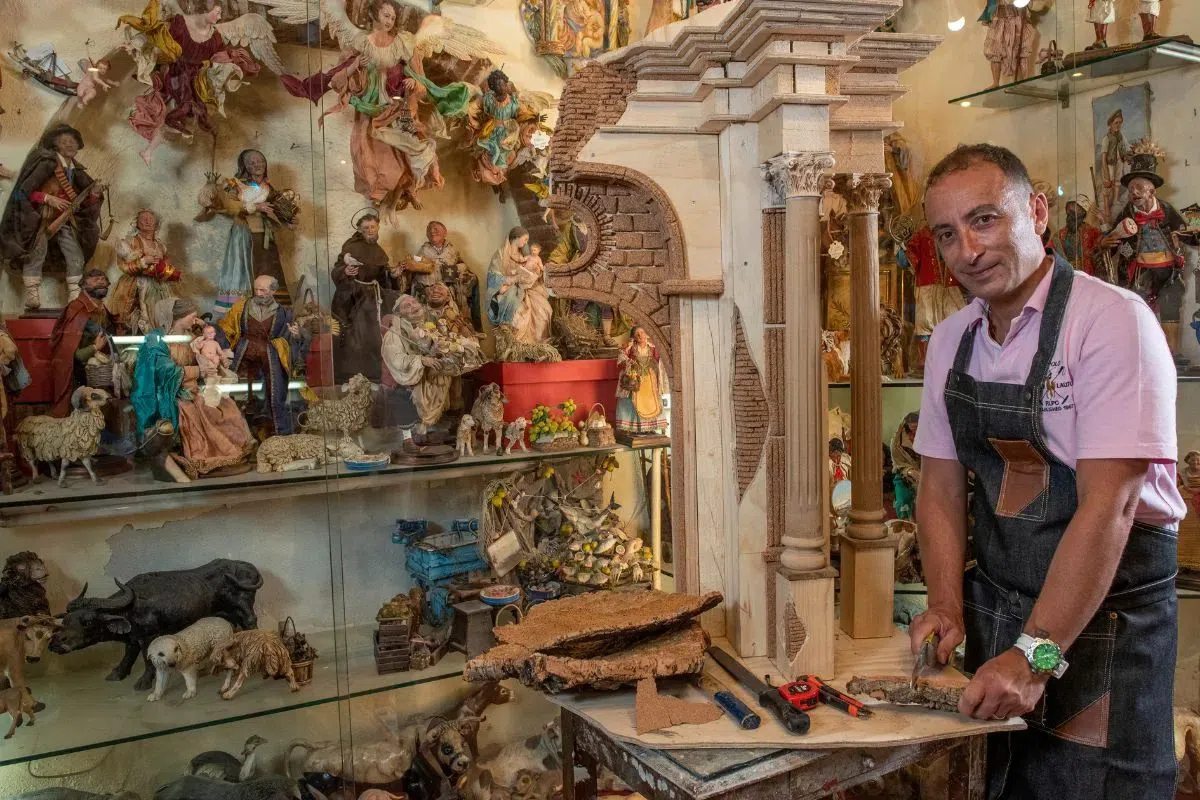
Ferrigno 1836 (Via San Gregorio Armeno 10) is a narrow shop with tiered wooden shelves of hand-painted terracotta shepherd heads and busts, and a maestro painting a 30cm figure at a cluttered bench under a bare bulb. Watching the bench work costs nothing. Figures start at €20, most are €30, and large busts and commissions run €400 to €700. The workshop also runs a hands-on figure-making class in Italian or English at €65 per person, for a maximum of six people aged 18 and over. Book it ahead, because the shop floor holds only a few visitors at a time.
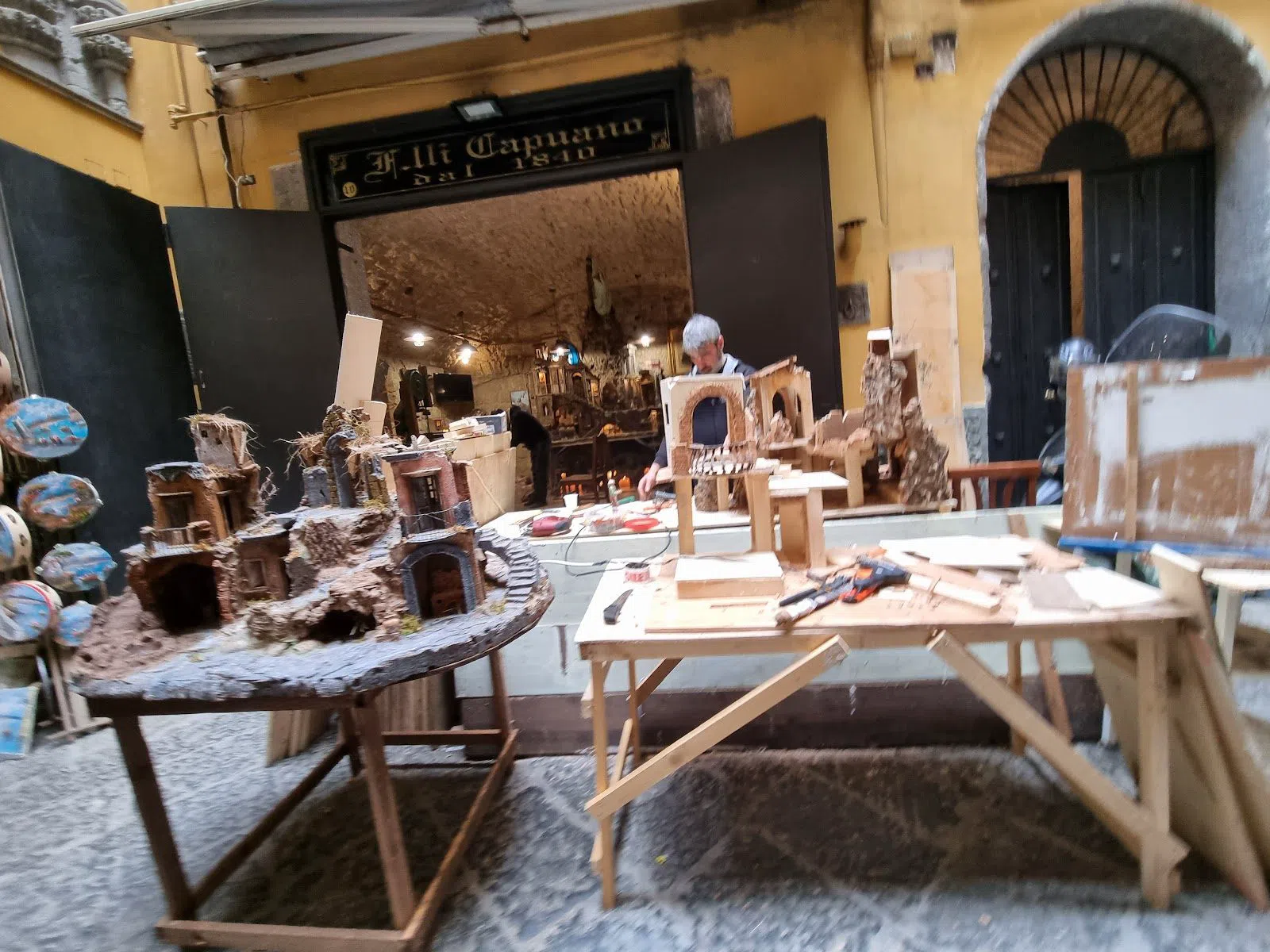
Fratelli Capuano dal 1840 (Via San Gregorio Armeno 28) puts its workbench in view straight from the street. Vincenzo and Luciano Capuano are the fourth generation, and in December they are assembling monumental cork-and-timber scenography with working fountains and wired lights. Watching is free, with no obligation to buy. Scenographies of that size are commissioned for thousands of euros and shipped to collectors. Their old .com domain is dead, so find them by the street number or on Facebook.
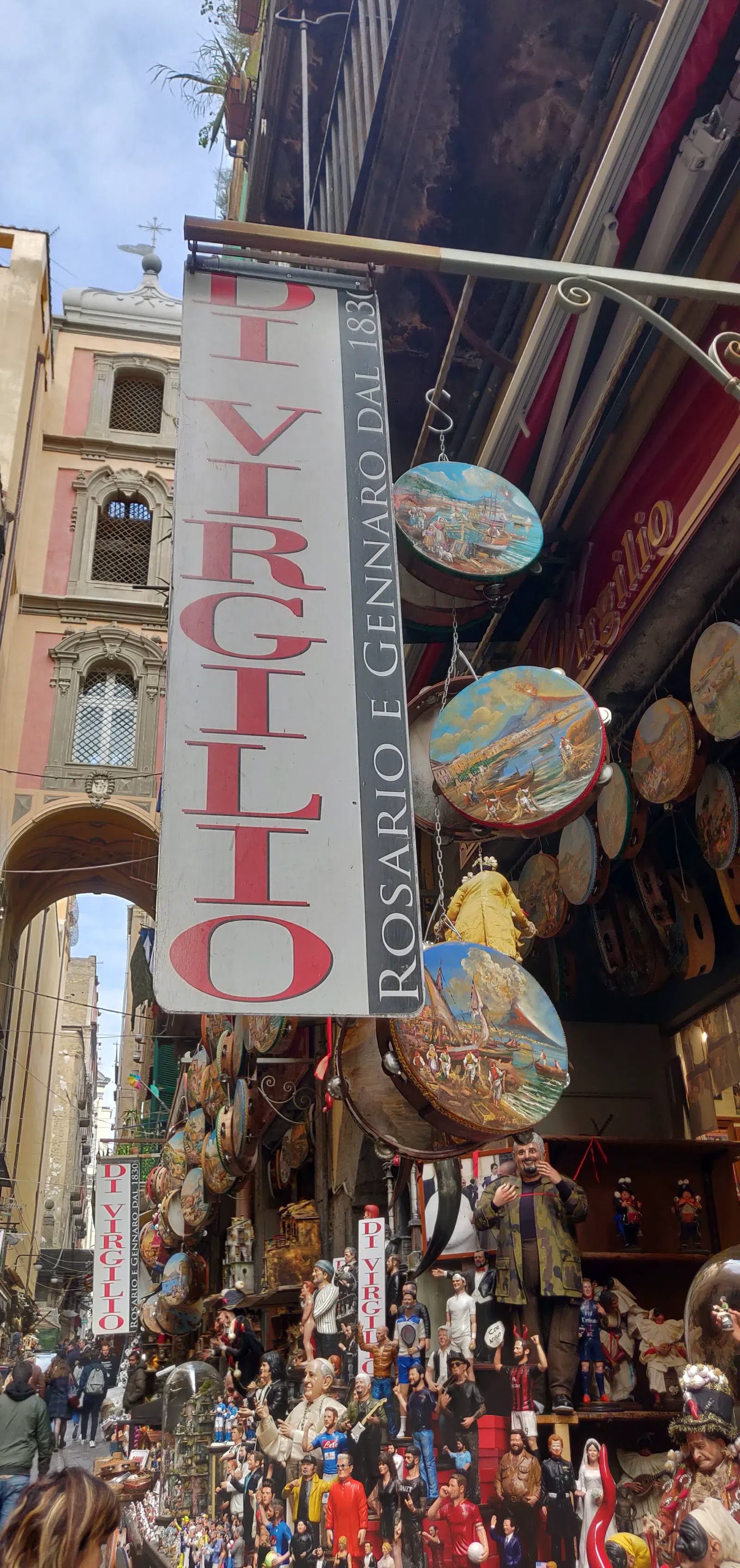
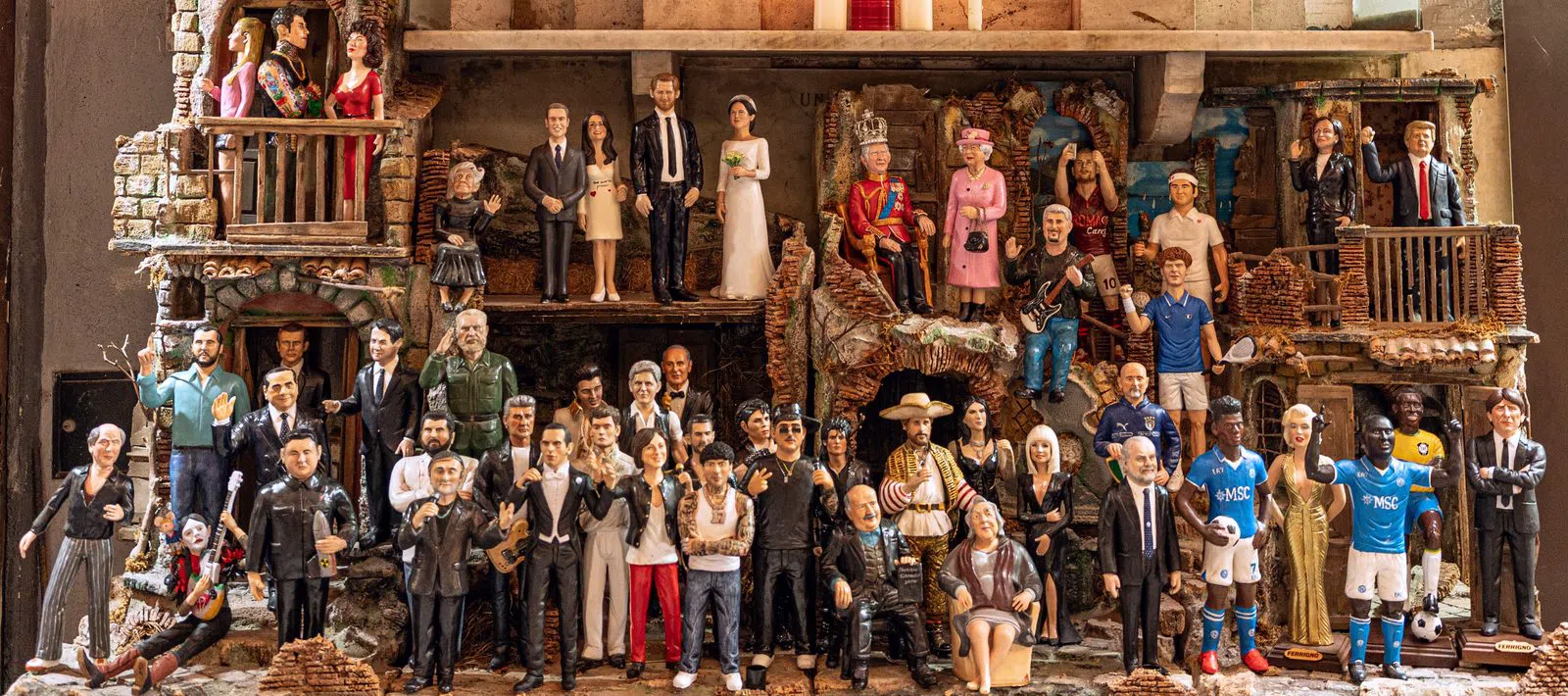
Di Virgilio dal 1830 has the most photographed front on the alley. Genny Di Virgilio is the fourth generation of the workshop that started the Neapolitan habit of putting the year's famous faces into the crib, and his rows of topical statuettes, footballers and an F1 driver in overalls, stand among the classic terracotta shepherds. Browsing is free. Prices run from €15 for a small charm to €1,500 and above for a large commissioned scene. It is the busiest doorway on the street in December, so split a larger party into threes before you go in.
Bottega Ferrigno Presepi (Via San Gregorio Armeno 55) is a different family business from Ferrigno 1836 despite the shared surname, and guides do conflate the two; it has more than 120 years of hand-modelling behind it. Strings of red lucky horns and fabric-dressed Pulcinella hang in the doorway, with glass cabinets of 18th-century-style pastori behind. Small pastori are €15 to €40, full scenes into the hundreds. It is at the far end of the alley and worth the walk.
What fits in hand luggage
Mauro Gambardella Presepi (Via San Gregorio Armeno 49) seals complete miniature nativities under glass bell jars, each one a whole Naples street scene of tiny market stalls and trades, with cork rock-face backdrops stacked to the ceiling behind. Bell-jar scenes and small sets start in the tens of euros. A second, separate Gambardella shop trades at no. 40, so check the number before you buy.
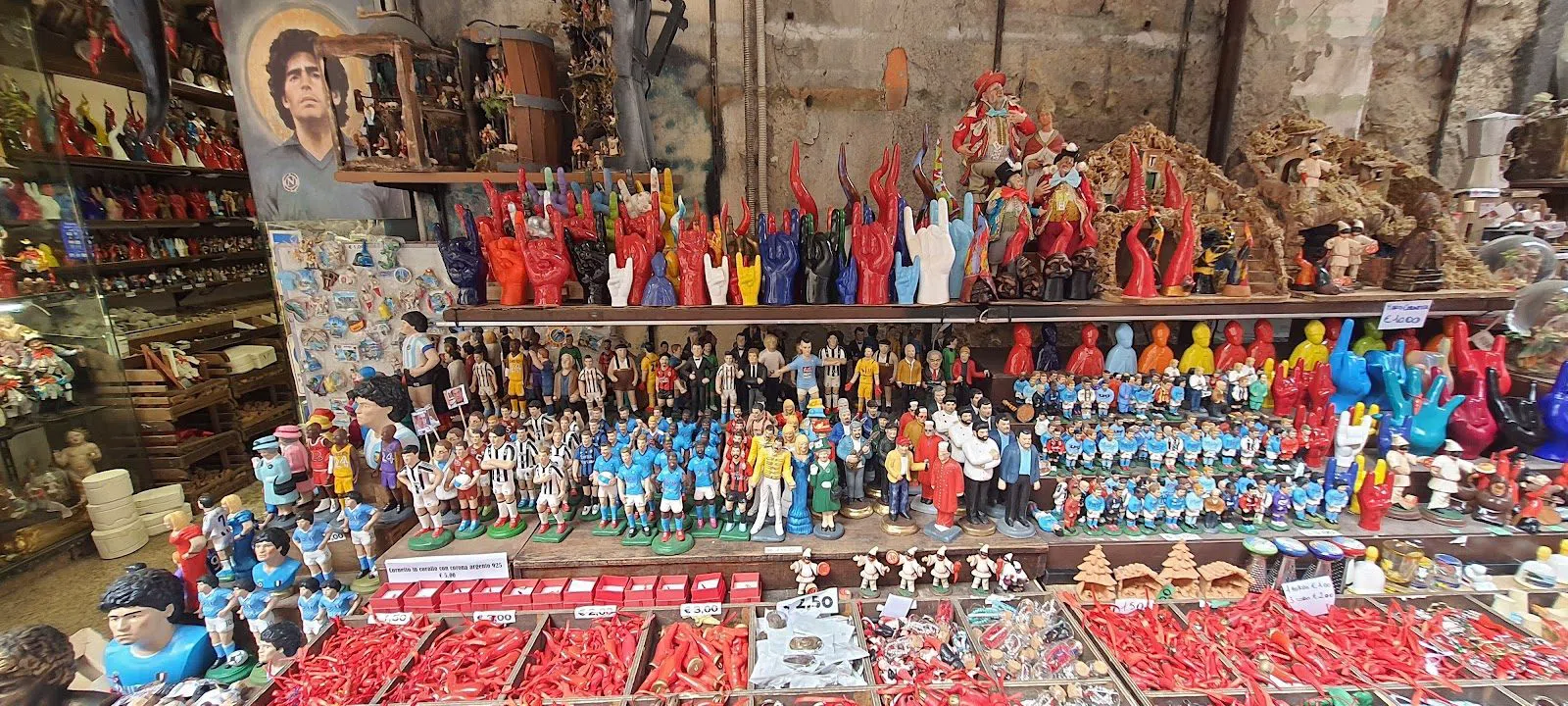
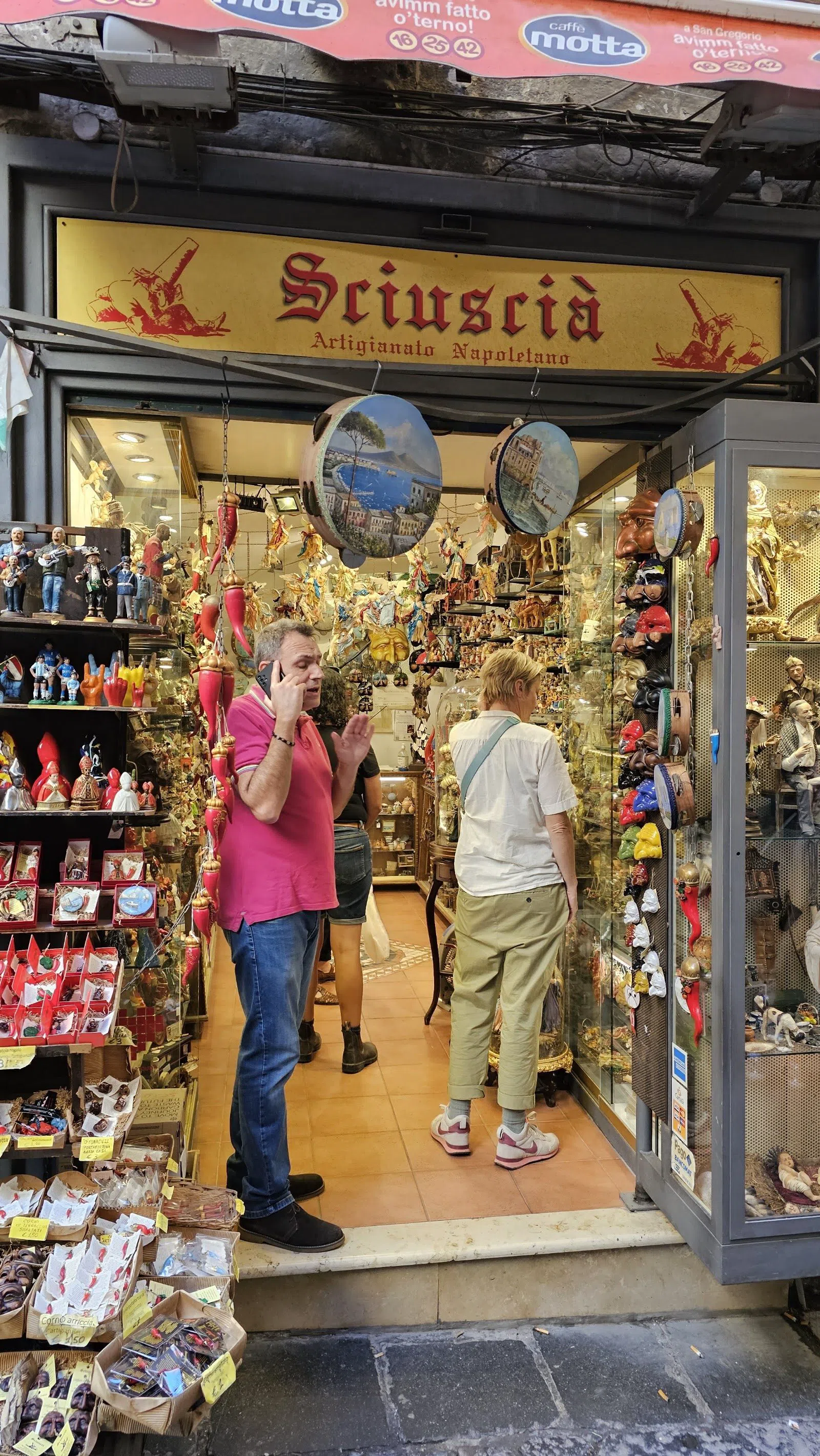
Sciuscià Arte Presepiale (Via San Gregorio Armeno 3) works the miniature end of the craft. Shallow trays hold 3cm muschelle shepherds no bigger than a thumbnail, next to fabric-dressed terracotta Pulcinella with sharply expressive hand-modelled heads. Prices start at single figures and reach the low tens of euros, the cheapest hand-painted work on the street. The shop is tiny, and two or three people at a time is all it holds.
L'Arte del Pastore (Via San Gregorio Armeno 7) is a century-old bottega that sells the furniture of the crib rather than the holy family. One wall carries miniature market-stall props: thumb-sized copper pots, salami and loaves, fish laid out on tiny marble slabs, strung peppers. You can walk in and browse for nothing, and the figures reach into the tens of euros.
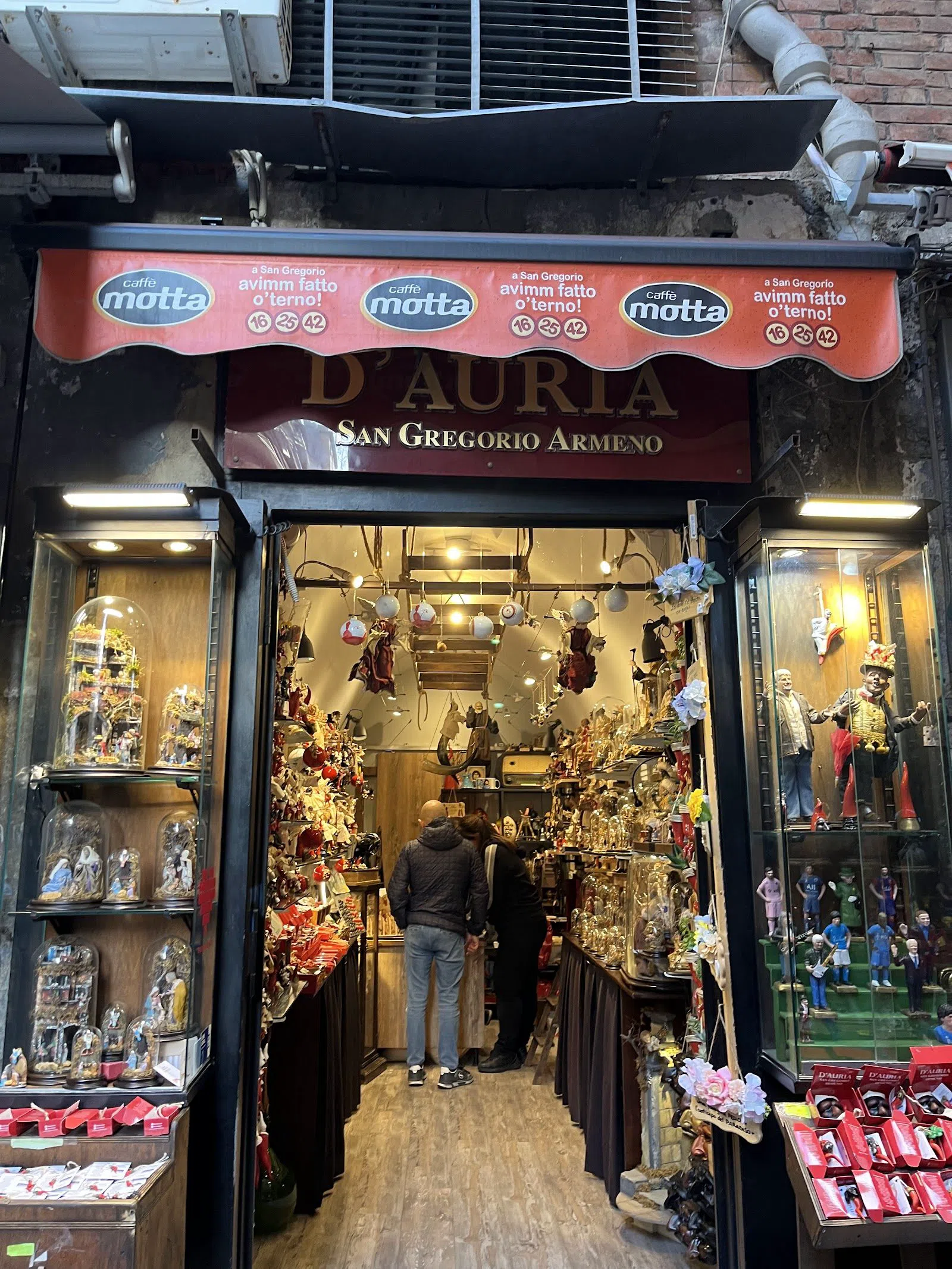
D'Auria Presepi (Via San Gregorio Armeno 1) stands right where the alley meets Via San Biagio dei Librai. More than 50 years of sacred and nativity art are mixed in with red coral horns, amulets and folklore charms, Neapolitan superstition shelved alongside the Christmas tradition. Souvenirs and charms cost a handful of euros, and terracotta pastori reach into the tens. Their dauriapresepi.it address currently lands on an unfinished shop placeholder, so treat the physical shop as the source of truth.
The monastery behind the fair
Chiesa e Chiostro di San Gregorio Armeno gave the fair its name, and its bell-tower arch bridges the alley outside. In the cloister a baroque marble fountain of Christ and the Samaritan woman stands among planted citrus, with Luca Giordano frescoes and a gilded nuns' choir above. The ticket is €4, free under 5 and over 65, and it covers the church, the cloister, the Idria chapel, the refectory, the old bakery and the abbess's parlour. Open daily 10:00 to 13:00 and 15:00 to 18:00, with afternoons running to 19:00 at weekends. Allow 40 minutes. The hours were verified in September 2026 and are worth re-checking before you build a morning around them.
Two stops off the alley
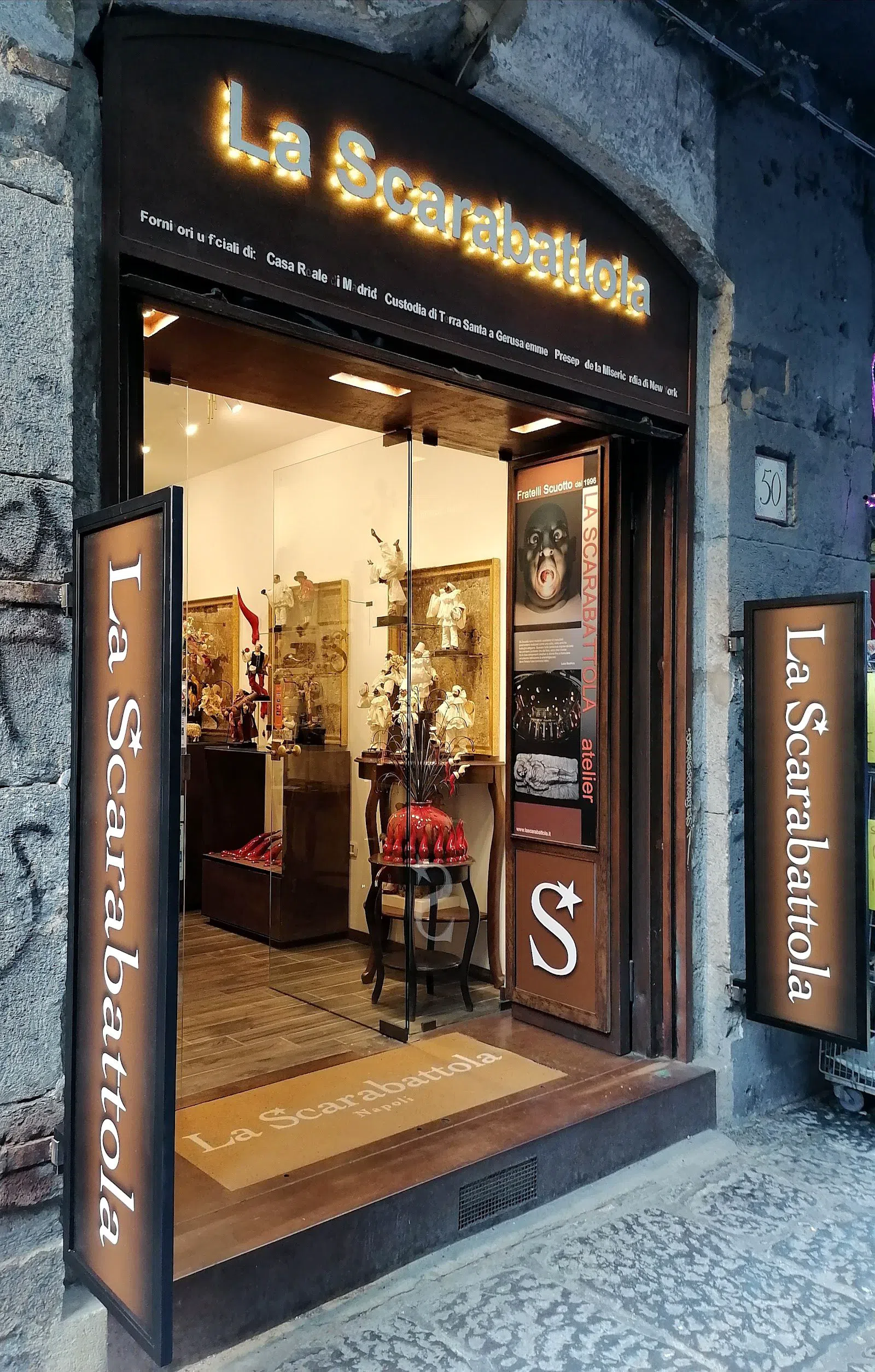
La Scarabattola (Via dei Tribunali 50) is a five-minute walk from the crowd: white walls, gallery lighting, tall stylised Magi in elongated sculptural robes, a studio instead of a market stall. The Scuotto brothers make the Giffoni Film Festival awards and built a monumental crib for the Custody of the Holy Land. Looking is free, and signed sculptural pieces run into the hundreds and beyond. It closes on Sundays, and a proper studio visit needs a call ahead.
Il Presepe Favoloso (Rione Sanità) is a permanent crib by the same Scuotto brothers with scenographer Biagio Roscigno, installed in a working parish, and the modern reference point for the form. The glass case measures 4m by 3m, stands 2.2m high, holds 100 figures and can be walked round on all four sides, under the great double staircase of the Basilica di Santa Maria della Sanità. Basilica entry is free, daily 10:00 to 13:00, with last entry at 13:00. The crib is also taken in on the Catacombe di San Gaudioso tours and on the guided Miglio Sacro walk, both booked through the social co-operative that runs them, and the installation funds youth work in the Sanità. Paired with the catacombs it fills half a day.
Evenings at Pietrarsa
Mercatini di Natale (Pietrarsa) fills the Museo Nazionale Ferroviario with wooden market huts strung with lights between 19th-century steam locomotives, in glass-roofed workshop halls on the shoreline with Vesuvius across the water. It opens 10:00 to late evening from 28 and 29 November through to 6 January. Entry is €8 on weekdays before 15:00, €12 at weekends and on holidays, €6 reduced, with family packages at €20 to €25. Groups pay €3.50 to €5 per head plus a reduced companion ticket. Get there on a regional train to Pietrarsa-San Giorgio a Cremano, or on the Pietrarsa Express heritage train.
When to go
San Martino closes on Wednesdays, the one scheduling trap in a December week, and Santa Chiara closes on 25 December, 1 January and at Easter. Pietrarsa has scattered closure days through December, so check them before you fix an evening there, and book the modelling class and any guided visit in the Sanità before you travel.
See the Naples guide and the Naples hotel search.
Antes de ir
When is San Gregorio Armeno busiest?
In December the busiest doorway on the alley is Di Virgilio dal 1830. The shops are one-room workshops, so a large party should split and go in threes.
How much does a handmade crib figure cost?
Small pastori start at €15 at Bottega Ferrigno Presepi and €20 at Ferrigno 1836, where most figures cost €30. Busts and commissions run €400 to €700, and a commissioned scene at Di Virgilio can reach €1,500 or more.
Can you watch the artisans working for free?
Yes. Fratelli Capuano dal 1840 at no. 28 says plainly that visitors can watch its artisans without buying anything, and Ferrigno 1836 at no. 10 lets you walk in and watch the bench work.
Can I make a figure myself?
Ferrigno 1836 runs a hands-on figure-making class in its workshop at €65 per person, in Italian or English, for up to six people aged 18 and over. You need to book ahead.
Which days are closed in December?
The Certosa e Museo di San Martino shuts on Wednesdays, La Scarabattola on Sundays, and Santa Chiara on 25 December and 1 January. The Pietrarsa market has scattered closure days, so check the dates.