 In this area
The Naples issue
Chiaia, Naples: the polished district where Naples goes out to breathe
From Piazza dei Martiri to the Lungomare, Chiaia is Naples in a silk tie: aperitivo streets, serious seafood, designer windows and a seafront that slows the whole city down.
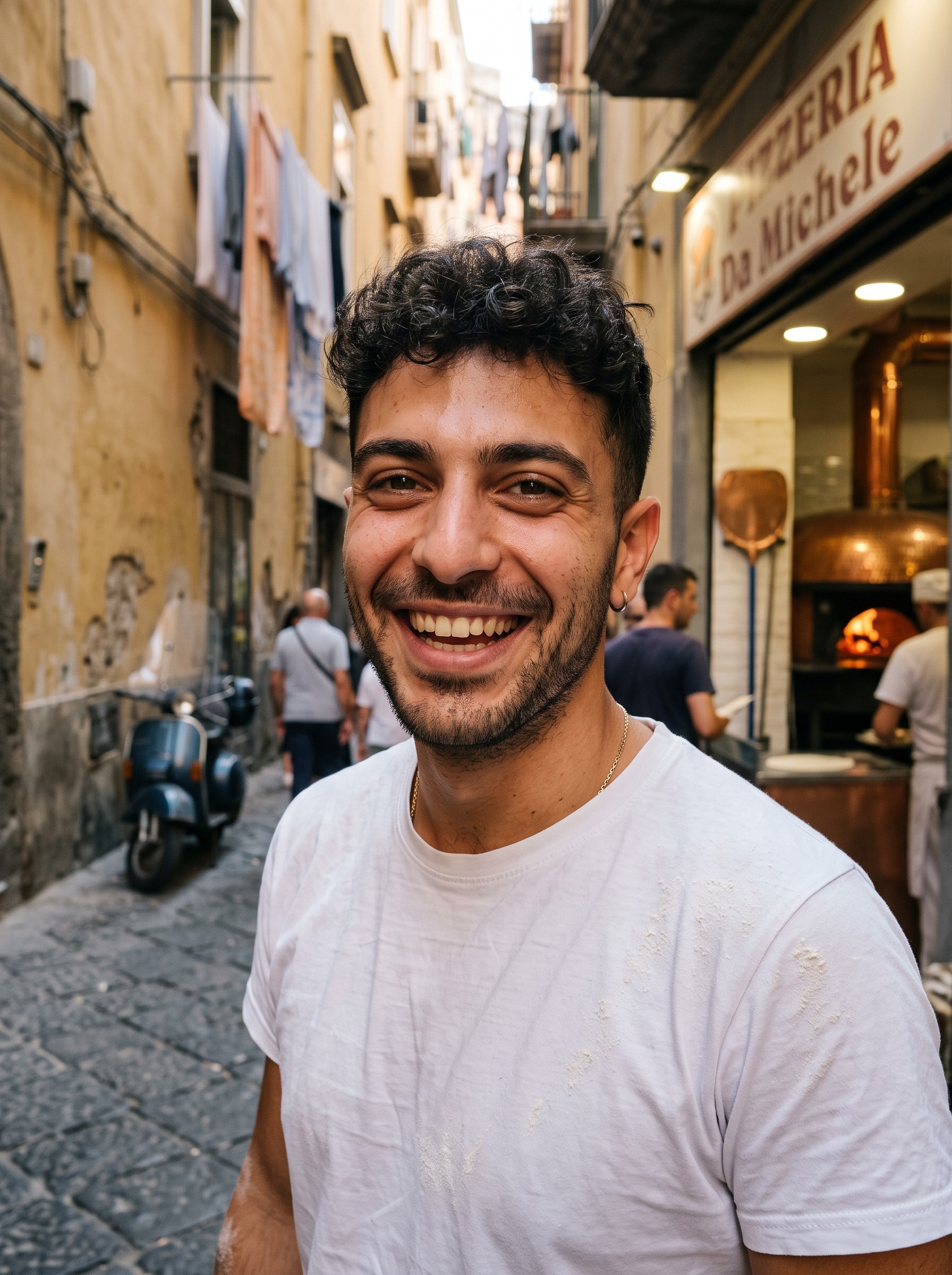
By Gennaro EspositoPizza queues and two-euro cuoppi, at full volume
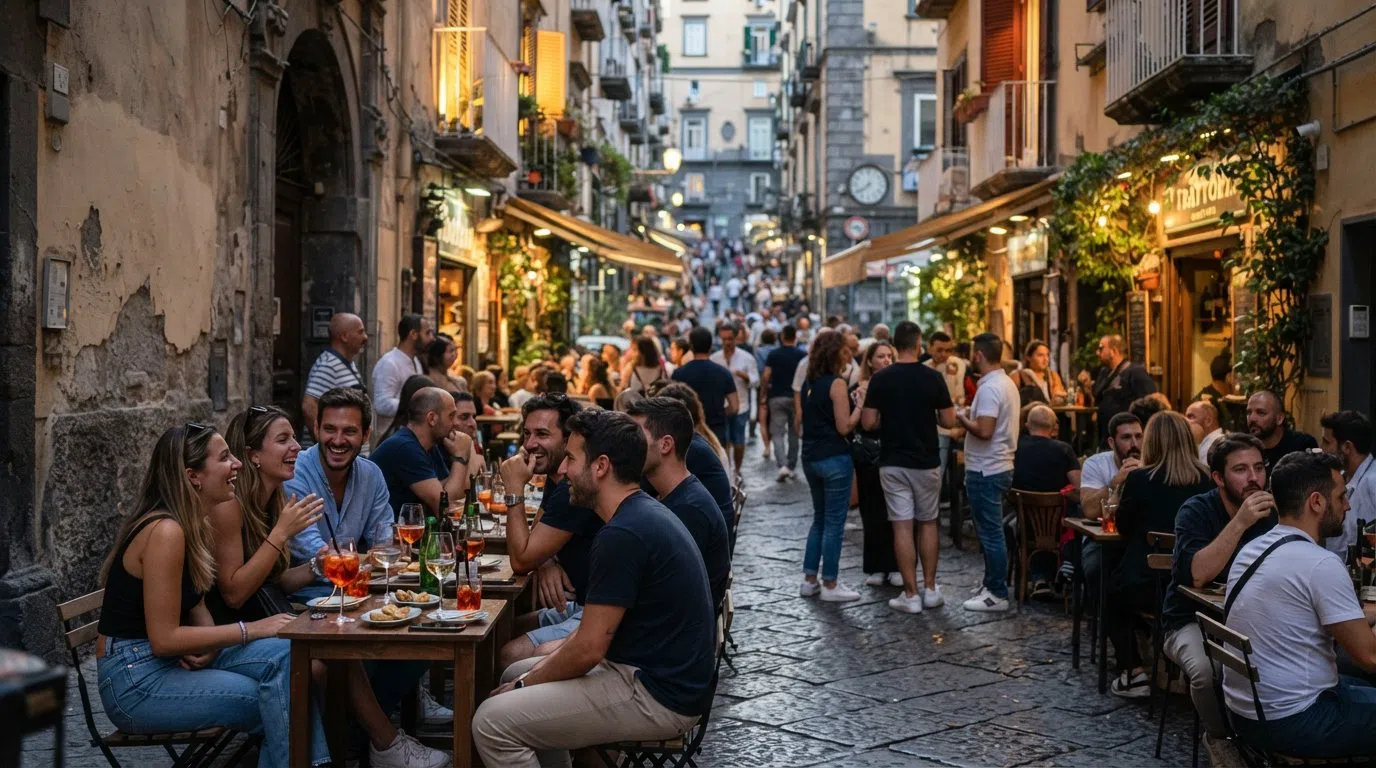
Off Piazza dei Martiri, the marble lions sit there like they own the place, and by eight in the evening the whole district is doing what Chiaia does best: pouring a spritz, lighting the bar tables, and pretending the night is young. This is Naples with its collar straightened. The scooters still buzz, the voices still carry, but the shopfronts are Hermès and Cartier, not fried-fish counters, and the coffee comes in porcelain that looks too expensive to touch.
What Chiaia is known for
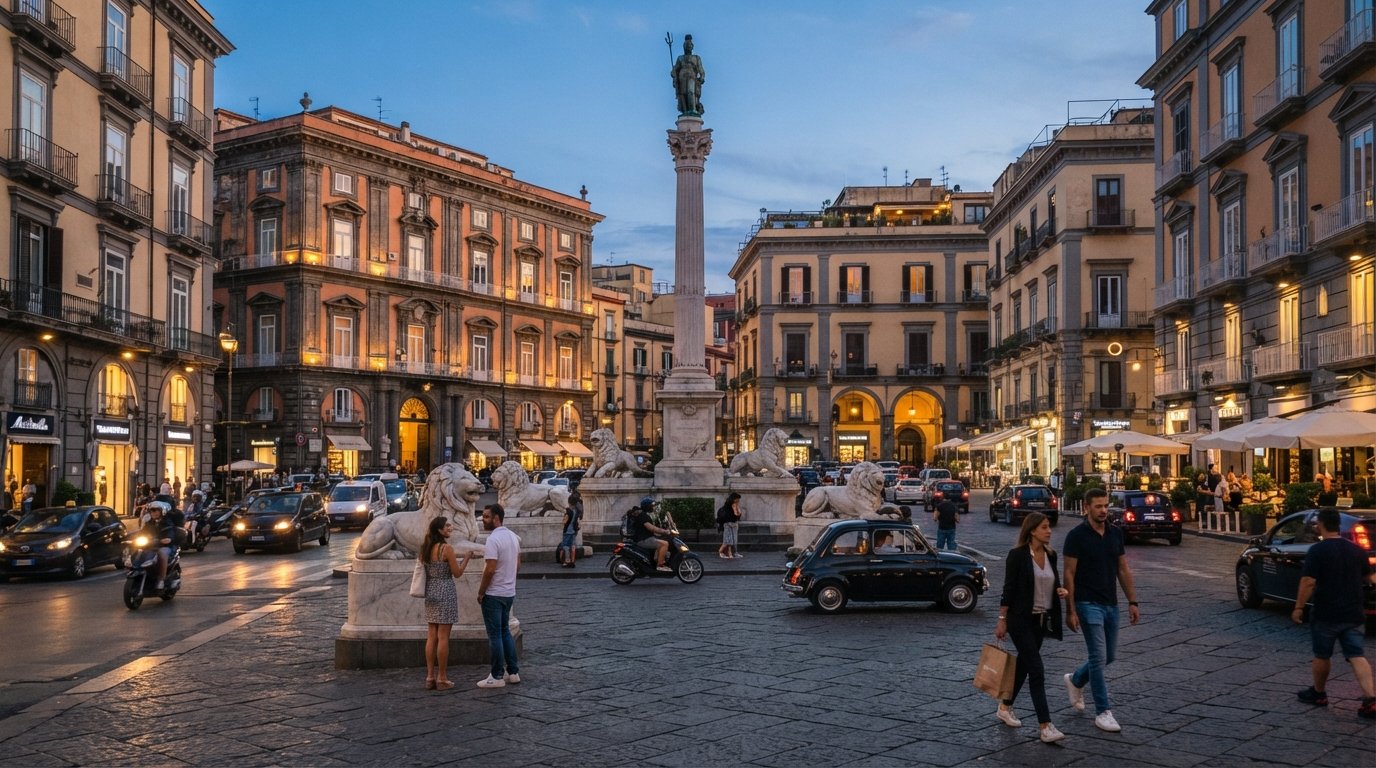
Chiaia is the moneyed, seaward end of central Naples, and it wears that status without much fuss. Its spine runs along Via dei Mille, Via Filangieri, Via Calabritto and Via Carlo Poerio, all of them feeding off Piazza dei Martiri, the elegant square built under the Bourbons and ringed by four marble lions for the uprisings of 1799, 1820, 1848 and 1860. The square has that polished civic air Naples does so well when it wants to look serious: a place for a quick cross-town cut, a cigarette, a glance at the shop windows, and then on.
Walk south and the city drops toward the water. One block from the luxury axis, the Villa Comunale stretches along the seafront, laid out for the royal court in the 1780s, and beyond it the Lungomare opens the bay like a stage set. That is the trick of Chiaia: you can go from a silk tie to a sea breeze in a few minutes flat. It is a neighbourhood that rewards slow walking because the details keep changing under your feet — Liberty-era facades, a spiral staircase glimpsed through a doorway, a bay view at the bottom of a downhill lane, the sudden flash of laundry in a back vicolo. The polish is real, but so is Naples.
The social rhythm here is the real headline. From about seven, the barretti begin to fill: the small bars threaded through Via Giuseppe Fiorelli, Via Bisignano and Vico Belledonne. Tables blur from one place into the next, and by the time the light goes soft the cobbles feel like one long open-air lounge. It is calmer than Piazza Bellini, more conversational, more grown-up, and yes, more expensive. But this is the point. Chiaia is where people come to talk, to be seen, to order one more drink, to walk off dinner toward the sea and then back again.
Plan your Naples trip
Live prices from our booking partners.
Guests & rooms
Free cancellation on many rooms. We may earn a commission when you book.
Where to eat & drink
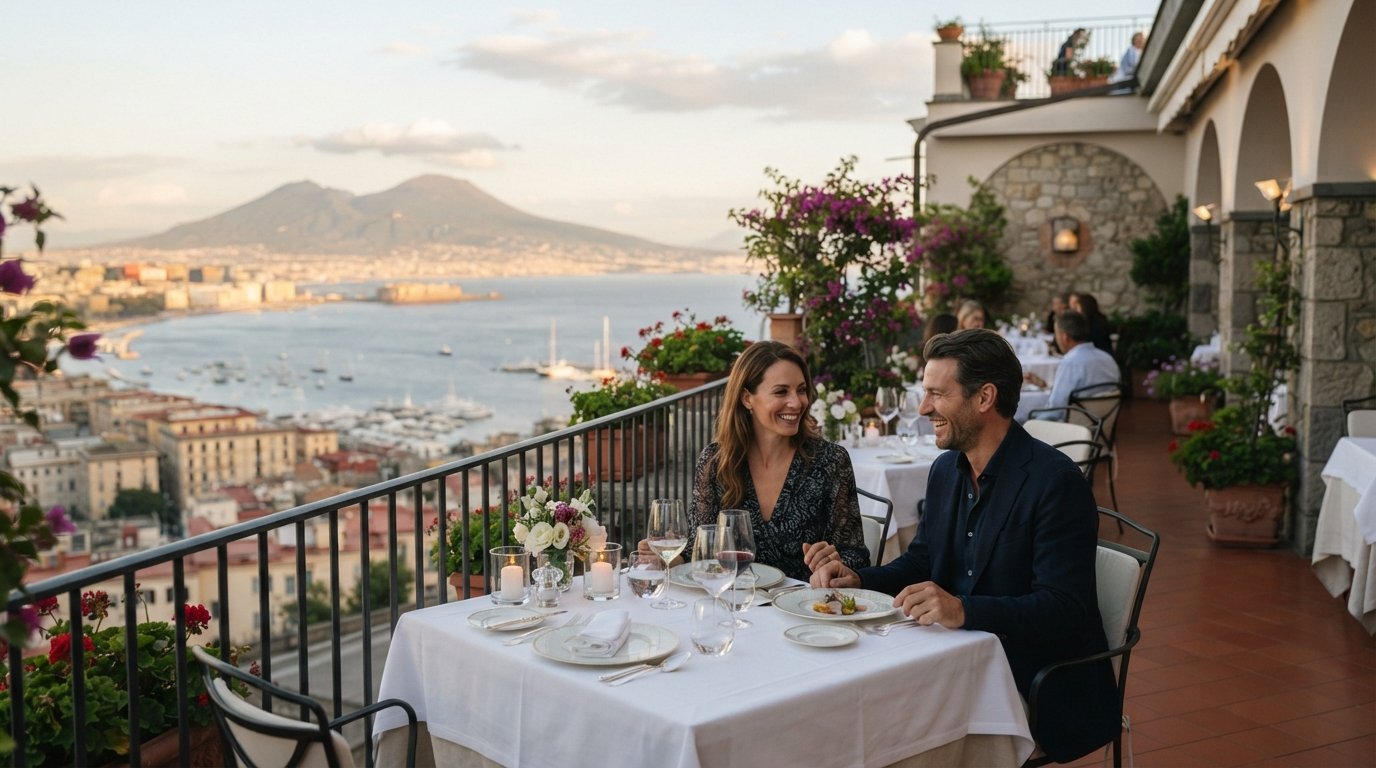
At the top end, Chiaia goes fine dining without losing its Neapolitan nerve. George Restaurant, on the roof of the Grand Hotel Parker's on the Chiaia/Vomero fringe, became Naples' first two-Michelin-star kitchen in 2025 under Domenico Candela. The room looks out over the Bay of Naples, and that view is not just decoration; it is part of the argument. Candela threads classical French technique through Campanian produce, which is exactly the sort of sentence that sounds grand until you sit down and realise the city below is doing half the work for him.
Veritas on Corso Vittorio Emanuele keeps one Michelin star and a more grounded pulse, with Gianluca D'Agostino working modern, seasonal Neapolitan cooking through tasting menus that run roughly €90–140. That is not a casual supper, but it is a serious one, the kind where the room stays quiet enough for the plates to matter. If you want seafood with a cult following rather than a white-tablecloth sermon, Da Dora on Via Ferdinando Palasciano is the old-school answer. It is tiny, seats barely forty, and the dish to order is the linguine alla Dora, piled with prawns, mussels and lobster in a whisper of tomato. Book ahead. In this part of Naples, the places that matter are often the ones that can barely fit a crowd.
CrudoRe on Via Carlo Poerio takes the raw-fish route with more polish: carpaccio, oysters, tartare, the clean knife work that makes seafood feel almost architectural. Pescheria Mattiucci on Vico Belledonne does something more local and sly — fishmonger by day, oyster-and-crudo bar by night — which is exactly the sort of transformation Chiaia understands. The neighbourhood likes a shop that changes costume after dark.
For a classic table, Umberto on Via Alabardieri has been in the Di Porzio family since 1916, and the order is the paccheri d'o treddeta, that “three-finger” pasta with octopus, olives and capers. It is the sort of dish that reminds you Naples does not need to shout to be itself. And if it has to be pizza, 1000 Gourmet on Via San Pasquale is the one to know for the creative, lighter-dough version, with gluten-free options too. This is not the old centre’s pizza-pilgrimage terrain; Chiaia’s pizza is more polished, more experimental, less about queues and more about precision.
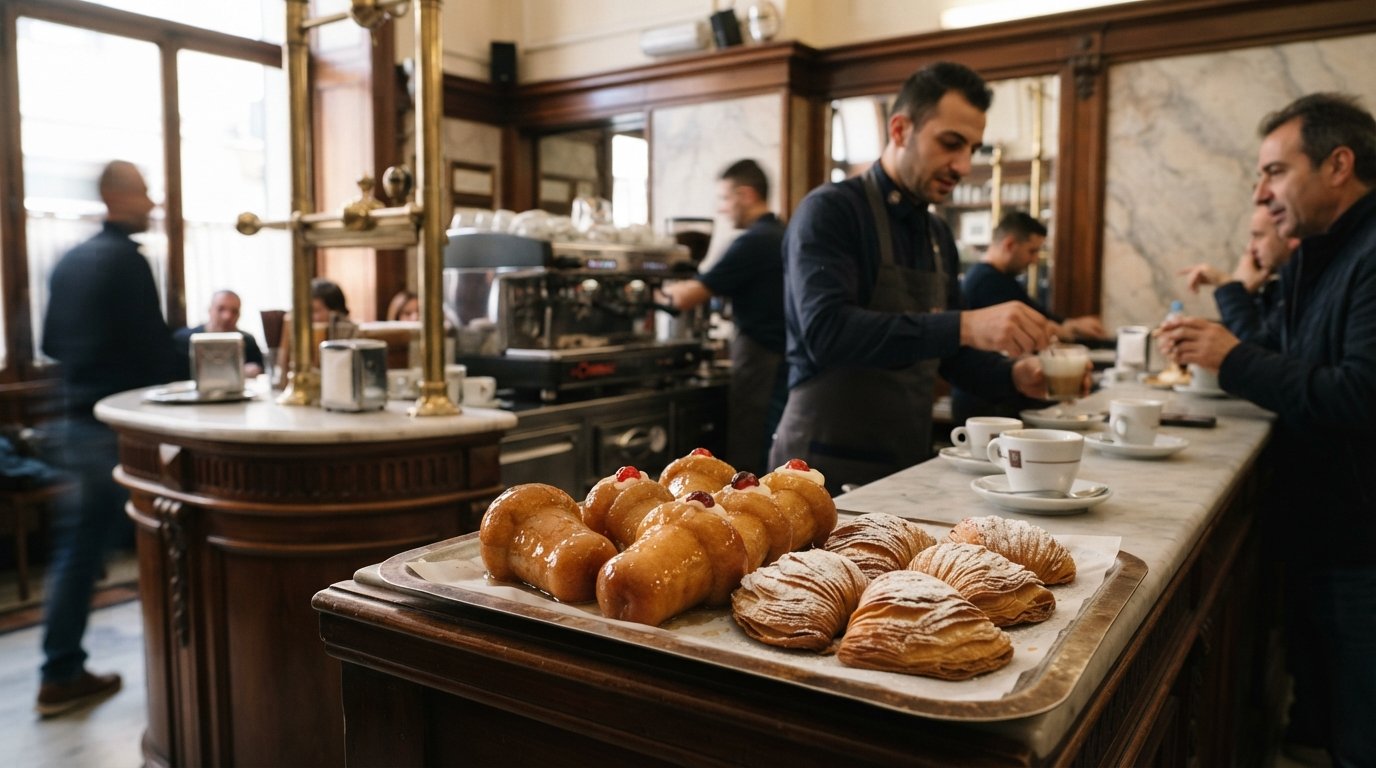
For the sweet things, Gran Caffè Cimmino on Via Filangieri has been a fixture since 1907, with babà and sfogliatella served in the sort of elegant coffee room that makes time feel expensive. Pasticceria Mennella on Via Giosuè Carducci is where you go for lemon-cream frolla and babà gelato, which sounds like a joke until you taste it and stop talking.
Going out
The barretti are Chiaia’s true nightlife district, and the best way to understand them is to start walking. Vico Belledonne a Chiaia is the first stop, and Enoteca Belledonne at No. 18 has been the neighbourhood’s living room since the Scognamillo brothers turned an old wine-and-oil shop into a bar in 1989. Between eight and nine, it is packed with people standing over wooden stools, Campanian white in hand, talking over the clink of glasses and the hum of the street. It is not trying to be glamorous. It just is.
Round the corner on Via Giuseppe Fiorelli, Barril at No. 11 leans into the courtyard mood: planted greenery, aperitivo spread, a long list of mojitos, and enough space to linger without feeling pinned to the bar. Ba-Bar on Via Bisignano, No. 20, is warmer and dimmer, the sort of room where you sit down and let the evening slow its pace. These three streets, and the little turnings between them, are the heart of the district after dark. Tables spill outward, neighbours greet each other across the road, scooters hiss past, and somewhere a football match is audible from three bars at once.
Then there is L'Antiquario on Via Vannella Gaetani 2, which is the single best drink in the district and one of the best reasons to come to Chiaia at all. You enter through what looks like an antique shop, and behind the red velvet and Art Nouveau wallpaper, Alex Frezza’s cocktails do the work. The bar sits at No. 63 on the World's 50 Best Bars 2025 list, opens daily from 6pm, and often has a queue, so go early or reserve. The signature Cristo Velato is the kind of drink that makes the room go briefly quiet. Not because it is precious, but because it is properly made.
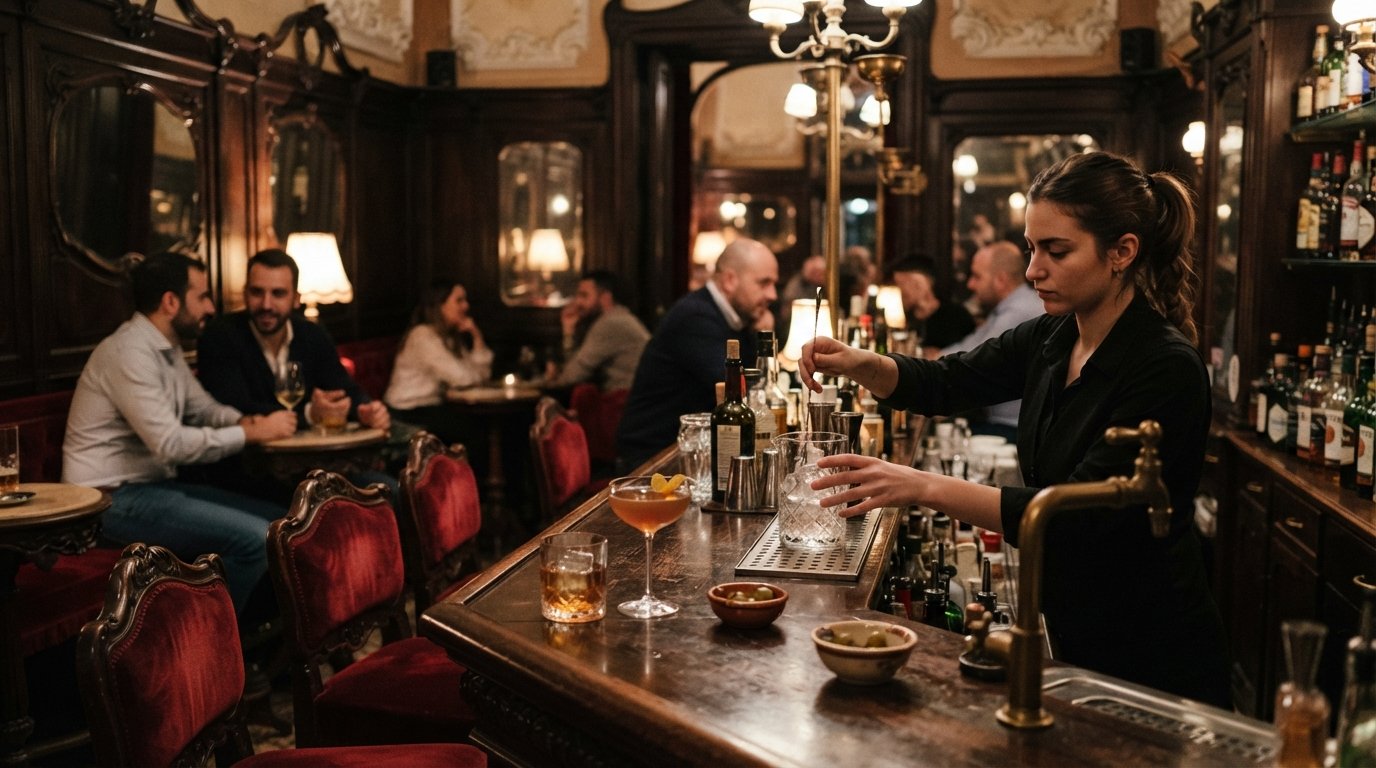
This is not club territory. Chiaia goes for aperitivo into late drinks, polished rather than feral. The volume is still Naples volume — greetings shouted across the street, a laugh that turns into a chorus — but the register is conversational. Couples, friends, a few visitors who have wandered over from the sights: that is the crowd. Smart-casual by default, no costume required.
Things to do / what to see
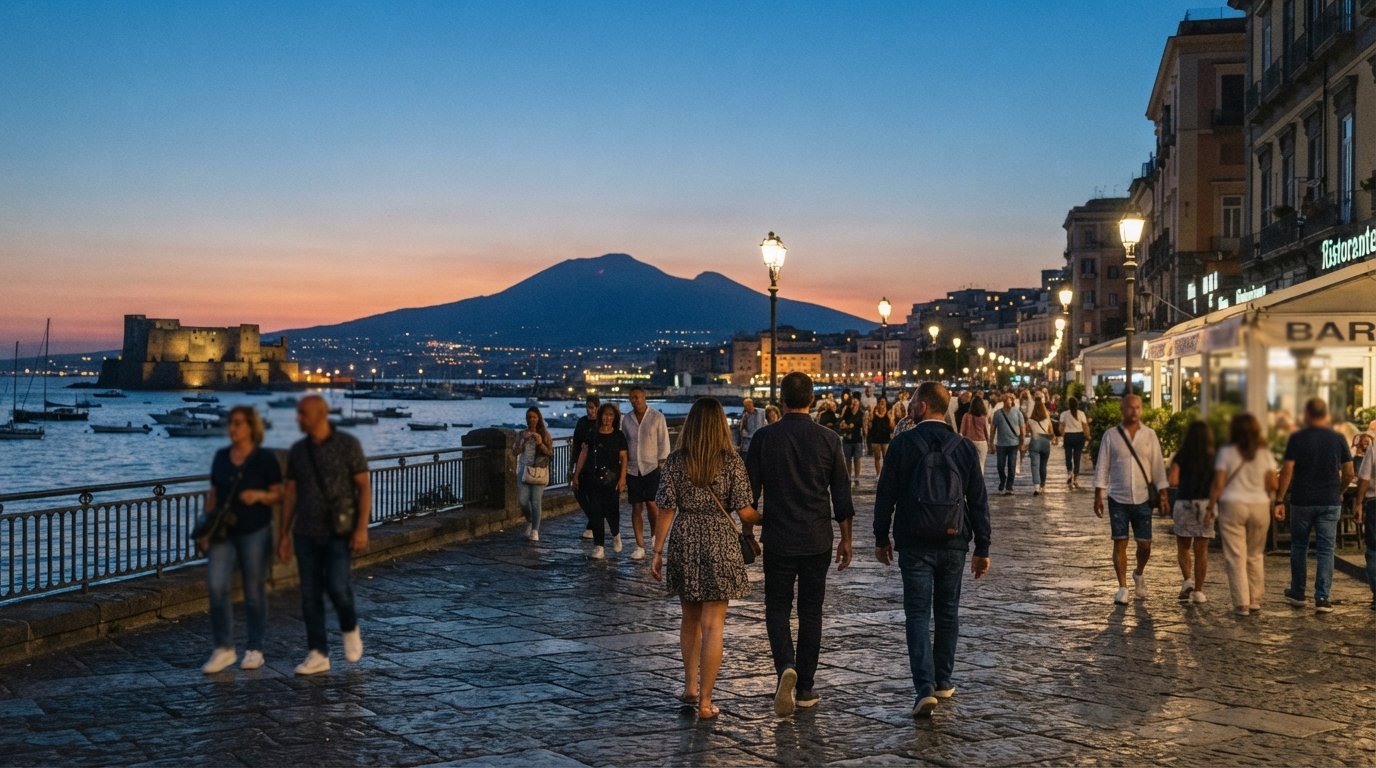
The set-piece is the Lungomare Caracciolo, the pedestrian seafront promenade that runs the length of Chiaia with Vesuvius and the islands across the water. Walk it at dusk toward Castel dell'Ovo, the tufa fortress on its own islet at the Santa Lucia end, where you can cross on for free. There are few better ways to understand Naples than by watching the light go down over that stretch of water while the city keeps talking behind you.
Behind the promenade, the Villa Comunale gives the district its green lung: royal seafront gardens dotted with fountains, sculptures and the wrought-iron Cassa Armonica bandstand designed by Enrico Alvino. Inside the park sits the Stazione Zoologica Anton Dohrn, opened in 1874 and still in its original building, dedicated entirely to Mediterranean marine life. It is Europe’s oldest aquarium, and there is something wonderfully unflashy about that fact. Naples does not always need to reinvent itself; sometimes it just keeps the good old thing running.
The Galleria Borbonica is stranger, and worth it for that reason alone. Guided tours take you through 1850s tunnels dug as a royal escape route and later used as a wartime air-raid shelter. The entrances sit on the Chiaia side of the hill, so you are never far from the polished surface even while you are underground. It is one of those Naples experiences that reminds you how many cities are stacked inside this one.
PAN — Palazzo delle Arti Napoli on Via dei Mille keeps the culture side current with rotating contemporary-art shows in a grand old palazzo, while the Palazzo Mannajuolo on Via Filangieri is worth stepping into for its elliptical Liberty-era spiral staircase alone. That staircase is a little flourish of urban theatre, the sort of thing Chiaia does well: not shouting for attention, but rewarding anyone who looks up.
Don’t miss in Chiaia
Villa Comunale park
Lungomare Caracciolo promenade
Palazzo Alabardieri shopping streets
Shopping
Chiaia is Naples’ luxury-shopping quarter, and the route is almost too easy. Piazza dei Martiri anchors it, with Via Filangieri, Via dei Mille, Via Calabritto and Via Carlo Poerio lined with international houses — Hermès, Cartier, Louis Vuitton, Prada, Valentino, Ferragamo — alongside serious Neapolitan tailoring. You come here to browse, to compare, to let the window displays do their work. This is not bargain-hunting territory, and nobody pretends otherwise.
The one address to seek out is E. Marinella at Riviera di Chiaia 287 by Piazza Vittoria. It is a 20-square-metre shop opened in 1914, still hand-printing and hand-sewing the silk ties Italian statesmen and heads of state swear by, now run by the founder’s grandson Maurizio. That is Chiaia in one object: small, exacting, expensive, and built on a family story that never bothered to get smaller for the sake of trend.
From there, Via Chiaia runs back toward the Royal Palace, technically the seam between Chiaia and the centre, and it is pedestrianised, lined with a mix of mid-market and independent shops. If you need a sweet pause, Fantasia Gelati at No. 186/187 is there for a cone en route. There is no big produce market in Chiaia itself — locals head up to Pignasecca in neighbouring Montesanto for that — so this is a district for tailoring, leather, jewellery and silk rather than tomatoes and fish crates.
Where to stay in Chiaia
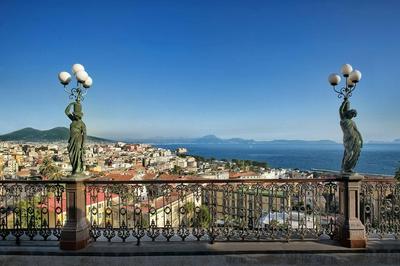
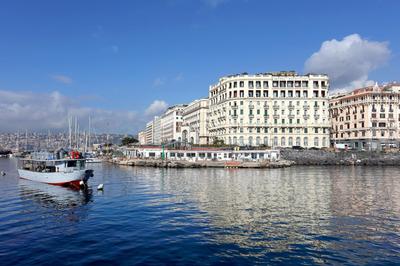
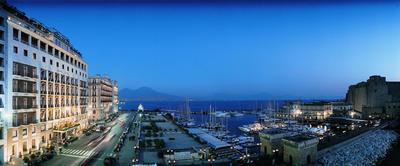
Chiaia is the refined, safe-feeling choice for a Naples base, but where you sleep inside it changes the whole experience. The Lungomare / Riviera di Chiaia strip gives you seafront hotels and bay views, plus an easy stroll to the Villa Comunale and Castel dell'Ovo. It is the calmest option, best if you want quieter nights and a view to wake up to rather than a bar under the window.
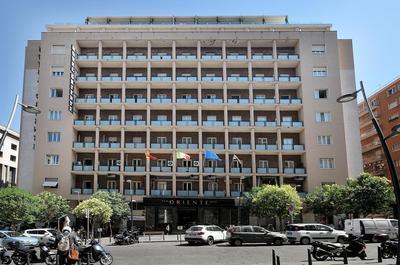
The blocks around Piazza dei Martiri, Via dei Mille and Via Filangieri are the liveliest, because they put you in the shopping district and among the barretti. That means more noise at weekends, but also more atmosphere and everything on the doorstep. The pockets near Piazza Amedeo are handy for the metro and the Chiaia Funicular up to Vomero, which matters if you want to move around the city without fuss.
Prices here sit above the historic centre and well above the Quartieri Spagnoli, but you get a smarter, more residential neighbourhood and a walkable night scene that feels notably calmer than Naples’ denser centre. Light sleepers should avoid a room directly over Vico Belledonne or Via Fiorelli on a Friday or Saturday.
Hotels in Chiaia
Our best-rated stays in this neighbourhood. Prices are approximate “from” rates — confirmed at the provider when you continue. We may earn a commission if you book through our partners — at no extra cost to you.
In this area In this area
 In this area
 In this area
 In this area
 In this area
Getting around
Chiaia is flat and eminently walkable. The whole neighbourhood, from seafront to shopping streets, covers about 15 minutes on foot, which is part of why it works so well for an evening out. The main transit node is Piazza Amedeo on Metro Line 2, which links east to Napoli Centrale and beyond; a newer Line 2 station at San Pasquale serves the seafront side. From Piazza Amedeo, the Chiaia Funicular has been climbing to Vomero since 1889 and takes about three minutes. That is classic Naples: one minute you are at the bar, the next you are above it.
Via Chiaia connects the neighbourhood straight up to the Royal Palace, Piazza del Plebiscito and the start of Via Toledo, a 10–15 minute walk. If you are heading toward the historic centre and the pizza streets, it is a short metro ride or a 20-minute walk. Naples Capodichino airport is roughly 20–30 minutes by taxi. Inside Chiaia, skip the car. Parking is scarce, the lanes are made for walking, and the whole district makes more sense on foot anyway.
Chiaia is not Naples trying to impress you with noise. It is Naples after it has changed shirt, stepped out for a drink, and decided to stay civilised for the evening. The sea is there, the money is there, the boutiques are there, but so are the shouted greetings, the scooter engines, the wine bars full by eight, and the old city pulse underneath. That is why it works. It is polished, yes. But it is still Naples, still loud-hearted, still alive to the last table.
Gallery
Chiaia in pictures
Chiaia — your questions
Is Chiaia a good area to stay in Naples?
Yes — if you want a calmer, more upmarket base. Chiaia is walkable, safe-feeling and full of good restaurants, cocktail bars and shops, with the seafront close by and Metro Line 2 linking you to the sights in minutes. The trade-off is price, and you’ll be a short ride rather than a few steps from the Duomo and the classic pizza streets.
Where are the best bars in Chiaia?
The barretti around Vico Belledonne, Via Bisignano and Via Fiorelli are the heart of it: Enoteca Belledonne for wine, Barril for courtyard aperitivo and Ba-Bar for cocktails. For the single best drink, L'Antiquario on Via Vannella Gaetani is the one to book or reach early.
Is Chiaia safe at night?
Chiaia is among the safest and best-lit parts of central Naples, and the barretti streets stay busy and social well into the night. Use the usual big-city sense with phones and bags in packed bar crowds, but it feels notably more relaxed after dark than the old centre.
What is Chiaia known for?
Luxury shopping, aperitivo streets, polished cocktail bars and a walkable seafront. It’s also home to standout dining, from seafood rooms to Michelin-starred kitchens, plus the Villa Comunale, the Lungomare and the city’s best-dressed night out.