The Naples issue
Naples Runs on Standing Espresso and the Sospeso Rule
How the city's daily coffee ritual works, bar by bar, from the grand cafés of the centro to the quiet counters of Vomero.
By Rosaria EspositoRagù that took a Sunday, sfogliatella that took a queue
Before eight in the morning, Naples is already standing. Baristas snap portafilters like castanets, coins slide across worn zinc counters, and half the city drinks its tazzulella 'e cafè (dialect for the little cup, the everyday espresso) in under ninety seconds without ever pulling out a chair. This isn't corner-shop haste. It's a ritual with its own etiquette, its own economy, and a small act of generosity built into the ordering system itself. Spend a few days moving between Naples' bars and you start reading the city by its counters as much as by its churches.
How the bar actually works
At almost every bar in Naples (and this trips up first-time visitors constantly) you pay before you drink. Walk to the cassa (till), state your order, hand over exact change if you have it, and take the small paper scontrino (receipt) that comes back. Only then do you approach the counter, slide the receipt toward the barista with a coin on top if you're tipping, and say your order again in three words: un caffè, a cappuccino, whatever you're having. The whole exchange, from till to cup to drinking to leaving, rarely runs past two minutes for a coffee at the bar. Seats, where they exist, are a different transaction entirely: table service in Naples' grand cafés carries its own cover charge and roughly triples the price of the same cup, which is why locals stand and visitors sit.
Plan your Naples trip
Live prices from our booking partners.
Free cancellation on many rooms. We may earn a commission when you book.
The grand cafés that set the stage
No account of the ritual can skip Gran Caffè Gambrinus (Piazza Trieste e Trento, centro storico), the city's oldest and grandest café, open daily from 7am into the late evening. It takes groups easily: squeeze in at the standing bar for a €1.20 espresso and you're doing what generations of Neapolitans have done on the way to work, or reserve one of the frescoed rooms for a larger party and pay €5-8 a head for full table service under gilded ceilings. Both are legitimate ways to experience it. The trick is knowing which one you're paying for before you sit down.

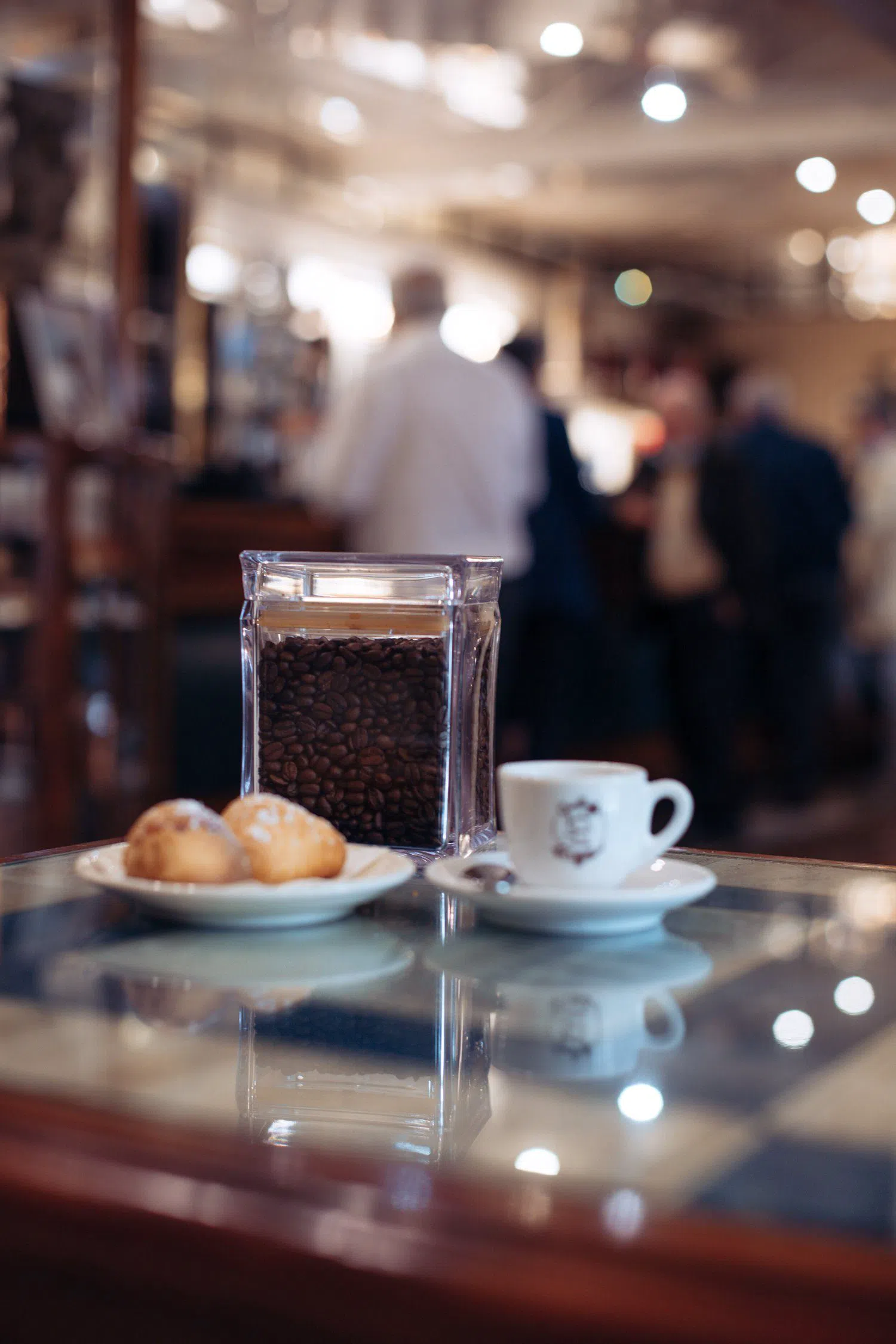
A short walk from the grand piazzas, Gran Caffè Cimmino has pulled shots in the same spot since 1930, making it one of the few Naples cafés never to have moved. It's a good alternative to Gambrinus for anyone who wants the same historic-grand-café register without the tour-group density: comfortable for small-to-medium groups, with both a standing bar (€1.30) and seated tables (€5-7) properly staffed, not an afterthought bolted onto a takeaway counter.
Cross into Chiaia, the city's polished shopping district, for Gran Caffè La Caffettiera, where table seating and reservations are taken seriously rather than tolerated. It's the most comfortable of the historic houses for a proper sit-down party (€6-9 for seated table service, €1.30 at the bar), and its location gives a coffee crawl a natural west-end bookend, a useful contrast to the scrappier bars around Spaccanapoli below.
Spaccanapoli's counter culture, and the true home of caffè sospeso
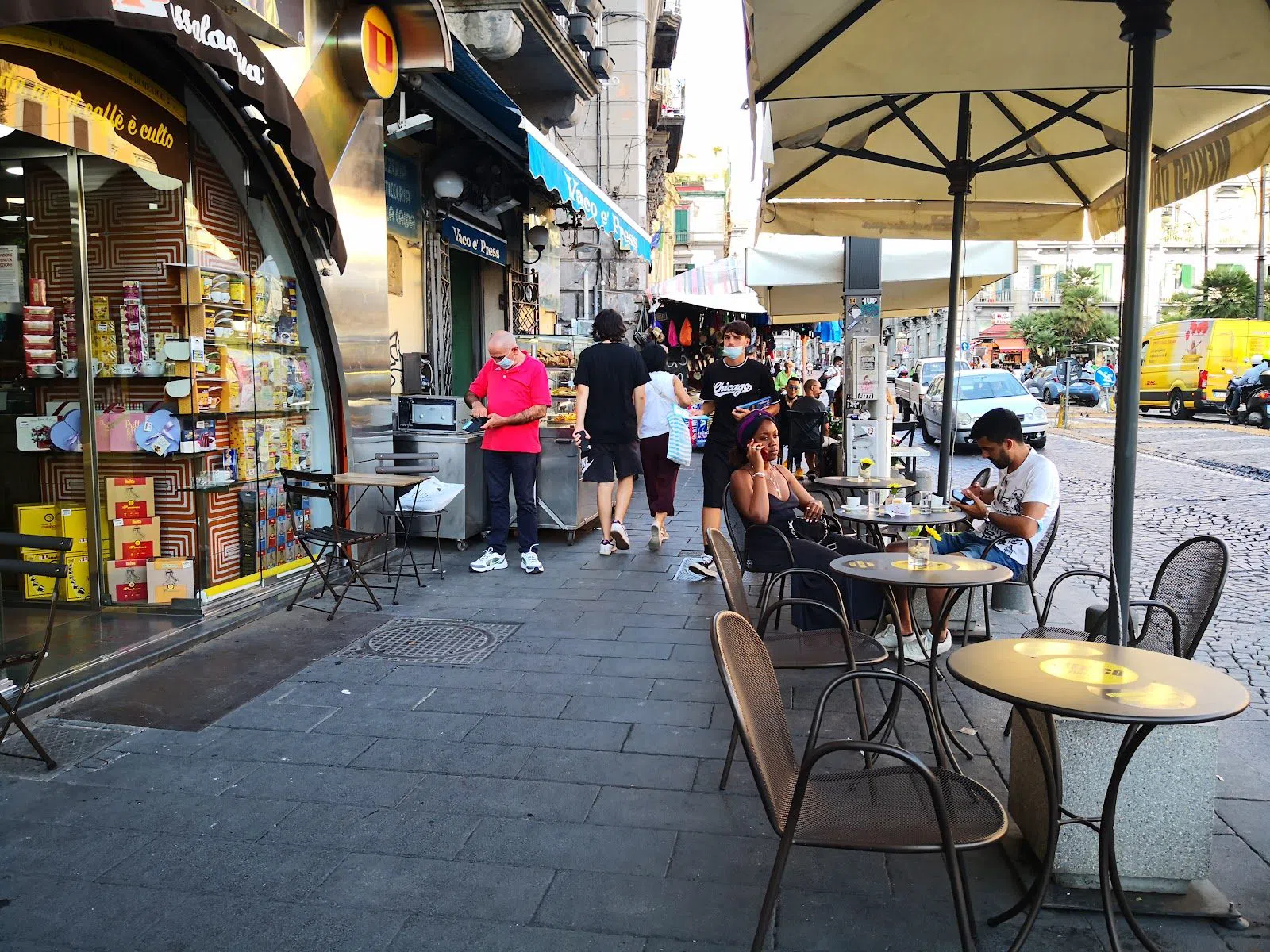
If Gambrinus is the opening scene, Bar Mexico (Piazza Dante) is where the ritual shows its bones. Running since 1948 and cited by Neapolitans themselves, not just guidebooks, as the purest expression of stand-at-the-bar coffee, it's a working roastery as much as a café: no reservations, barely any seating, just a counter that absorbs groups of three or four comfortably if everyone's willing to squeeze. An espresso here runs €1.20-1.50, and it's also a genuine caffè sospeso house, which makes it the right place to explain what that actually means.
'O cafè sospeso (the suspended coffee) is a small, specifically Neapolitan piece of etiquette: you pay for two coffees but drink one, leaving the second paid in advance for whoever comes in next and can't afford it. It costs the giver nothing in dignity-signalling: you don't announce it, you just tell the barista "un caffè sospeso" alongside your own order, and the till keeps a running tally that anyone can draw down by simply asking, at the counter, "c'è un caffè sospeso?" It's wartime-era in origin, revived hard after the 2008 financial crisis, and it survives today less as a tourist curiosity than as a genuine social safety net that happens to be delicious. Not every bar in this piece runs a formal sospeso board, but Bar Mexico is one of the houses where the custom is real and active.
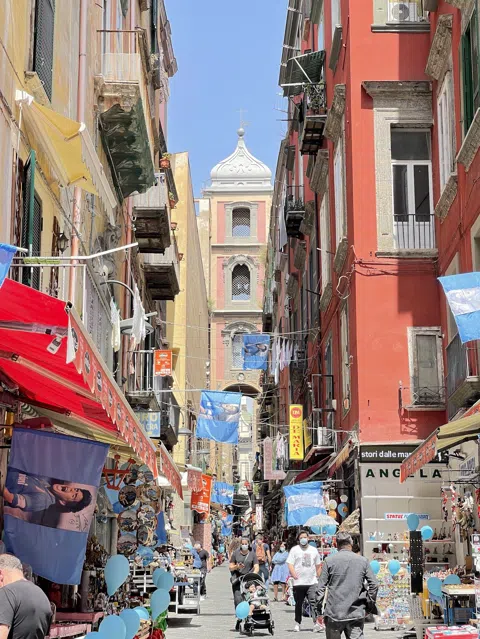
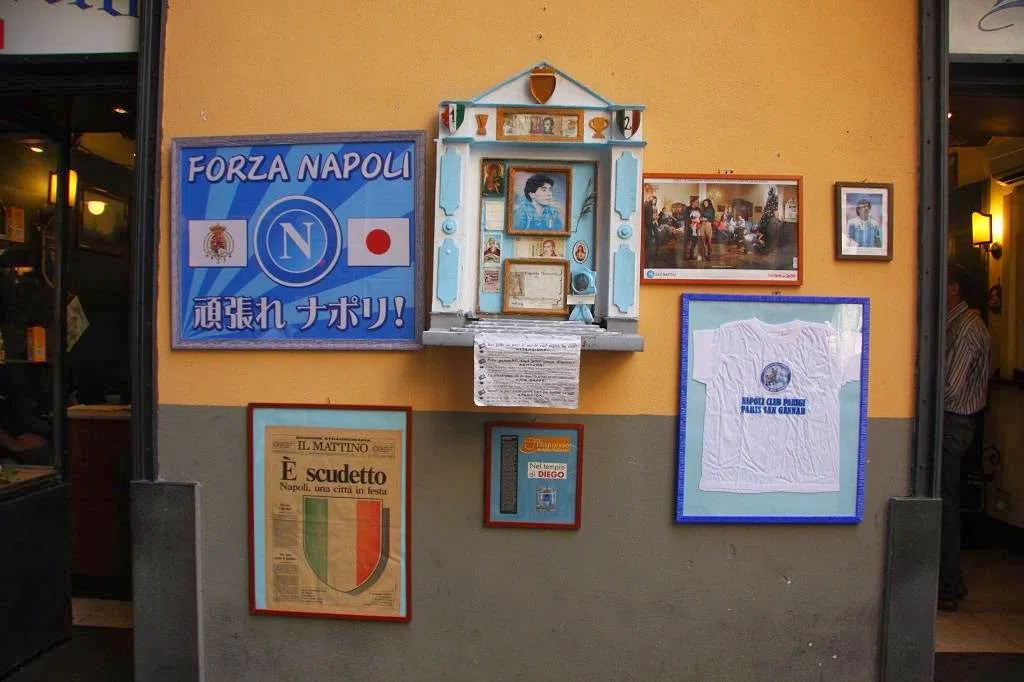
Ten minutes into Spaccanapoli proper, Bar Nilo is the opposite scale entirely: a tiny puteca, dialect for a small shop-front business, that suits two or three people at a time and not a sit-down group. It's arguably the most photographed bar on the street thanks to its shrine to Diego Maradona, Naples' football devotion turned into interior décor. A €1.20 espresso here is as much about five minutes of neighbourhood theatre as the shot itself; don't come expecting anywhere to sit, and don't come in a party of six.
For a version of the same street with piazza seating, Scaturchio anchors the ritual to Spaccanapoli's most photogenic square. It handles groups comfortably at its outdoor tables (€4-6 seated), while the standing bar inside keeps a €1.30 espresso moving fast for anyone who just wants coffee and pastry without lingering. It's the natural midpoint on a walk through the old centre, and one of the few venues here where you choose your own pace: five minutes standing, or half an hour watching the square.
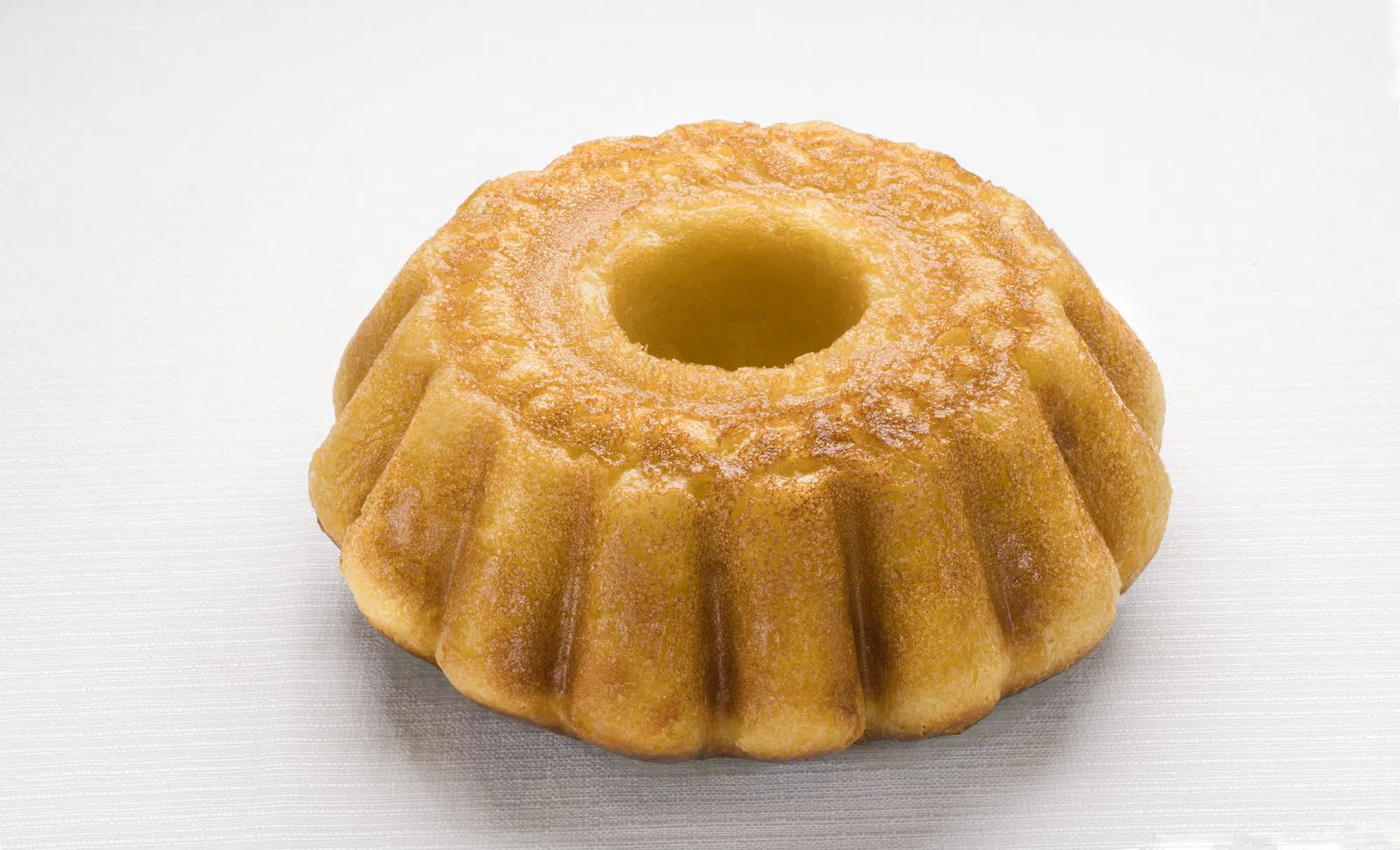
Vomero's residential rhythm and the literary alternative
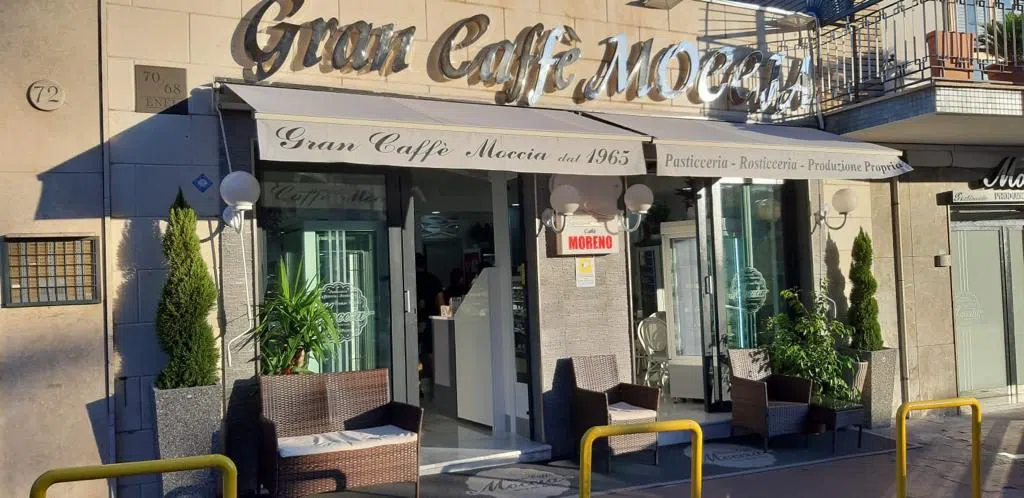
Every bar so far sits in or near the historic centre, which is worth correcting for: most Neapolitans don't drink their daily coffee anywhere near Spaccanapoli. Up the funicular in Vomero, Gran Caffè Moccia has served the same residential district since 1965, and it's worth the detour precisely because it shows the ritual as lived rather than performed, a genuine neighbourhood counter, not a stop on anyone's must-see list. Small groups work fine at the bar; the seating is limited enough that larger parties should plan to stand. Espresso runs €1.30, pastries €2-4, and the crowd is overwhelmingly local at any hour.
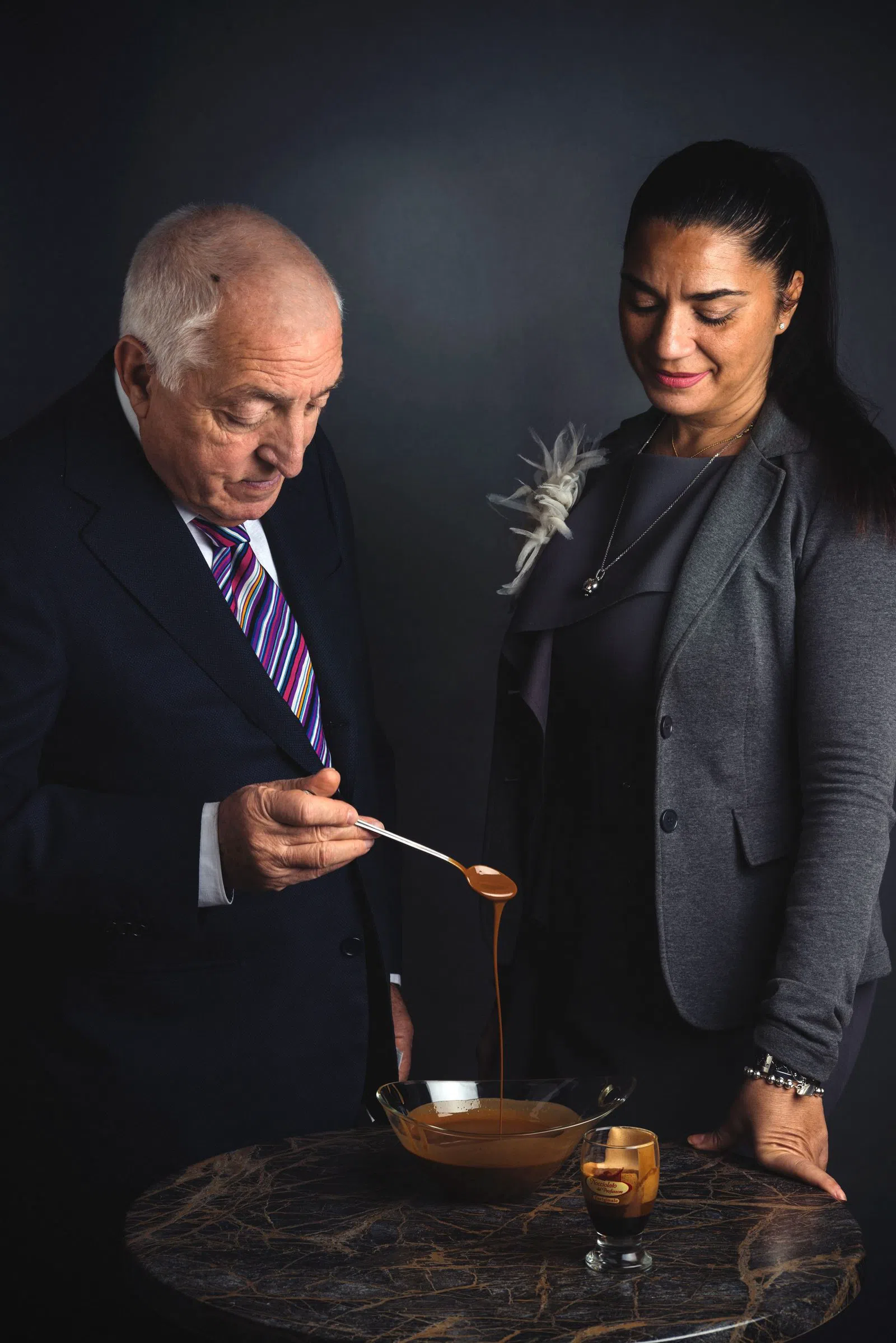
Back in the centre, near Piazza San Domenico Maggiore, Caffè del Professore has built its whole identity since 1996 around the nocciola, the hazelnut-cream espresso variant, at €1.50-2 against €1.20 for a plain shot. It's younger than the grand houses by a century or more, but it's now the definitive stop if hazelnut coffee is what you're after; it takes groups at the bar or its small seating area, though its tourist-corner location means real queues at midday and early evening. Go before 10am or after 4pm if you want the counter to yourself.
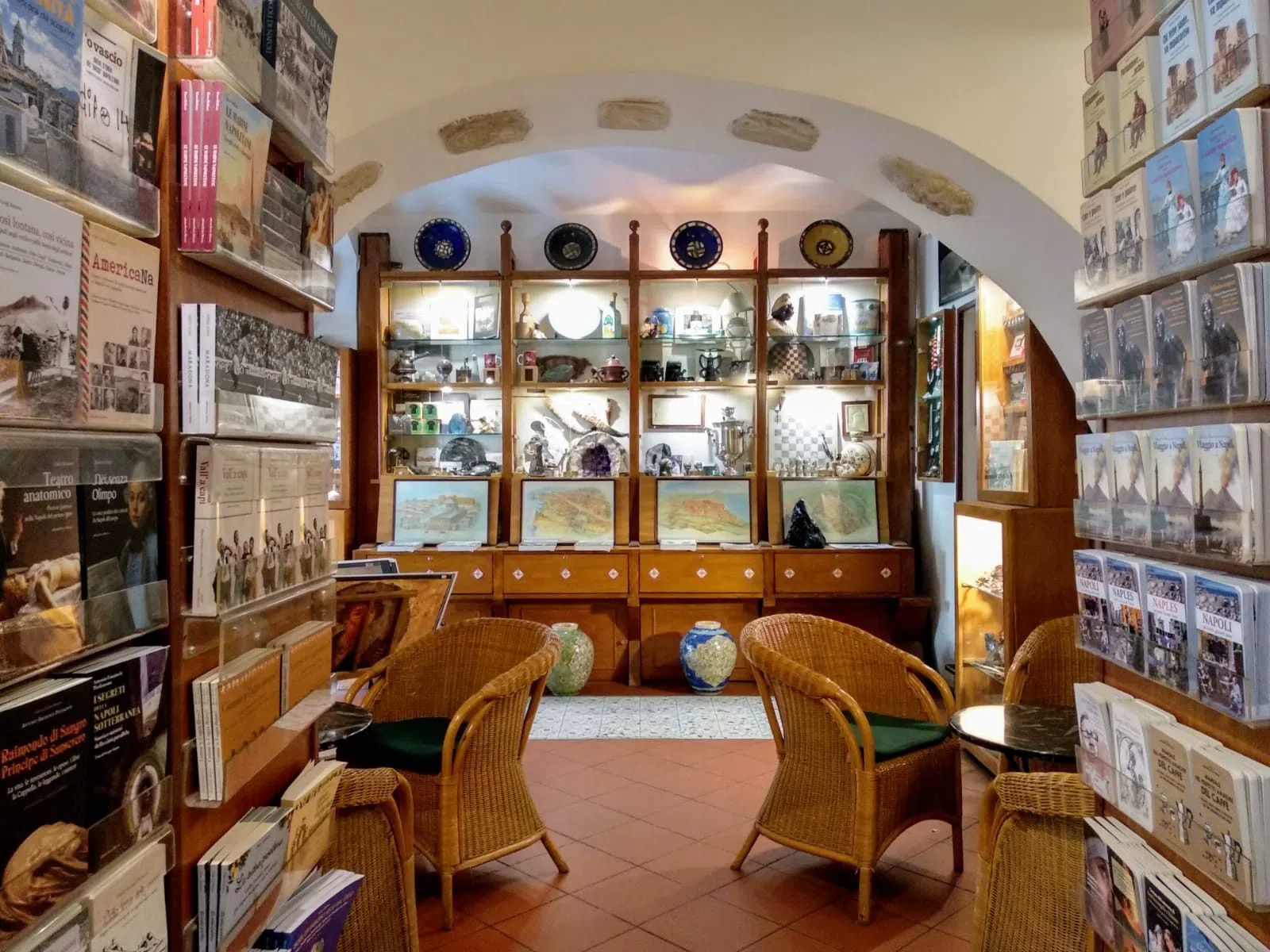
For something outside the pure espresso-and-move-on model, Caffè Letterario Intra Moenia on Piazza Bellini has been a working bookshop-café since 1989, and it widens the ritual into Naples' older tradition of the café as literary salon rather than a fuel stop. It handles groups well, especially at its outdoor piazza tables (€5-7 seated, €1.50 at the bar), though it also hosts readings and events that can crowd the room out in the evening. Check what's on if you want conversation rather than an audience.
The station arrival and the seafront wind-down
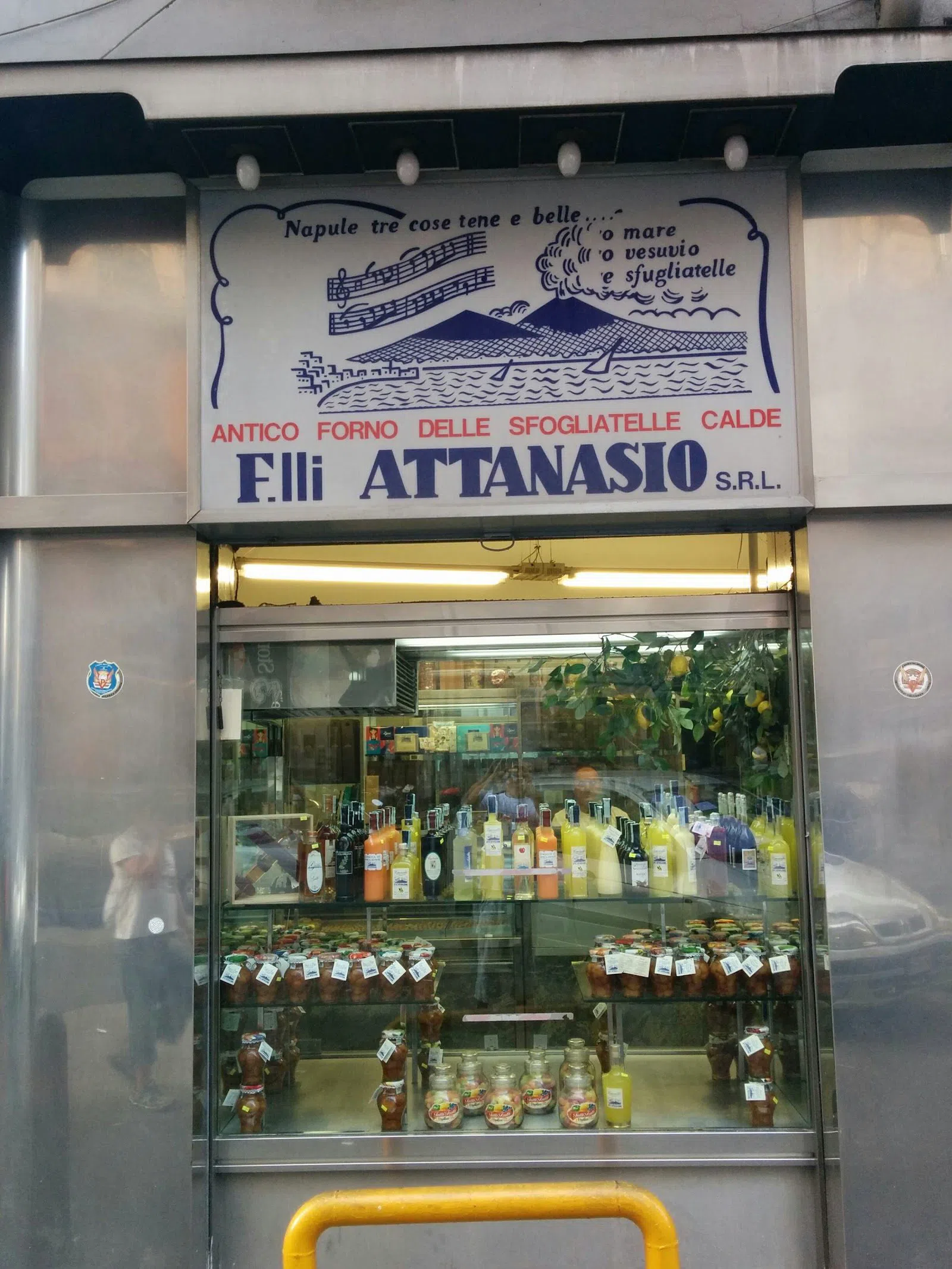
Two venues bookend the ritual at the edges of the day rather than its middle. Arriving by train, most visitors walk straight past Antico Forno delle Sfogliatelle Calde Fratelli Attanasio, a few minutes from Napoli Centrale, which has run the definitive espresso-and-sfogliatella pairing since 1904. There's no seating at all: you eat standing on the pavement, pastry in one hand, a €1.20 espresso in the other. But the sensory hit of a warm sfogliatella (the shell-shaped, ricotta-filled pastry, €2) straight from the oven, eaten in the street within minutes of stepping off the train, is one of the most honest first impressions the city offers. It works for groups in the loosest sense: everyone just eats on the same stretch of pavement.
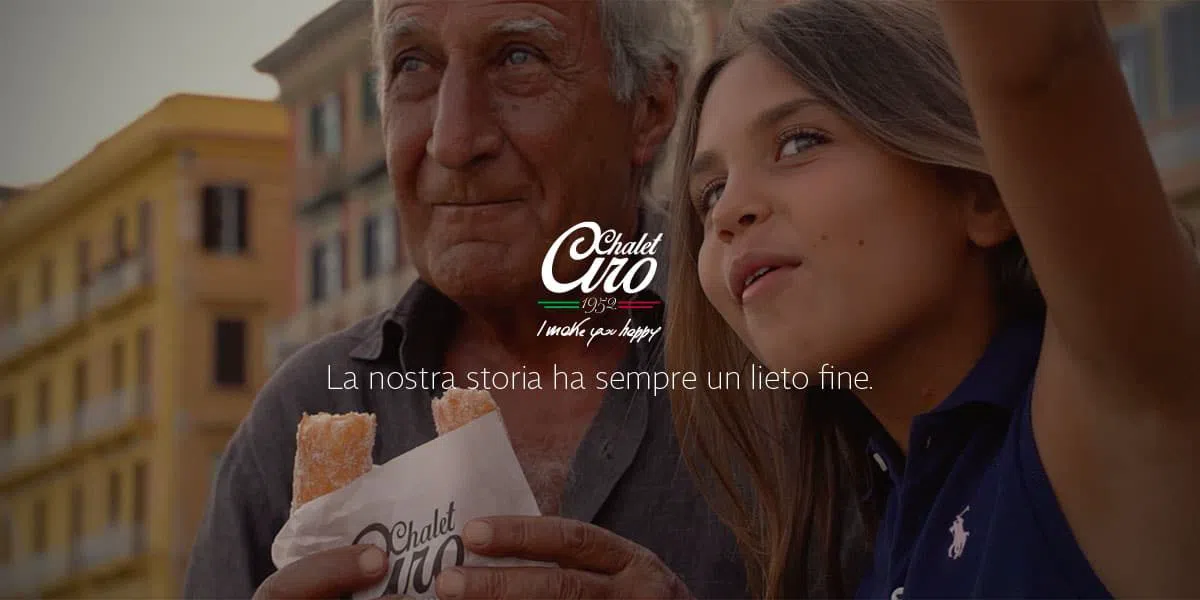
At the other end of the clock, Chalet Ciro 1952 on the seafront has been the after-hours and early-morning stop since 1952, open past 3am and built for that open-air, come-as-you-are rhythm. A €1.30 espresso with a graffa, the Neapolitan sugar-dusted doughnut (€1.50), works equally as a post-dinner nightcap or a coffee-and-jog stop at dawn. Either way, the seafront setting handles groups without friction, no counter squeeze required.
Planning it: transport, cash, timing, budget
Base yourself somewhere central. Most of this route sits within Spaccanapoli, the centro storico, and Chiaia, all walkable to each other, with Vomero one funicular ride up and the seafront a short walk or bus from the centre; a Naples hotel search in one of those areas saves more time than any taxi. Carry small change: bar transactions are cash-heavy and fast, and fumbling for a card at a counter three deep with regulars marks you out instantly. Espresso at the bar runs €1.20-1.50 almost everywhere on this list; budget €10-15 a day for four or five stops, more if you sit for table service at the grand cafés (€5-9 a head). Mornings, from opening until around 10am, are when the ritual is most authentic and least crowded by other visitors; midday and early evening bring queues at the better-known stops like Caffè del Professore and Gambrinus. None of this needs booking except larger parties at the seated grand cafés: Gambrinus, Cimmino, and La Caffettiera all take table reservations, everywhere else is walk-up only. For the wider context of where these bars sit against the rest of the city, the Naples guide covers the districts this route passes through in more depth.
Before you go
What exactly is a caffè sospeso and how do I ask for one?
It's a pre-paid coffee left for a stranger who can't afford one: you tell the barista "un caffè sospeso" alongside your own order and pay for two, drink one. Someone in need later asks at the counter, "c'è un caffè sospeso?" (is there a suspended coffee?), and drinks it for free. Bar Mexico near Piazza Dante is one of the houses where the custom is genuinely active, not just a sign on the wall.
How much should an espresso cost in Naples in 2026?
Standing at the bar, €1.20-1.50 is the going rate at almost every venue in this piece, from Bar Nilo to Gran Caffè Gambrinus. Sitting at a table roughly triples that, plus a cover charge at the grand cafés: expect €5-9 a head for seated service at Gambrinus, Cimmino, or La Caffettiera.
Do you tip at the bar in Naples?
Not really expected for a quick standing espresso: locals rarely leave anything beyond the price on the receipt. Some do rest a small coin on top of the scontrino when sliding it to the barista, more a habit than an obligation. Table service at the grand cafés is a different matter and a small tip there is more normal.
Which of these bars take reservations for larger groups?
Gran Caffè Gambrinus, Gran Caffè Cimmino, and Gran Caffè La Caffettiera all take table bookings for seated service. Everywhere else on this route (Bar Mexico, Bar Nilo, Scaturchio's bar counter, Moccia, Caffè del Professore, Attanasio, and Chalet Ciro) is walk-up only, so arrive with some flexibility if you're a party of six or more.
Is it considered rude to sit down instead of standing at the bar?
No, it's simply a different, more expensive transaction, and every bar in this piece accommodates both where seating exists. What locals do (stand, drink in under two minutes, leave) is the cheaper, faster option, not a stricter cultural rule tourists risk breaking by sitting.